
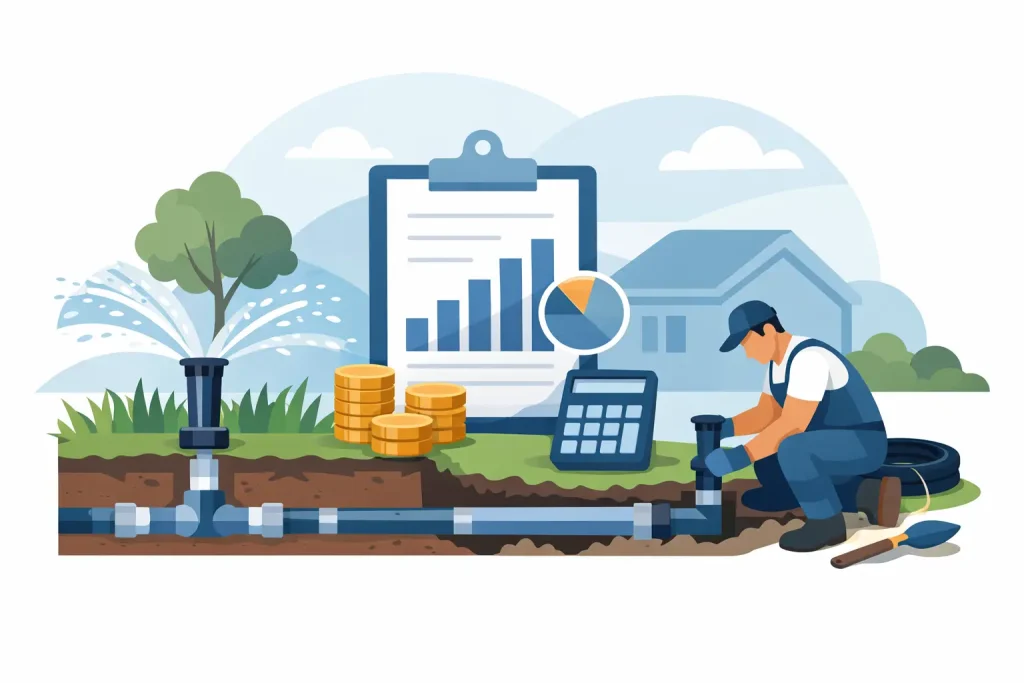
A healthy lawn should not depend on whether someone remembers to move a hose before work. For many Macomb-area homeowners, a professionally designed irrigation system brings consistency, convenience, and better-looking turf. But sprinkler system installation cost can vary widely because no two properties have the same lawn layout, water supply, planting beds, or drainage needs.
A clear estimate should explain what is being installed, why it is needed, and how the system will be set up for long-term performance. The lowest number is not always the best value if it leaves out proper zoning, winterization provisions, quality components, or restoration after trenching.
What Does a Sprinkler System Installation Cost?
For a typical residential property, a professionally installed sprinkler system often falls between $3,500 and $12,000 or more. Smaller, straightforward yards with a few lawn zones may land near the lower end. Larger lots, extensive landscape beds, multiple water-source requirements, and complex layouts can raise the investment.
That range is useful as a starting point, but it should not replace an on-site evaluation. A yard that looks simple from the street may have low water pressure, mature trees, slopes, tight access, or drainage concerns that change the scope. A reputable contractor will measure the property, review the water source, and create a line-item proposal rather than offer a one-size-fits-all price.
A basic system versus a complete design
A basic installation may cover open lawn areas with standard spray heads and a manual controller. A more complete system can include separate zones for sunny turf, shaded turf, foundation plantings, garden beds, and newly installed landscaping. It may also include drip irrigation, a rain sensor, a smart controller, backflow prevention, and dedicated shutoff valves.
Those additions increase the initial price, but they can improve water efficiency and simplify maintenance. The right choice depends on how you use your property. Homeowners with established flower beds or new landscape investments often benefit from giving those areas their own watering schedule instead of trying to water everything the same way.
Factors That Affect Sprinkler System Installation Cost
The most accurate way to understand pricing is to look at the work behind the system. Irrigation is not simply a matter of placing heads around the lawn. It is a water-delivery system that needs to match the property.
Property size and the number of zones
Larger yards require more pipe, heads, wire, valves, and installation time. They also usually need more zones. A zone is a section of the property that runs at one time, allowing the system to deliver enough water pressure to each head.
Proper zoning matters because an oversized zone can produce weak coverage, while too few zones can force lawn, shrubs, and beds onto the same schedule. The goal is even coverage without runoff, dry spots, or water being sprayed onto sidewalks and driveways.
Water pressure and available flow
Before planning a system, an installer should evaluate water pressure and flow. A home may have adequate pressure for household use but still need careful zone design to operate sprinklers effectively. Low flow can require smaller zones or different nozzle selections. In some cases, changes to the connection point or equipment may be necessary.
Skipping this step is one reason some systems perform poorly from day one. An irrigation layout should be designed around what the water supply can actually support, not around a generic layout copied from another property.
Lawn shape, landscaping, and obstacles
A flat rectangular lawn is relatively simple to irrigate. Curved beds, narrow side yards, trees, fences, slopes, patios, pools, and retaining walls require more planning. Heads need to be placed where they can cover the turf without soaking siding, hardscapes, or outdoor living areas.
Landscape beds may need drip lines rather than spray heads. Drip irrigation puts water closer to plant roots and is especially useful around shrubs, annuals, containers, and mulch beds. It is a more precise solution, but it adds materials and labor to the project.
Soil conditions, grading, and access
Installation crews need to trench or use specialized equipment to place pipe and wiring below grade. Rocky soil, roots, compacted ground, steep slopes, and limited access can all affect labor time. If a property has standing-water issues or significant grading concerns, it may make sense to address those conditions during the planning stage instead of installing irrigation around an unresolved drainage problem.
A professional should also explain how disturbed lawn areas will be restored. In most cases, crews can minimize disruption, but some soil settling and turf recovery are normal after underground work. Knowing what restoration is included helps prevent surprises.
Equipment and controls
The controller is the system’s command center. Standard programmable timers are dependable and cost-effective, while smart controllers can adjust schedules using local weather information and seasonal conditions. Rain and freeze sensors can help prevent unnecessary watering and protect the system from operating when conditions are not appropriate.
Quality valves, heads, wiring, and fittings matter as well. Less expensive components may reduce the initial invoice, but they can be harder to service or more likely to fail over time. A well-built system should use accessible valve boxes, clearly identified zones, and components that can be maintained without tearing up the yard.
Permits, backflow prevention, and local requirements
Depending on the property and water connection, permits or inspections may be required. Backflow prevention is also a critical part of many irrigation installations because it helps protect the potable water supply from contamination.
These details should not be treated as optional extras. A licensed and insured contractor can identify the requirements that apply to your project and include them in the scope. That protects the homeowner and helps ensure the installation is built correctly from the beginning.
What a Professional Installation Should Include
A complete proposal should make it easy to see what you are paying for. It should identify the planned zones, controller type, sprinkler heads, drip areas if applicable, valves, pipe, backflow equipment, and restoration work. It should also address any electrical connection needs, permitting responsibilities, and warranty terms.
The installation process generally begins with a site consultation and system design. Once the plan is approved, the crew marks utilities, installs underground pipe and valves, connects the controller, sets heads, tests coverage, and adjusts the system. Before the project is complete, the homeowner should understand how to operate the controller and where key shutoff points are located.
For Michigan properties, seasonal service should be part of the conversation. Winterization is essential because water left in irrigation lines can freeze and cause damage. Spring startup, midseason adjustments, and fall shutdown services help protect the investment and keep the system running efficiently year after year.
How to Compare Irrigation Estimates
When comparing bids, focus on scope instead of price alone. A lower quote may include fewer zones, lower-grade components, no drip irrigation for beds, or limited restoration. It may also leave out backflow protection, permitting, or the first winterization service.
Ask each contractor how they calculate zones, how they test water pressure, and what happens if coverage needs adjustment after installation. Confirm who handles permit requirements and whether the estimate includes a walkthrough of the controller. These questions reveal whether a contractor is planning a system for your property or simply selling equipment.
It is also reasonable to ask about warranties and service availability. Irrigation systems need occasional adjustments as landscapes mature, beds change, or homeowners add patios and plantings. Working with a local company that can install, maintain, and repair the system can be more convenient than tracking down a different provider each season.
Is a Sprinkler System Worth the Investment?
For homeowners who value a consistent lawn and less weekly work, irrigation can be a practical upgrade. It reduces the need to drag hoses, helps new sod and plantings establish more reliably, and allows watering to happen during more effective early-morning hours. It can also support the curb appeal and long-term health of a larger landscape investment.
Still, a sprinkler system is not a substitute for proper lawn care. Compacted soil, poor grading, inadequate fertilizer, pests, and shade issues can affect turf health even with regular watering. The best results come from coordinating irrigation with mowing, fertilization, aeration, drainage work, and seasonal landscape care.
A thoughtful estimate gives you more than a number. It gives you a plan for watering your property responsibly, protecting your lawn through changing seasons, and avoiding the frustration of an installation that has to be corrected later. Reeser Outdoor can help homeowners evaluate the right scope, equipment, and maintenance approach for a system built to serve their yard for years.