
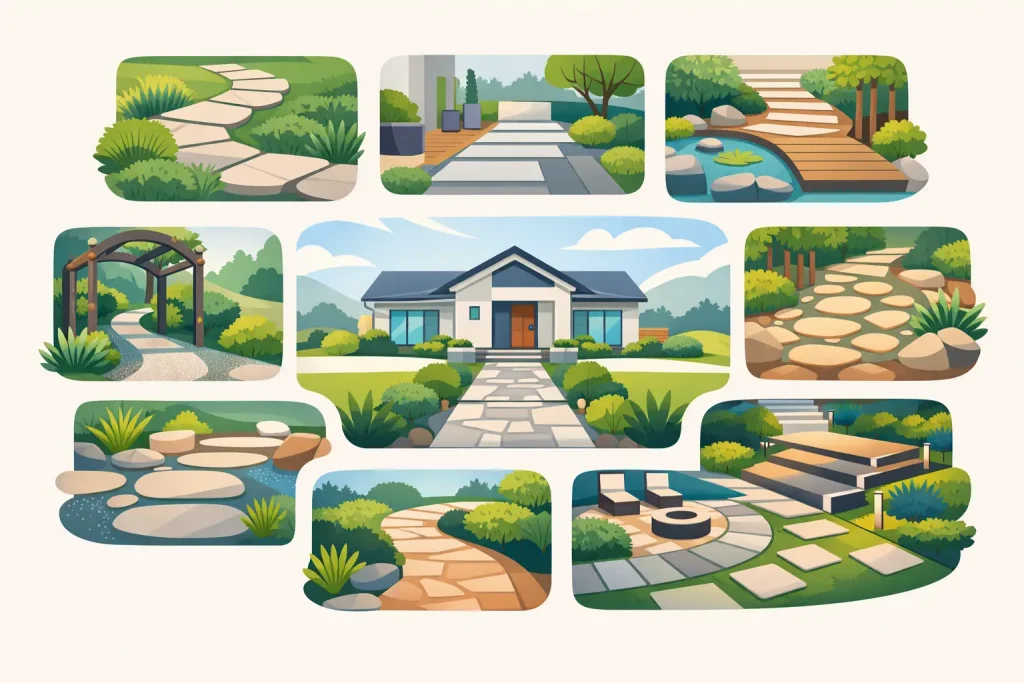
A front walk does more than connect the driveway to the door. It sets the pace for the whole property, directs guests safely, and can either support or disrupt drainage around your foundation. The best walkway design ideas for home balance appearance with the details that make a path hold up through Michigan freeze-thaw cycles, heavy rain, and daily use.
For homeowners in Macomb and nearby communities, a good walkway project starts below the surface. Material color and pattern matter, but base preparation, slope, edging, and the way the path meets the driveway and entry matter just as much. A professionally planned walk should feel natural on the property, stay stable underfoot, and make routine lawn and landscape care easier.
Start with How the Walkway Will Be Used
Before choosing pavers, flagstone, or concrete, consider who uses the path and where they are headed. A narrow side-yard route used mainly for taking out the trash has different needs than a front walkway that welcomes visitors, accommodates strollers, and carries packages to the porch.
Most primary front walks feel comfortable at four feet wide. This gives two people enough room to walk side by side and creates a more generous arrival than a narrow three-foot path. Secondary garden paths can be narrower, provided they have a clear purpose and do not create a tripping hazard near planting beds or utility areas.
The route should follow the way people naturally move. A perfectly straight line can suit a formal home or short entry, while a gentle curve often works better on a deeper lot with mature trees, landscape beds, or a detached outdoor living area. Curves should be broad enough to walk comfortably. Tight turns can look forced and make mowing, snow removal, and edging more difficult.
9 Walkway Design Ideas for Home Exteriors
1. Use pavers for a durable, tailored front entry
Concrete pavers offer clean lines, consistent sizing, and plenty of color options, from warm earth tones to classic grays. They work especially well when a walkway needs to coordinate with a paver patio, driveway border, or retaining wall.
Their main advantage is repairability. If settling occurs because of an unexpected drainage issue or utility work, individual pavers can often be lifted and reset rather than replacing an entire slab. That benefit depends on a properly compacted base and secure edge restraint from the beginning.
2. Create a welcoming path with natural flagstone
Flagstone gives a home a more relaxed, organic look. Irregular pieces can soften the transition between lawn, planting beds, and a front porch, especially on homes with natural stone accents or less formal architecture.
The trade-off is that flagstone requires thoughtful layout. Joints should be consistent enough for safe footing, and the surface needs a stable base so stones do not rock or shift over time. For a main entry, choose pieces that create a predictable walking surface instead of a path that feels like a series of uneven stepping stones.
3. Choose large-format concrete for a modern look
Large rectangular concrete slabs can give a front yard a simple, contemporary appearance. They are particularly effective when paired with structured plantings, low-profile lighting, and a minimal color palette.
Concrete is not maintenance-free, however. It needs joints placed intentionally to manage movement, and it should be graded so water moves away from the home. In Michigan, a walkway that holds standing water is more likely to experience surface damage and heaving after winter.
4. Add a border to define the route
A contrasting paver or stone border can make even a straightforward walkway look more finished. Borders also provide a visual cue at the path edge, which is helpful at night and near steps.
This approach works well when homeowners want to tie together several hardscape features without making everything match exactly. For example, a charcoal border can connect a light-gray paver walk to dark retaining wall caps or porch accents. The border must be installed as part of the overall base and restraint system, not treated as a decorative add-on that can spread apart.
5. Widen the walkway near the porch
A small landing or widened section near the front door gives people space to pause, greet neighbors, set down packages, or open the door without stepping into a planting bed. It can also make a modest entry feel more intentional.
This is a practical improvement for busy families. Rather than creating a path that ends abruptly at the porch steps, the walkway becomes part of a usable entry zone. The final dimensions should account for door swing, handrails, steps, and any grade changes at the foundation.
6. Pair a walkway with layered planting beds
A walkway looks best when it has room to breathe. Layered planting beds along one or both sides can frame the route, soften hardscape edges, and improve curb appeal without obstructing the path.
Keep mature plant size in mind. Shrubs that eventually lean into the walkway create a cramped feeling and retain moisture on the surface. Low perennials, ornamental grasses, and carefully spaced evergreen structure can provide color and texture while preserving clear access for guests, delivery drivers, and maintenance crews.
7. Build drainage into the layout
Drainage is one of the most valuable parts of a walkway design, even though it is not the feature people notice first. A path should not direct roof runoff toward the house, trap water beside a driveway, or create a low spot where ice forms.
Depending on the property, the solution may include subtle grading, a gravel drainage layer, a channel drain, or rerouting downspouts before hardscape installation begins. Addressing water movement during design is more cost-effective than tearing out a finished walkway later because the base has washed out or the area near the foundation stays wet.
8. Include low-voltage lighting where it adds safety
Walkway lighting makes evening arrivals safer and gives the property a finished appearance after dark. The goal is guidance, not glare. Fixtures should illuminate changes in elevation, turns, and the path edge without shining into windows or creating a runway effect.
Lighting is easiest to install before or during hardscape work, when wiring routes can be planned around planting areas and future maintenance. A simple, well-spaced lighting plan usually looks better than placing a fixture beside every paver.
9. Connect the front walk to the rest of the property
A walkway can become part of a larger circulation plan rather than an isolated strip from driveway to door. A side path may lead cleanly to a gate, backyard patio, fire feature, or service area. This is useful for families who entertain outdoors and do not want guests walking through the lawn or around the house in poor weather.
Matching every material is not required. What matters is that transitions feel deliberate. Repeating a border color, wall cap, joint style, or planting palette can connect a front walkway with a backyard outdoor living space while allowing each area to serve its own purpose.
Details That Separate a Lasting Walkway From a Short-Term Fix
The visible surface is only one part of the project. A lasting walkway requires excavation to the appropriate depth, a compacted aggregate base, proper bedding material for the selected surface, and durable edge restraint where needed. Skipping these steps may lower the initial price, but it often leads to sinking, loose pavers, cracked joints, and uneven sections.
Grade is equally important. Water should move away from the home while the path remains comfortable to walk on. This can be challenging on properties with existing drainage problems, steep approaches, or settled areas near the foundation. Those conditions are a reason to plan the walkway alongside grading, drainage, irrigation, or retaining work instead of treating it as a surface-only update.
Material selection also depends on maintenance expectations. Pavers may need occasional joint sand renewal and resetting over many years. Natural stone benefits from seasonal inspection and careful joint maintenance. Concrete can be a good fit for clean, simple designs but may require joint sealing and cannot be repaired as invisibly if it cracks. There is no single best material for every property – the right choice is the one that fits the home’s style, site conditions, budget, and expected use.
Plan Installation Around the Full Landscape
A new walkway affects more than the space directly beneath it. Irrigation heads may need adjustment, lawn areas may need restoration, and planting beds should be reshaped after the final grades are set. If holiday lighting, landscape lighting, a front bed renovation, or a patio project is on the horizon, coordinating those plans can prevent duplicate work and protect the finished hardscape.
At Reeser Outdoor, a walkway consultation can look at the full property picture, including drainage patterns, existing hardscape, planting needs, and ongoing maintenance. Clear scope planning helps homeowners understand what is being installed, why it is needed, and how the completed area will be cared for over time.
The most successful walkway is one you stop thinking about because it simply works: it stays firm underfoot, guides people where they need to go, sheds water properly, and makes coming home feel more inviting every day.