
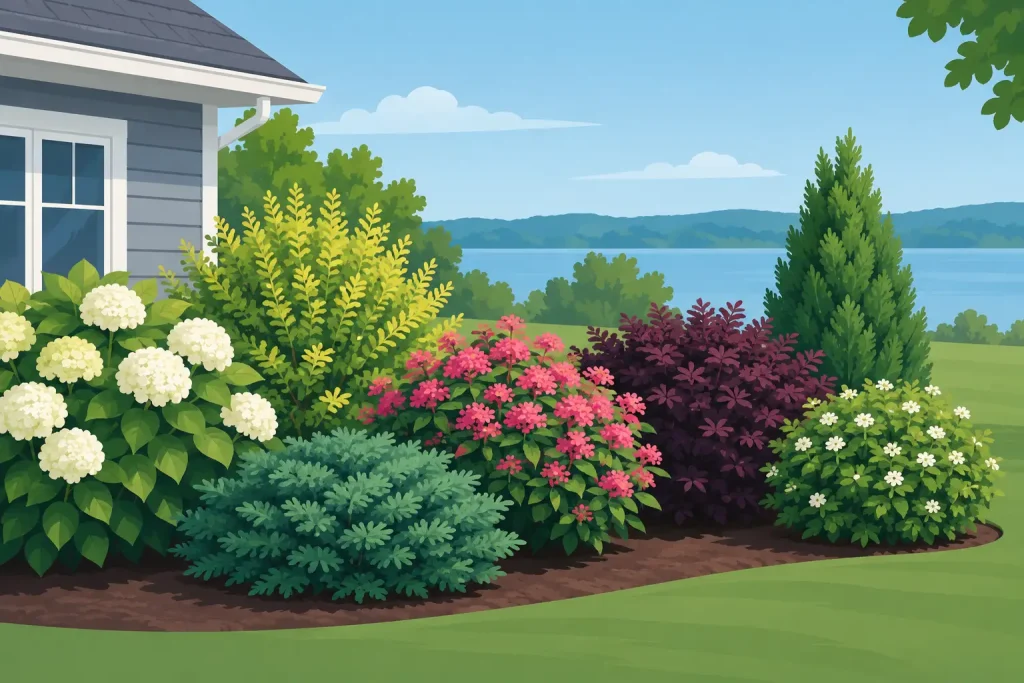
A shrub bed should not become another weekend chore. The best low maintenance shrubs give Macomb homeowners dependable structure, seasonal color, and curb appeal while asking for far less pruning, watering, and replacing than high-maintenance plantings. The key is not finding a plant that needs no care. It is choosing one that fits Michigan weather, your sun exposure, and the space it will occupy at maturity.
A well-planned shrub selection can also reduce common landscape headaches. Plants that are too large for their beds get sheared into unnatural shapes. Shade-loving shrubs planted in full sun struggle through July. Poor drainage can damage even a hardy plant before it has a chance to establish. Choosing correctly at the start makes maintenance simpler for years to come.
What Makes a Shrub Low Maintenance?
Low maintenance does not mean low quality or bare-looking. It means the shrub naturally holds a useful size and shape, tolerates typical local conditions, and does not require constant intervention to stay healthy.
For properties in Macomb and nearby communities, look for shrubs that are cold hardy for Michigan winters, reasonably tolerant of clay soil, and appropriate for the amount of sun available. Deer pressure, drainage, road salt, and irrigation coverage matter too. A shrub that performs beautifully in one front yard may be a poor fit for a shaded backyard or a wet low spot.
Proper installation remains part of the equation. Even tough shrubs need a correctly sized planting hole, sound soil preparation, mulch kept away from the stems, and consistent watering during their first growing season. Once roots are established, the plants below are generally much easier to manage than delicate or fast-growing alternatives.
12 Best Low Maintenance Shrubs for Michigan Landscapes
1. Panicle Hydrangea
Panicle hydrangeas are among the most dependable flowering shrubs for full sun to partial shade. Their large summer blooms often fade from white to pink, creating interest well into fall. Unlike some hydrangeas, they bloom on new wood, so a hard winter is less likely to eliminate the season’s flowers.
Most varieties benefit from a simple late-winter or early-spring pruning to remove old blooms and maintain size. Choose a compact variety for foundation beds so it does not crowd windows, walks, or other plantings.
2. Smooth Hydrangea
For a softer look in part shade, smooth hydrangea is a practical choice. It produces rounded white or green-white blooms in summer and handles Michigan winters reliably. Newer compact selections are especially useful near patios and entryways where you want flowers without a large shrub footprint.
Smooth hydrangeas appreciate steady moisture, particularly in hot weather. They are not the best option for a dry, unwatered bed in full afternoon sun, but they are easygoing in a properly mulched landscape with irrigation.
3. Dwarf Ninebark
Dwarf ninebark brings foliage color without demanding frequent pruning. Depending on the variety, leaves may be deep burgundy, coppery orange, or bright chartreuse, often followed by small spring flowers. It tolerates full sun and adapts well to many soil conditions.
Ninebark is a strong choice when a bed needs contrast against evergreens or light-colored siding. Give it room to reach its natural width. Cutting it back repeatedly to force it into a narrow space defeats the low-maintenance advantage.
4. Spirea
Spirea earns its place in many Michigan landscapes because it is compact, colorful, and forgiving. Spring-blooming varieties offer white flower clusters, while summer-blooming types bring pink blooms and foliage that can emerge gold, orange, or red.
A light trim after flowering can encourage a cleaner shape and sometimes additional blooms. Still, spirea does not need the detailed pruning that many formal shrubs require. It performs best in sun and works well along walkways, driveways, and front foundation beds.
5. Potentilla
Potentilla is a durable flowering shrub for sunny, well-drained areas. Its small blooms appear for much of summer in yellow, white, pink, or orange tones, and its naturally tidy habit works well in lower border plantings.
It is particularly useful where soil is not overly rich and where homeowners want color without intensive care. Avoid placing it in consistently wet soil. An occasional renewal pruning in early spring helps older plants stay full.
6. Inkberry Holly
Inkberry holly provides the evergreen presence many homeowners want without the rigid appearance of tightly sheared boxwood. Its dark green leaves work well in foundation plantings and mixed borders, and it is native to eastern North America.
Inkberry prefers acidic to neutral soil and more consistent moisture than some other evergreens. It can thin out in deep shade or very dry sites, so placement matters. In the right location, it needs little more than occasional corrective pruning.
7. Boxwood
Boxwood remains a classic choice for clean, formal edges around entries, patios, and front walks. Compact varieties offer year-round structure and can be left in a natural rounded shape or lightly shaped once a year.
The trade-off is site selection and disease awareness. Boxwood does not like wet roots, winter wind exposure, or heavy repeated shearing. It is best used where drainage is good and air circulation is adequate. A professional can help select varieties suited to the site rather than treating every boxwood as interchangeable.
8. Arborvitae
Arborvitae is a reliable screening shrub for privacy between neighboring yards or along property lines. It offers evergreen coverage, a narrow upright form, and relatively little pruning when the right mature size is selected.
The main consideration is deer. Arborvitae can be heavily browsed in areas with frequent deer activity, especially in winter. It also needs watering during establishment and during dry fall periods. For a privacy screen, spacing and irrigation planning are as important as the plant itself.
9. Dwarf Korean Lilac
Dwarf Korean lilac delivers the familiar fragrance of lilac in a more manageable size. It blooms in spring with lavender-pink flowers and is usually less prone to the powdery mildew issues seen on some common lilacs.
Plant it in full sun with good air circulation. It needs little pruning beyond removing spent blooms or occasional thinning after flowering. This is a strong choice near a porch, patio, or front entry where the fragrance can be enjoyed.
10. Red Twig Dogwood
Red twig dogwood earns attention in winter, when its vivid red stems stand out against snow and dormant landscapes. It also provides green foliage in summer and can handle wetter conditions better than many shrubs.
For the brightest stem color, remove a portion of the oldest branches every few years in late winter. This is not a shrub for a very dry, exposed bed, but it is an excellent solution for areas that stay consistently moist or have occasional drainage challenges.
11. Winterberry Holly
Winterberry holly brings bright red berries after the leaves drop, making it one of the most useful shrubs for winter interest. It tolerates wet soil and provides habitat value for birds while maintaining a natural, informal appearance.
Berry production requires both male and female plants, with the male planted nearby. That is a small planning detail that makes a major difference. Winterberry also works best where it has room to grow rather than being forced into a narrow foundation bed.
12. Yew
Yews are versatile evergreens for shaded or partially shaded areas where many flowering shrubs struggle. Their dark needles provide a refined backdrop for perennials, annual color, stonework, and outdoor living spaces. They can be lightly shaped, but they also look good when allowed to develop naturally.
Good drainage is essential. Yews do not tolerate saturated roots, and deer may browse them in some neighborhoods. Where those conditions are not a concern, they are among the more dependable evergreen choices for low-light areas.
Match the Shrub to the Job
The best low maintenance shrubs are selected for a purpose, not simply because they look good at the garden center. A low border near a driveway needs plants that will not block sightlines. A foundation bed needs shrubs sized for the distance between the house and the walkway. A privacy planting needs enough width, proper spacing, and irrigation that reaches the full row.
Sun exposure should be observed over a full day before choosing plants. Four hours of morning sun is very different from six hours of intense afternoon sun reflecting off a driveway. Soil should also be evaluated before installation, especially in low areas where water sits after rain. In some yards, correcting drainage or adjusting grades should happen before new plants are installed.
Mulch helps conserve moisture and suppress weeds, but it should be applied at a modest depth of about two to three inches. Keep it pulled back from shrub stems to avoid trapping moisture against the bark. During the first year, deep, consistent watering is more valuable than frequent shallow watering because it encourages roots to grow down into the soil.
A landscape should make a home easier to enjoy, not add a growing list of chores. When shrubs are matched to the site and installed with room to mature, seasonal care becomes straightforward and the property looks intentional in every season.