
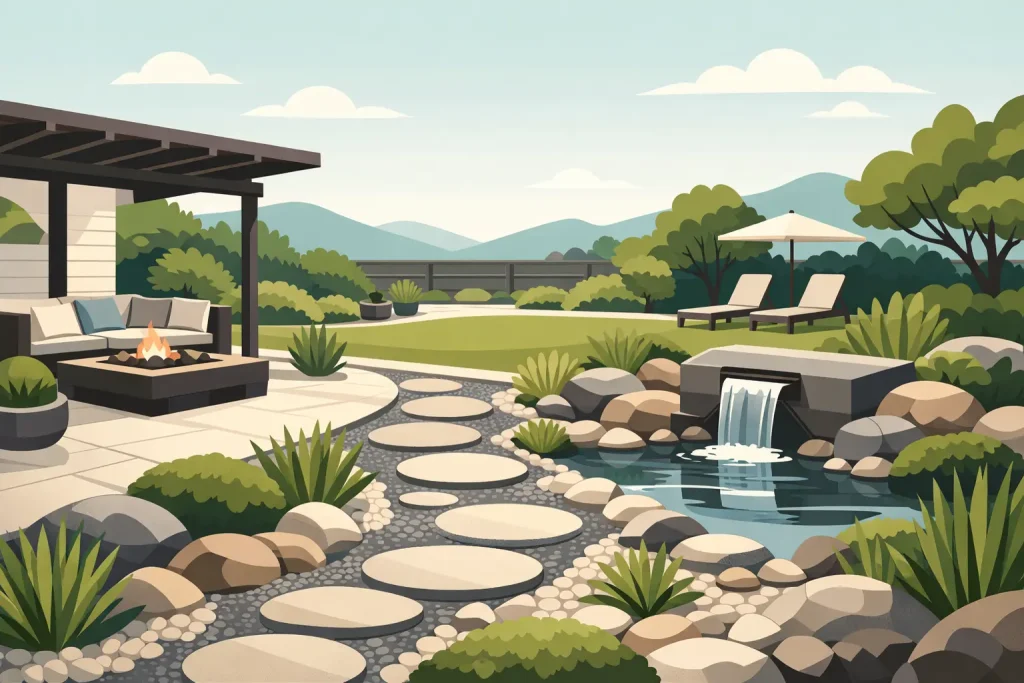
A backyard should not become another weekend obligation. The best low maintenance backyard landscaping gives your family a comfortable place to relax, host friends, and spend time outside without constant weeding, watering, pruning, or repairing. The goal is not a yard that needs no care at all. It is a landscape designed so routine care is predictable, manageable, and worth the result.
For homeowners in Macomb and nearby communities, that starts with a plan built for real conditions: heavy clay soil, spring rain, hot stretches of summer, snow, salt, and freeze-thaw cycles. Choosing plants or materials because they look good in a photo can lead to expensive replacements later. A durable backyard is shaped around drainage, sun exposure, traffic patterns, and how you actually want to use the space.
Start With the Work You Want to Avoid
A practical design begins by identifying what creates the most work in your current yard. It may be a large lawn that requires frequent mowing, garden beds that fill with weeds, mulch that washes out, or a patio that holds water after every storm. These are not just maintenance annoyances. They are signs that the landscape may need a better layout, grading adjustment, or material selection.
Many homeowners assume lower maintenance means covering every available area with stone. Stone has a place, especially around foundations, utility areas, and drainage features, but it is not automatically maintenance-free. Leaves, soil, and windblown seeds still collect between rocks, and removing weeds from decorative stone can be more difficult than pulling them from a mulched bed.
Instead, reduce high-effort areas strategically. Replace awkward strips of grass with planting beds, widen a patio where people already gather, and create clean edges that make mowing easier. A well-designed backyard should eliminate the small, hard-to-reach areas that turn a 30-minute mowing job into a longer chore.
Build Low Maintenance Backyard Landscaping From the Ground Up
Drainage and grading are the hidden parts of a landscape that determine how well everything above them performs. If water collects near a patio, settles against the home, or turns planting beds into mud, adding new plants alone will not fix the problem. Excess moisture can damage roots, shift pavers, wash away mulch, and create slick walking surfaces.
Before installing hardscape or beds, evaluate where water moves during a heavy rain. Proper grading directs runoff away from the foundation and toward an appropriate drainage area. Depending on the property, the solution may involve reshaping the grade, installing a catch basin or drain line, extending downspouts, or using a dry creek bed that manages runoff while adding visual interest.
This work is often overlooked because it is not the most visible part of a backyard renovation. It is also where professional planning matters most. A patio, retaining wall, or planting bed built on poor drainage can become a recurring repair project instead of a long-term improvement.
Choose hardscape for Michigan weather
Patios, walkways, seat walls, and fire features can reduce the amount of lawn and planting space that needs regular attention. They also create an outdoor living area that is useful beyond the peak growing season. The key is installing them correctly.
Pavers and natural stone require proper base preparation, compaction, edge restraint, and a slope that carries water away from the house. Concrete can be a good choice for certain budgets and designs, but it also needs well-prepared subgrade and control joints to handle seasonal movement. No surface is completely maintenance-free, yet quality installation greatly reduces settling, heaving, standing water, and premature cracking.
Retaining walls deserve the same attention. A wall holding back soil needs a stable base, appropriate drainage stone, and a way for water to escape behind it. Skipping these steps may lower the initial price, but it can lead to shifting, leaning, or failure after a few winters.
Use Plants That Earn Their Place
Low-maintenance planting does not mean a backyard without color or texture. It means selecting plants that match the site instead of forcing the site to support plants that struggle there. A full-sun area needs a different plant palette than a shaded space beneath mature trees, and a wet low spot needs different choices than a dry area near a driveway or patio.
Perennials, ornamental grasses, shrubs, and groundcovers can provide seasonal interest with less replanting than annual-heavy beds. Native and regionally adapted plants are often good options because they are suited to local temperature swings and rainfall patterns. However, even a hardy plant needs the right sunlight, spacing, and soil conditions to perform well.
Avoid overcrowding new beds. Small shrubs and perennials can look sparse on installation day, which leads homeowners to plant too closely. Within a few seasons, crowded plants compete for moisture and air circulation, require more pruning, and can become more vulnerable to disease. Planning for mature size gives every plant room to grow and keeps the bed looking intentional.
A simple plant palette is usually easier to maintain than a collection of one-off varieties. Repeating a few dependable plants creates a cleaner appearance and makes seasonal care more straightforward. It also helps a landscape feel cohesive rather than busy.
Make Bed Edges and Mulch Work Harder
Crisp edging is one of the most effective ways to make a backyard look cared for without adding much weekly work. A defined edge keeps mulch in place, prevents lawn from creeping into beds, and gives mowing equipment a clear boundary. Depending on the design, edging may be steel, aluminum, paver, or a clean-cut natural edge maintained as part of routine service.
Mulch helps retain soil moisture, moderate temperature changes, and reduce weed germination. It is not a permanent weed barrier, and installing it too deeply can harm plants by trapping moisture around stems and roots. A properly prepared bed with quality landscape fabric only where appropriate, adequate mulch depth, and healthy plant spacing will require far less attention than a bed that is simply covered each spring.
Rock mulch can be useful near the home, around evergreens, or in areas where organic mulch repeatedly washes away. Consider its long-term effect before committing to large rock beds. Stone absorbs heat, is harder to refresh or remove, and can make future plant changes more labor-intensive. The right material depends on the location and the look you want to maintain over time.
Keep the Lawn Manageable, Not Perfect
A healthy lawn can still be part of a low-maintenance backyard. The difference is scale and purpose. Keep turf where children play, pets run, or you need an open gathering area. Consider reducing it in shaded corners, steep slopes, narrow side strips, and isolated patches that are difficult to mow efficiently.
Irrigation can make lawn and plant care more consistent, but it should be designed for efficiency rather than set-and-forget watering. Separate zones for turf and planting beds allow for different watering needs. Rain sensors, seasonal adjustments, properly aimed heads, and occasional inspections prevent wasted water and dry spots. An irrigation system needs service, but it can save time and protect the investment in your landscape when it is installed and managed correctly.
Regular mowing, fertilization, and seasonal cleanup also remain part of responsible property care. Low maintenance is not the same as neglected. A professional maintenance plan can keep small issues, such as weeds, compacted edges, overgrown shrubs, and irrigation problems, from turning into a larger renovation later.
Design for How Your Family Uses the Backyard
The easiest backyard to maintain is one that matches your routine. If your family eats outdoors often, prioritize a patio with enough space for seating, a grill, and clear walking paths. If evenings are the main time you use the yard, lighting and a fire feature may add more value than another large planting bed. If privacy is the priority, a layered screen of properly spaced shrubs may be more practical than a fence line that still leaves exposed views.
This is where an end-to-end approach can prevent costly gaps between design and installation. Reeser Outdoor can evaluate the full property, from drainage and irrigation to hardscape construction and ongoing care, so the finished space is designed to perform as well as it looks.
The right backyard should give you more time outside, not more tasks waiting for you. Start with the problems you want solved, invest in the work beneath the surface, and choose materials and plants that can handle the way your property lives through every season.