
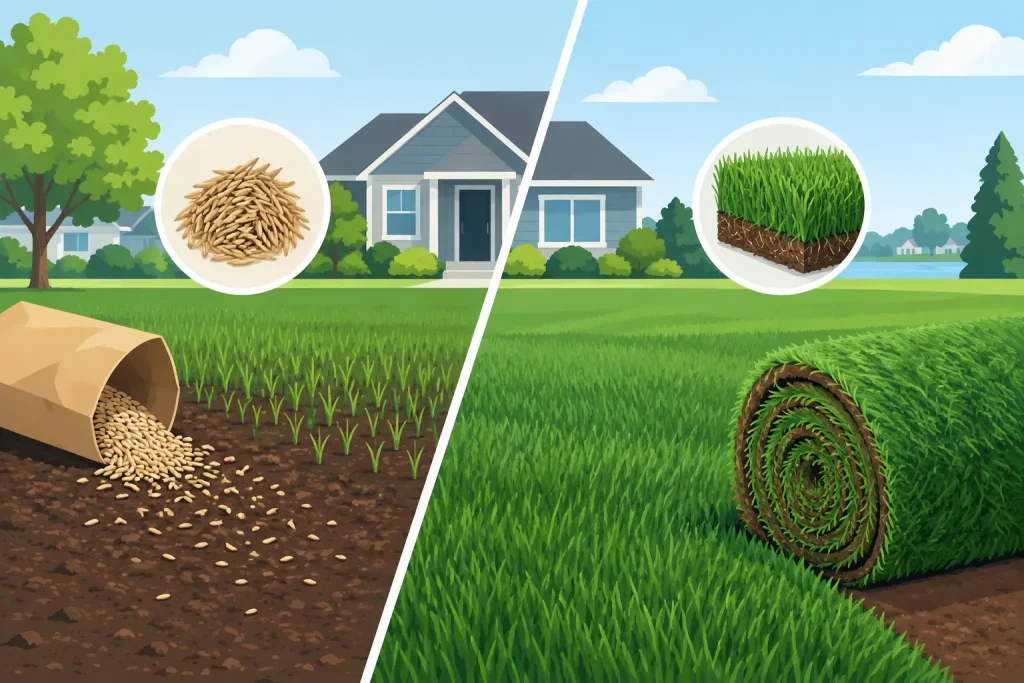
A bare yard after grading, drainage work, or a landscape renovation can make the next decision feel urgent: should you seed it or install sod? A seed vs sod lawn is not simply a choice between the cheaper option and the faster option. In Macomb-area yards, soil condition, sun exposure, drainage, irrigation, pets, children, timing, and your tolerance for waiting all affect which approach will hold up over time.
Both methods can produce a thick, attractive lawn. The difference is in how they get there and how much preparation and attention they require along the way. The best choice is the one that fits your property and gives the grass a realistic chance to establish healthy roots.
Seed vs Sod Lawn: The Core Differences
Sod is mature turfgrass that has been grown on a farm, cut into rolls or slabs, delivered, and installed over prepared soil. It creates immediate green coverage, which makes it appealing after a construction project or when a homeowner wants the yard to look finished quickly. But sod is only as successful as the grading, soil preparation, installation, and watering behind it.
Seed starts at an earlier stage. It takes longer to create a full lawn, but it offers more flexibility in choosing a grass blend that suits the property. A quality seed mix can be selected for full sun, partial shade, high traffic, drought tolerance, or the variable conditions common in southeastern Michigan lawns.
Cost is often the first comparison homeowners make. Seeding is generally less expensive per square foot than sod, especially on larger properties. Sod costs more because it includes the growing, harvesting, transportation, and labor needed to install established turf. That higher upfront cost can be worthwhile when immediate coverage, erosion control, or a defined completion date matters.
When Sod Is the Better Choice
Sod is usually the practical answer when time matters. If you are finishing a patio installation, correcting a drainage issue, building a new home, or preparing a property for an event, sod provides a clean, finished appearance right away. It also helps stabilize exposed soil on slopes or areas that could wash out in heavy rain.
For busy families, sod can reduce the period when the yard is mostly dirt and off limits. Once installed, it still needs careful watering and limited foot traffic while roots establish, but the visual improvement is immediate. A professionally installed sod lawn can often be lightly used sooner than a seeded lawn, provided it has rooted properly.
Sod also works well for smaller areas where the added material cost is more manageable. Replacing a worn front lawn, repairing a section damaged by construction, or finishing the area around a new walkway are common examples. In these situations, waiting weeks for seed germination may be more frustrating than the higher cost of sod.
There are trade-offs. Sod installation requires a well-timed crew, fresh material, level grading, and good soil contact. Rolls that sit too long before installation can dry out and struggle. If sod is laid over compacted soil, poor drainage, or uneven grades, it may look green initially but develop thin spots, disease pressure, or weak roots later.
What sod needs after installation
New sod needs consistent moisture, especially during its first few weeks. The goal is to keep the soil beneath the sod damp enough for roots to grow into it without creating standing water. Watering schedules change with heat, rainfall, soil type, and shade, so there is no single timer setting that works for every yard.
Mowing should wait until the sod is rooted and tall enough to cut without pulling or shifting it. Avoid heavy foot traffic, pet activity, and lawn equipment on new sod until it is secure. The lawn may look complete on day one, but its root system is still in transition.
When Seeding Is the Better Choice
Seeding is a strong option when budget flexibility and long-term grass selection are priorities. It is particularly effective for large yards, renovation projects, and areas where a custom blend will perform better than standard sod. A lawn with shade from mature trees, changing moisture conditions, or frequent activity may benefit from a seed mix chosen specifically for those challenges.
Fall is often an excellent time to seed in Macomb and surrounding communities. Warm soil supports germination while cooler air reduces stress on young grass. Weed competition is often lower than in spring, and there is time for seedlings to establish before summer heat returns. Exact timing still matters, because seed planted too late may not develop enough before winter.
Spring seeding can succeed, but it brings more pressure from annual weeds and the possibility of hot, dry weather before new grass is mature. Summer is generally the most demanding season for seeding because frequent irrigation is essential and young plants are vulnerable to heat stress.
A seeded lawn requires patience. Depending on the grass variety and conditions, germination may begin within days or take several weeks. The lawn will look thin and uneven at first. It takes ongoing watering, proper mowing, fertilizer planning, and time for seedlings to mature into a dense turf stand.
What seed needs to establish
Seed must have direct contact with prepared soil. Spreading it over hard, compacted ground or existing thatch rarely produces the even lawn homeowners expect. Proper preparation may include removing debris, rough grading, loosening compacted soil, adding topsoil where needed, leveling low areas, and applying seed at the correct rate.
Once seed is down, the surface needs frequent light watering to keep the top layer of soil consistently moist. Letting it dry out during germination can reduce results quickly. Overwatering, however, can move seed, create puddles, and encourage disease. A professional plan accounts for the site rather than treating every lawn the same.
Preparation Matters More Than the Material
Whether you choose seed or sod, a new lawn should not be used to hide an underlying property issue. Water that drains toward the house, compacted clay soil, irrigation gaps, deep shade, and poor grading can all limit lawn performance. Addressing those conditions before installation is more cost-effective than repeatedly repairing a struggling lawn afterward.
A proper lawn installation begins with evaluating the site. Is water collecting near a foundation or in the middle of the yard? Does the surface need regrading? Is topsoil sufficient? Will existing irrigation cover the entire new lawn evenly? Are there tree roots or shaded areas where turf may not be the best long-term solution? These questions shape the recommendation.
Professional installation also helps create a consistent finished grade around hardscapes, landscape beds, and drainage features. A lawn should blend into the rest of the property without leaving trip hazards, exposed edges, or low spots that retain water. The goal is not just green grass. It is a lawn that functions with the property’s infrastructure.
How to Choose for Your Yard
If you need immediate visual impact, have a smaller area, or need to stabilize bare soil quickly, sod is often worth the investment. If you have a larger property, want more control over grass selection, or can allow time for establishment, seed can deliver excellent value.
Your maintenance plan matters as much as your installation method. Both options need irrigation, mowing at the proper height, fertilization based on lawn needs, and prompt attention to weeds or disease. A new lawn is most vulnerable when it is treated as a one-day project rather than the beginning of a care routine.
For homeowners who want one accountable team to assess grading, irrigation, installation, and follow-up lawn care, Reeser Outdoor can help build a plan around the property instead of offering a one-size-fits-all answer. Clear site preparation and realistic aftercare expectations protect your investment from the first day.
A good lawn does not come from rushing the greenest-looking option. It comes from matching seed or sod to the site, preparing the soil correctly, and giving new turf the care it needs to take root.