
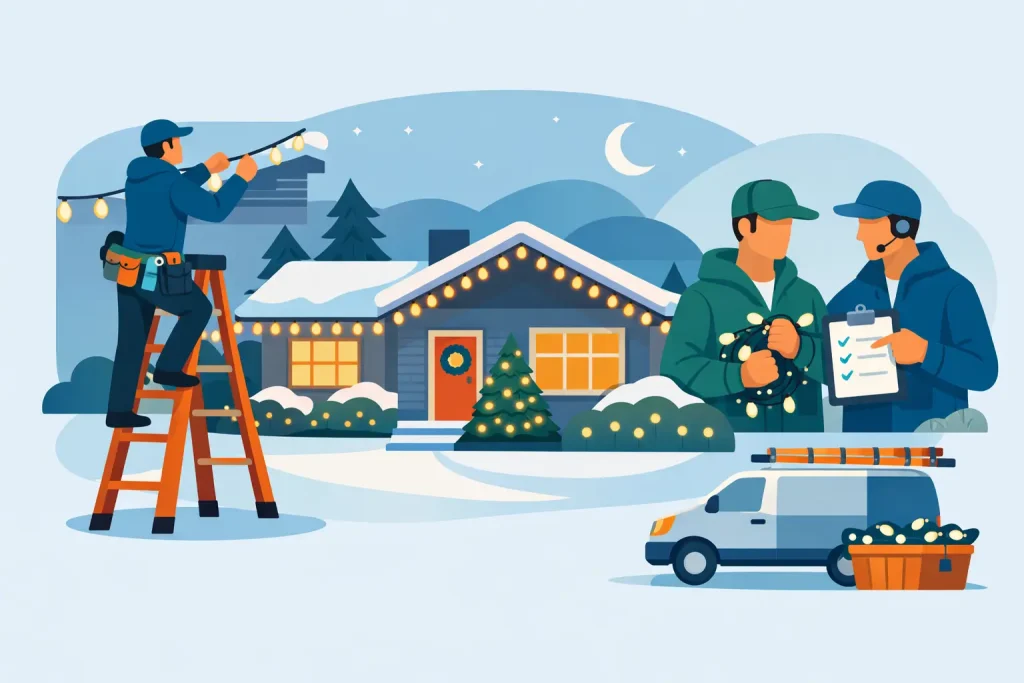
The first cold weekend of the season is not the time most homeowners want to be on a ladder, untangling old strands and testing outlets in the dark. A professional holiday light installation service takes that work off your list while giving your home a clean, coordinated display that fits the property instead of overwhelming it.
For homeowners in Macomb and nearby communities, the biggest benefit is not simply having lights up before the holidays. It is knowing the design, installation, maintenance, and removal are handled by one accountable team. That means fewer rushed decisions, fewer safety concerns, and more time to enjoy the season with family.
What a Holiday Light Installation Service Should Include
Holiday lighting is often treated as a simple decorating task, but a professional installation involves planning, electrical awareness, secure attachment methods, and ongoing service. The right scope depends on your home, budget, and the look you want to create, but a complete service should cover more than hanging a few strands along the roofline.
A design built around your home
A good display starts with a walkthrough or consultation. The installer should look at rooflines, peaks, entryways, windows, trees, shrubs, walkways, and other focal points. This conversation is where you can decide whether you want a classic warm-white outline, colorful bulbs for a family-friendly look, or a more detailed display with wrapped trees and landscape accents.
The best designs account for the home’s architecture. A ranch home may look its best with crisp roofline lighting, a bright entryway, and a few defined landscape features. A larger two-story home may have room for peaks, columns, trees, and window outlines. More lights are not always better. Thoughtful spacing and consistent color temperature usually create a more polished result than adding decorations to every available surface.
Commercial-grade materials and safe installation
Professional crews commonly use commercial-grade LED lights and cut-to-fit roofline sections rather than relying on excess cord and loose strands. LED lighting uses less energy, produces less heat, and tends to provide more consistent color throughout the display.
Installation matters just as much as the lights themselves. Lights should be secured with appropriate clips and attachment methods designed for the surface, not nails, staples, or improvised fasteners that can damage shingles, gutters, siding, or trim. Crews should also plan cord routes carefully so connections are protected and walkways remain clear.
This is especially valuable when temperatures drop and roofs become slick. A licensed and insured provider brings the equipment, ladder safety practices, and experience needed to work at height without turning holiday decorating into a risky weekend project.
In-season maintenance and timely removal
Even quality lighting can be affected by wind, snow, moisture, or an unexpected outage. Ask whether the service includes in-season maintenance. If a section goes dark or a clip comes loose, you should know who to call and what response to expect.
Removal is another part of the job that should be clearly defined. After the season, the team returns to remove the display carefully, helping protect the exterior of your home and avoiding the frustration of leaving lights up until spring. Some providers also offer organized storage, which can make next year’s installation faster and easier.
Why Professional Installation Is Different From DIY
There is nothing wrong with putting up a small display yourself if you have safe access, quality equipment, and time to do it. For a simple front porch arrangement or a few shrubs, DIY can be a practical choice. The trade-off is that you are responsible for design, product selection, ladder work, troubleshooting, removal, and storage.
A professional service is often a better fit when rooflines are steep or high, the display covers multiple areas of the property, or your schedule is already full during the holidays. It also helps homeowners who are tired of replacing mismatched strands, dealing with tangled cords, or finding that last year’s lights no longer work.
There is a property-care benefit, too. Outdoor professionals understand how to work around mature trees, landscape beds, irrigation components, hardscape edges, and exterior surfaces. That knowledge helps reduce the chance of crushed plant material, damaged gutters, or cords placed where they interfere with pedestrian areas.
How the Installation Process Typically Works
A dependable provider should make the process straightforward from the first conversation through removal. At Reeser Outdoor, the goal is to give homeowners one local team that can manage the seasonal work with clear communication and professional care.
The process usually begins with a free estimate and design discussion. You can share your preferred colors, the areas you want to feature, and your budget range. A transparent proposal should spell out the planned scope, including which rooflines, trees, shrubs, or entry features will be lit and whether maintenance and removal are included.
Once the plan is approved, installation is scheduled for a time that gives you the best chance of having your display ready before key holiday gatherings. Earlier scheduling is wise because popular installation dates fill quickly, particularly for homeowners who want lighting completed before Thanksgiving or early December.
On installation day, the crew prepares the materials, installs the lighting, checks connections, and tests the display before leaving. It is worth walking the property after dark, if possible, to make sure the brightness, spacing, and focal points look right from the street and from your front entry.
During the season, keep the provider’s contact information handy in case you notice an issue. Do not try to repair a roofline section yourself, especially in wet or icy conditions. A service call is safer and helps preserve the integrity of the installation.
What Affects Holiday Lighting Costs?
Holiday lighting prices vary because every property and display is different. The main factors are the length and complexity of rooflines, roof height and accessibility, the number of trees or shrubs being wrapped, the type of lights selected, and whether the service includes maintenance, takedown, and storage.
A simple roofline design will cost less than a multi-level display with peaks, columns, large trees, pathway lighting, and multiple color zones. Rental-style seasonal programs may have a different pricing structure than a plan where lights are purchased for repeated use. Neither option is automatically better. Renting can reduce storage and replacement responsibilities, while ownership may make sense for homeowners who want the same display installed year after year.
The lowest estimate is not always the best value. Compare the exact scope, material quality, installation methods, insurance coverage, maintenance policy, removal date, and any warranty terms. A line-item proposal makes it easier to understand what you are paying for and prevents surprises after the lights are already up.
Questions to Ask Before You Schedule
Before choosing a holiday light installation service, ask how the design is created and whether the lights are sized specifically for your home. Confirm whether the company is licensed and insured, what attachment methods it uses, and how it protects gutters, shingles, and landscape areas.
You should also ask what happens if a light strand fails, how quickly maintenance requests are handled, and whether removal is included in the quoted price. If storage is offered, find out how your materials are labeled and kept organized for the next season. Finally, get the installation window and removal timing in writing so you know what to expect.
A holiday display should add warmth to your home, not another project to manage. With a clear plan and a capable local team, you can enjoy a bright, welcoming property while keeping your weekends where they belong – with the people you are celebrating.