
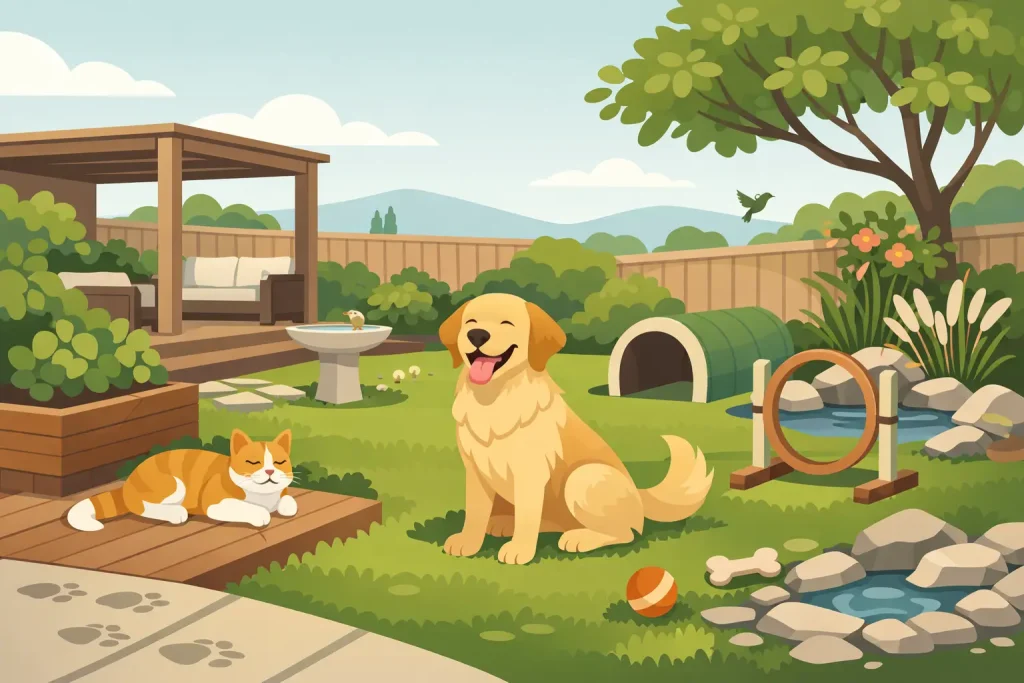
A backyard can look polished in the morning and be covered in muddy paw prints by noon. That does not mean homeowners have to choose between a beautiful landscape and a yard their dog can enjoy. Well-planned pet friendly backyard landscaping accounts for how animals actually move, dig, rest, and play, then uses the right grading, materials, and plant choices to keep the space functional through every season.
For Macomb-area homeowners, that planning also has to hold up to wet springs, summer heat, freeze-thaw cycles, and the wear that comes with an active family. The best results are rarely about adding more landscape features. They come from placing durable features in the right locations and solving drainage and traffic issues before they damage the lawn.
Start With Your Pet’s Real Backyard Habits
Before choosing pavers, mulch, or shrubs, observe where your pet spends time. Most dogs establish predictable routes along fence lines, between the back door and a favorite spot, and around the perimeter of a patio or deck. Those repeated paths are often where turf thins out first.
Rather than fighting those habits with replacement sod every year, build around them. A compacted gravel path, natural stone walkway, or properly installed paver route can give your dog a clear travel lane while protecting the lawn. The best material depends on the pet and the property. Small, smooth gravel may work for some dogs but can be uncomfortable for sensitive paws or easily scattered into planting beds. Pavers create a more stable surface, although they require proper base preparation and drainage to prevent shifting.
Dogs that like to patrol a fence may benefit from a narrow perimeter run made with turf, pavers, or durable ground cover. If privacy is the goal, a layered planting plan can soften the fence line without putting delicate shrubs directly in the path of an energetic pet.
Build Pet Friendly Backyard Landscaping From the Ground Up
A durable backyard begins below the surface. Poor grading can create puddles where pets run, turn low spots into muddy areas, and stress turf or planting beds. It can also lead to water collecting near the home’s foundation. A yard may look level while still directing water the wrong way.
Professional grading identifies how water moves across the property and creates a plan to manage it. Depending on the site, that may include reshaping the lawn, installing drainage, extending downspouts, or using permeable surfaces in selected areas. The right solution depends on the soil, existing elevations, and where the water needs to go. Simply adding mulch or new sod over a wet area may improve appearances briefly, but it does not correct the cause.
Irrigation matters, too. Areas used heavily by pets often need a different watering approach than ornamental beds. Overwatering creates soft soil and encourages muddy paws, while underwatering leaves grass thin and vulnerable to wear. A properly adjusted irrigation system helps turf recover without wasting water or creating constantly saturated ground.
Choose surfaces for traction, comfort, and cleanup
Hardscape surfaces are especially useful near doors, gates, and outdoor living areas. They reduce mud brought into the home and give pets a firm place to wait, dry off, or relax. Textured pavers, brushed concrete, and natural stone can provide dependable footing when designed with the proper slope.
Avoid choosing a surface based on appearance alone. Some materials absorb and hold heat in direct sun, while others can become slippery with algae or ice if drainage is poor. A professional installer can recommend material and layout options that fit the amount of shade, pet traffic, and maintenance the area will receive.
Artificial turf is another option for designated dog runs and small high-traffic spaces. It can reduce mud and eliminate mowing in that zone, but it is not maintenance-free. Pet waste must be removed promptly, odor control requires regular care, and the base must drain correctly. It is often most effective as part of a larger yard plan rather than a replacement for every natural lawn area.
Select Plants With Safety and Durability in Mind
Plant selection should consider more than color and bloom time. Pets may chew leaves, dig around roots, or brush against plants while running through the yard. Homeowners should verify that new plants are appropriate for their household, particularly if their pets are known to eat vegetation. When there is any question about plant toxicity, confirm the choice with a veterinarian or a reliable pet-safety resource before installation.
The placement of plants is just as important as the variety. Fragile perennials and newly planted shrubs need protection from heavy traffic while they establish. Raised beds, low retaining walls, decorative edging, and thoughtfully placed boulders can define garden areas without making the backyard feel closed off.
For a lower-maintenance layout, place tough, established plantings along areas where dogs pass nearby and reserve delicate flowers for beds closer to the patio, front entry, or other protected locations. Mulch helps retain moisture and gives beds a finished appearance, but it should be selected carefully and maintained. Keep mulch contained with edging, avoid large piles near the home, and replace or refresh it as needed so it does not become a digging target or spread into the lawn.
Give Pets a Purposeful Play and Rest Zone
A yard works better when it gives pets a place to do what they naturally want to do. A shaded corner can become a resting area. An open lawn section can support fetch and family play. A designated digging spot, filled with loose soil or sand and reinforced through training, may save the rest of the landscape from becoming the preferred excavation site.
Shade deserves special attention. Mature trees, pergolas, and covered outdoor living structures can make the backyard more comfortable for people and pets during hot weather. The location should still allow airflow and avoid creating a damp, worn-out area beneath the canopy. If a pet spends long periods outdoors, access to fresh water and shelter should always be part of the plan.
Fencing should be evaluated at the same time as landscaping. Gaps beneath gates, loose boards, weak latches, and climbable features can create safety concerns. Plantings can improve privacy, but they should not block sight lines needed to monitor children and pets or make gates difficult to access.
Make Maintenance Part of the Design
The most attractive pet-friendly yards are not designed as one-time projects. They are designed to be maintained. Grass in high-use areas may need overseeding, targeted fertilization, aeration, and occasional repair. Beds need seasonal cleanup, pruning, mulch renewal, and weed control. Pavers and retaining walls should be inspected for settling, joint loss, or drainage issues before small concerns become larger repairs.
A practical maintenance plan saves homeowners from juggling separate lawn, landscape, irrigation, and hardscape contractors. Reeser Outdoor can help homeowners assess existing trouble spots, develop a clear design and installation scope, and provide ongoing care after the project is complete. That approach is especially valuable when muddy areas, drainage concerns, worn turf, and outdated landscaping are all connected.
Plan for the Yard You Will Use, Not the Photo You Saw
A backyard should support everyday life: the dog racing toward the fence, kids coming in from the lawn, guests gathering around the patio, and spring rain draining away from the house. That may mean choosing a slightly wider walkway, reducing the size of a fussy planting bed, or investing in drainage before installing new sod.
The right pet-friendly design does not hide the realities of an active yard. It makes room for them, so your outdoor space stays safer, cleaner, and more enjoyable long after installation day.