
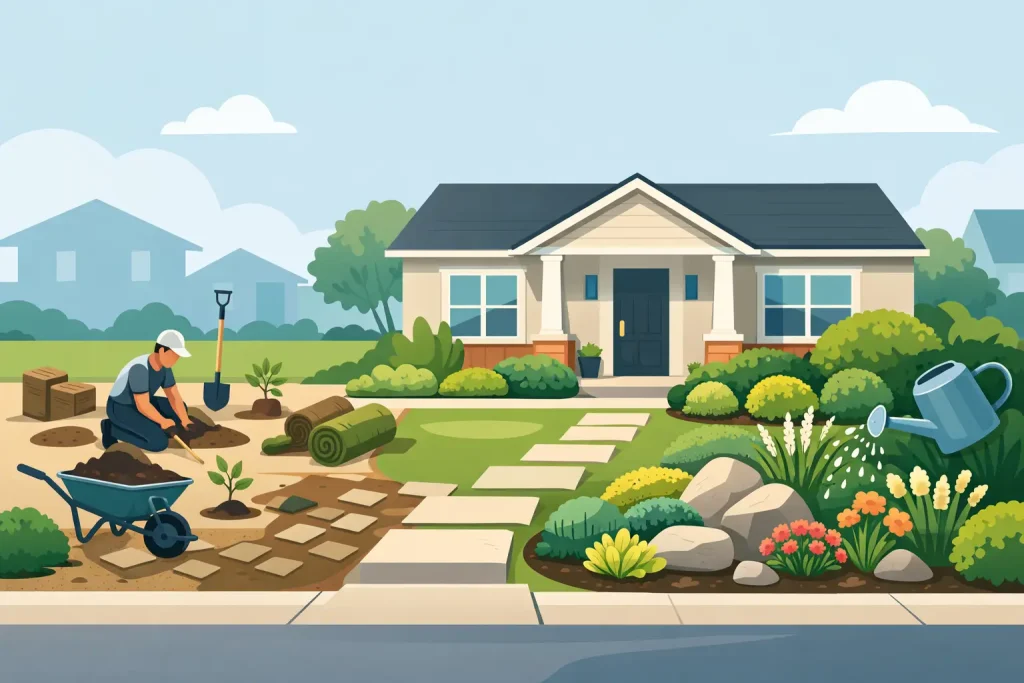
A front yard landscape renovation is often prompted by a familiar moment: you pull into the driveway, notice overgrown shrubs, thin lawn, uneven edging, or water pooling near the house, and realize the front of your property no longer reflects the care you put into your home. The answer is not always more mulch or a few replacement plants. A lasting improvement starts with a plan that addresses appearance, function, and the work required to keep it looking good.
For homeowners in Macomb and nearby communities, front-yard projects also need to stand up to Michigan weather. Heavy rain, freeze-thaw cycles, compacted soil, summer heat, and snowplow traffic can all affect plant health, drainage, and hardscape materials. Planning for those conditions at the beginning helps prevent expensive corrections later.
Start With the Problems You Want to Solve
A renovation should have a clear purpose beyond making the yard look newer. Walk the property from the street to the front door and identify what is not working. Maybe guests cannot see the walkway at night. Maybe mature shrubs cover the windows, or a low spot holds water after every storm. Perhaps the front entry lacks definition, the lawn is difficult to mow, or the beds need constant weeding to look presentable.
These details influence the scope of work. A landscaping project centered on curb appeal may focus on bed shape, plant layers, lighting, and fresh edging. A project with drainage concerns may require grading adjustments, downspout extensions, drainage solutions, or plant selections that can tolerate moisture. When infrastructure is ignored in favor of a quick cosmetic update, the new landscape can struggle from the first season.
It also helps to consider how the front yard needs to function. Families may need a wider walk from the driveway, safer steps, or a more durable path for daily foot traffic. Homeowners preparing to sell may prioritize a clean, balanced design with healthy lawn areas and a welcoming entry. There is no single right scope. The best plan reflects how you use the property and how much ongoing maintenance you want to handle.
Build the Front Yard Landscape Renovation From the Ground Up
The work beneath the finished surface matters as much as the visible design. Before installing plants, stone, or sod, a professional should evaluate grading, drainage patterns, existing soil, irrigation coverage, and the condition of any retaining walls or walkways.
Grade and Drainage Come First
Water should move away from the foundation and avoid collecting in planting beds, lawn depressions, and near hardscape edges. A small grading problem can create muddy turf, washed-out mulch, damaged roots, and moisture concerns around the home.
Correcting drainage may mean reshaping part of the yard, installing a drainage system, redirecting downspouts, or selecting a better location for a bed. The appropriate solution depends on where the water originates and where it can safely discharge. Adding soil without a drainage plan can simply move the problem somewhere else.
Protect the Lawn and Irrigation System
Renovation work often affects the surrounding lawn. Equipment access, excavation, and new bed lines can disturb turf, so restoration should be included in the project scope rather than treated as an afterthought. If the lawn is thin or uneven, it may be more efficient to address soil preparation, seeding, or sod installation as part of the larger project.
Irrigation deserves the same attention. Existing sprinkler heads may be blocked by new shrubs, miss redesigned beds, or spray sidewalks and driveways. Adjusting zones and coverage after the layout is finalized supports healthier plants and reduces water waste. A well-designed system should water the landscape, not the pavement.
Choose Materials That Fit the Home and the Maintenance Plan
Front-yard materials should complement the house while performing well through changing seasons. Natural stone, pavers, brick, mulch, decorative gravel, and landscape edging all create a different look and require different levels of care.
For example, a paver walkway can give an entry a finished, substantial appearance and can be repaired in sections if needed. It also requires proper excavation, base preparation, compaction, and edge restraint to avoid shifting. Decorative gravel can be practical in select areas, but it is not always ideal near a heavily used front door or in beds where fallen leaves will be difficult to remove.
Mulch remains a strong choice for many planting beds because it helps retain moisture, moderates soil temperature, and gives the landscape a clean appearance. It needs periodic replenishment, however, and it should not be piled against siding, tree trunks, or shrub stems. Stone mulch lasts longer but can make future planting changes more difficult and may hold heat around plants.
The right choice depends on the design, site conditions, budget, and how much seasonal upkeep you prefer. Transparent, line-item proposals make these trade-offs easier to understand before work begins.
Design Planting Beds for Every Season
A successful front yard does not rely on one row of identical shrubs. Layered plantings create depth and help the property look intentional from the street. A typical layout may include lower plants along walkways, medium shrubs to fill the bed, and carefully placed ornamental trees or taller evergreens for structure.
Plant selection should account for sun exposure, mature size, soil moisture, and visibility. Shrubs that look appropriately sized at installation can outgrow windows, walkways, and entry features within a few years. Giving plants enough room from the start reduces future pruning and replacement costs.
Aim for seasonal interest, but keep it practical. Evergreens provide winter structure. Flowering shrubs and perennials bring color during the growing season. Ornamental grasses, textured foliage, and plants with strong fall color keep the design from looking flat after spring blooms fade. Too many varieties can make a front bed feel busy, while too few can leave it looking sparse. A balanced palette is easier to maintain and usually reads better from the curb.
Michigan winters also call for realistic expectations. Deer pressure, road salt, snow storage, and winter sun can affect certain plants. A dependable contractor can recommend choices suited to the property rather than selecting plants based only on a photo.
Make the Entry Safer and More Welcoming
The front entry is where landscaping and hardscaping meet. A worn path, narrow walkway, unstable step, or poorly lit approach can make an otherwise attractive home feel unfinished. Improvements here often deliver the most immediate daily benefit.
Consider whether the walk provides enough room for two people, whether steps drain properly, and whether the transition from driveway to entry is clear. Retaining walls may be needed where elevation changes create erosion or unsafe slopes. When properly built, they can add definition while supporting the grade behind them.
Landscape lighting is another practical upgrade. Low-voltage fixtures can highlight a walkway, front entry, specimen tree, or house number without turning the yard into a bright display. The goal is useful visibility and subtle curb appeal. Fixtures should be positioned to reduce glare and remain accessible for service.
Plan for Care Before Installation Begins
Even the best-installed landscape needs attention. Plants need watering while roots establish, beds need weeding and edging, and mulch needs refreshing. Lawn areas benefit from consistent mowing, fertilization, and seasonal care. The question is not whether maintenance will be required, but whether the property has been designed around a realistic maintenance routine.
This is where working with one accountable team can simplify the process. Reeser Outdoor can coordinate design, installation, lawn care, irrigation attention, and seasonal maintenance so the people maintaining the property understand how it was built. That continuity can prevent common issues, such as pruning a shrub at the wrong time or mowing over sprinkler heads after a renovation.
Ask about installation timing, material availability, site access, cleanup, warranty coverage, and what the landscape will need during its first year. Clear answers are a sign that the contractor has considered the full project, not just installation day.
A front yard should make arriving home feel better, not add another weekend project to your list. When the plan respects drainage, plant maturity, daily use, and ongoing care, the finished space can stay welcoming long after the installation crew has left.