
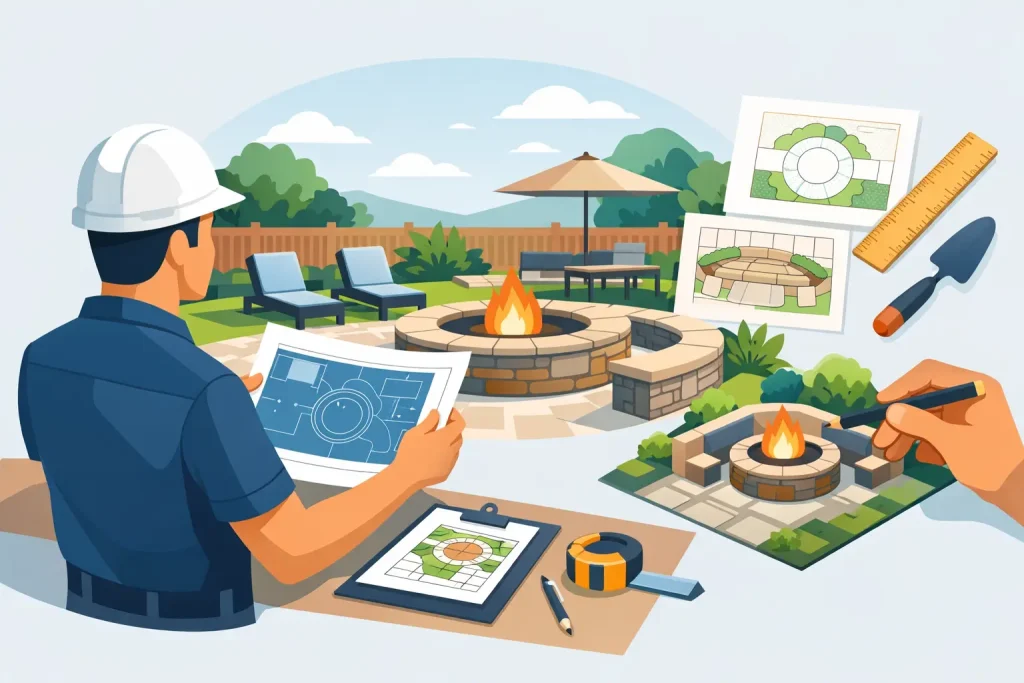
A fire pit can turn an underused lawn into the place where family dinners linger, neighbors gather, and cool Michigan evenings feel worth staying outside for. But a permanent fire feature is not simply a circle of stone with a burner in the middle. A qualified backyard fire pit contractor looks at the full property first: where people will sit, how water moves through the yard, what materials complement the home, and how the feature can be used safely for years.
For homeowners in Macomb and nearby communities, the best results come from treating the fire pit as part of an outdoor living space, not a standalone purchase. That means planning the patio, access, utilities, drainage, and landscaping together before construction begins.
What a Backyard Fire Pit Contractor Should Evaluate First
The first conversation should be about how your family will use the space. A small wood-burning fire pit may be ideal for occasional weekend fires, while a built-in gas fire feature may make more sense for homeowners who want clean, convenient flames at the push of a button. Neither option is automatically better. The right choice depends on your habits, available space, budget, and local requirements.
A contractor should also assess the location carefully. Fire features need appropriate clearance from the house, deck, fence, trees, rooflines, and other combustible materials. The exact requirements can vary by municipality, fuel type, and product specifications, so a professional should verify the applicable rules before the project is finalized.
Site conditions matter just as much as safety clearances. A low spot in the yard may be a poor location for a patio and fire pit, even if it has the best view. Water that pools around the seating area can shift pavers, damage a stone base, create muddy edges, and make the area uncomfortable after rain. Proper grading, a compacted base, and drainage planning protect the investment long after the installation crew leaves.
Space for Seating Changes the Design
Many homeowners choose a fire pit size based on the feature itself and forget about the people around it. A 36-inch or 48-inch fire bowl may fit easily in a patio layout, but chairs need room to pull out, guests need a clear walking path, and the fire needs a comfortable viewing distance.
A contractor should lay out the entire gathering area, including furniture placement and paths from the house. This is especially helpful when a patio is near a back door, pool, grill station, or existing landscape bed. A fire pit should invite people to gather without turning every trip in and out of the home into an obstacle course.
Gas and Wood Fire Pits Have Different Requirements
Wood-burning fire pits offer the familiar crackle, scent, and ritual of building a fire. They can be less complicated from a utility standpoint, although the site still needs a stable, noncombustible surface and safe clearances. Homeowners should also consider ash cleanup, wood storage, smoke direction, and whether local restrictions affect recreational fires.
Gas fire pits provide a more controlled experience. There is no wood to haul, no ash to remove, and no need to wait for logs to catch. With a properly installed ignition system, a gas feature is often easier to enjoy on a weeknight or during a brief gathering. The trade-off is that the project requires correct gas-line sizing, secure connections, approved components, and coordination with the appropriate licensed professionals.
Natural gas is often practical when a service line is accessible and the fire feature will stay in one location. Propane can work well where natural gas is unavailable, but the tank location and access for refilling need to be planned. A responsible contractor will explain these details upfront rather than treating fuel selection as an afterthought.
Materials Should Match the Project and the Climate
A fire pit is exposed to heat, freeze-thaw cycles, rain, snow, and seasonal temperature swings. Materials that look good in a showroom are not always the right fit for an outdoor fire feature in Michigan.
Concrete pavers, natural stone, manufactured wall block, heat-rated inserts, and fire-rated liners all serve different purposes. The visible finish is only one layer of the construction. A durable installation also depends on what is underneath: excavation to the right depth, compacted aggregate, proper bedding material, edge restraint where needed, and a level foundation.
For a built-in masonry fire pit, the firebox and surrounding structure must be designed to handle heat correctly. Standard landscape block should not be assumed to be safe for direct flame exposure without the proper insert or liner. This is one area where cutting corners may not be visible at first, but can lead to cracking, movement, or safety concerns over time.
Color and texture deserve attention, too. A fire pit should feel connected to the rest of the property. Matching or complementing the home’s brick, siding, existing patio, retaining walls, and planting beds creates a finished appearance. A good design does not need every material to be identical. It needs them to work together intentionally.
Why the Patio and Fire Pit Should Be Planned Together
It is possible to add a fire pit to an existing patio, but it is not always the most efficient route. If the patio is undersized, poorly drained, or already showing movement, adding a heavy fire feature may compound the problem. In some cases, expanding or rebuilding part of the hardscape creates a better long-term result than forcing a new feature into a layout that does not support it.
Planning the whole area at once also makes infrastructure easier to manage. Gas lines, electrical connections for lighting, drainage solutions, irrigation adjustments, and landscape borders can be addressed before the finished surface is installed. This reduces the chance of removing pavers later to correct something that should have been handled during construction.
A thoughtful design can also account for wind and privacy. If prevailing winds regularly push smoke toward the house or a neighbor’s patio, a wood-burning pit may be frustrating to use. Strategic planting, a pergola, a privacy screen, or a different fire feature location may improve comfort without closing in the yard.
Questions to Ask Before Hiring a Fire Pit Contractor
Homeowners deserve clear answers before construction starts. Ask whether the contractor is licensed and insured, who will manage the work on site, and whether the proposal includes excavation, base preparation, materials, utility coordination, cleanup, and restoration of surrounding lawn or beds.
It is also smart to ask how changes will be handled. Unexpected site conditions can happen, particularly when a project involves buried utilities, poor soil, or drainage concerns. A dependable contractor explains the original scope in writing and communicates promptly if conditions require an adjustment. A vague price with no line-item detail can make it difficult to compare proposals or understand what is actually included.
Timeline discussions should be practical. Weather, material availability, permit requirements, and utility work can affect scheduling. The right contractor will not promise an unrealistic completion date simply to win the job. Instead, they should provide a realistic sequence of work and keep you informed as the project moves forward.
Maintenance Keeps the Space Ready to Use
Even the best-built fire pit benefits from routine care. Keep leaves, mulch, and other debris away from the fire area. For gas systems, follow manufacturer guidance for covering the burner and inspecting components. For wood-burning pits, remove cooled ash regularly and check the interior liner for signs of wear.
The surrounding patio needs attention as well. Seasonal cleaning, prompt removal of stains, and occasional joint-sand maintenance can help preserve the surface. Nearby trees and shrubs should be maintained so branches, roots, and overgrown planting beds do not interfere with the seating area or create added fire risk.
Reeser Outdoor approaches fire features as one part of a complete outdoor property plan. That means the same team can consider the patio beneath the feature, drainage around it, plantings that frame it, and the ongoing care that keeps the space looking finished.
The best fire pit is not necessarily the largest one or the one with the most elaborate stonework. It is the one that fits your property, works safely with how you entertain, and is built on a foundation that will hold up through every season. When those details are handled before the first paver is set, your backyard becomes much easier to enjoy.