
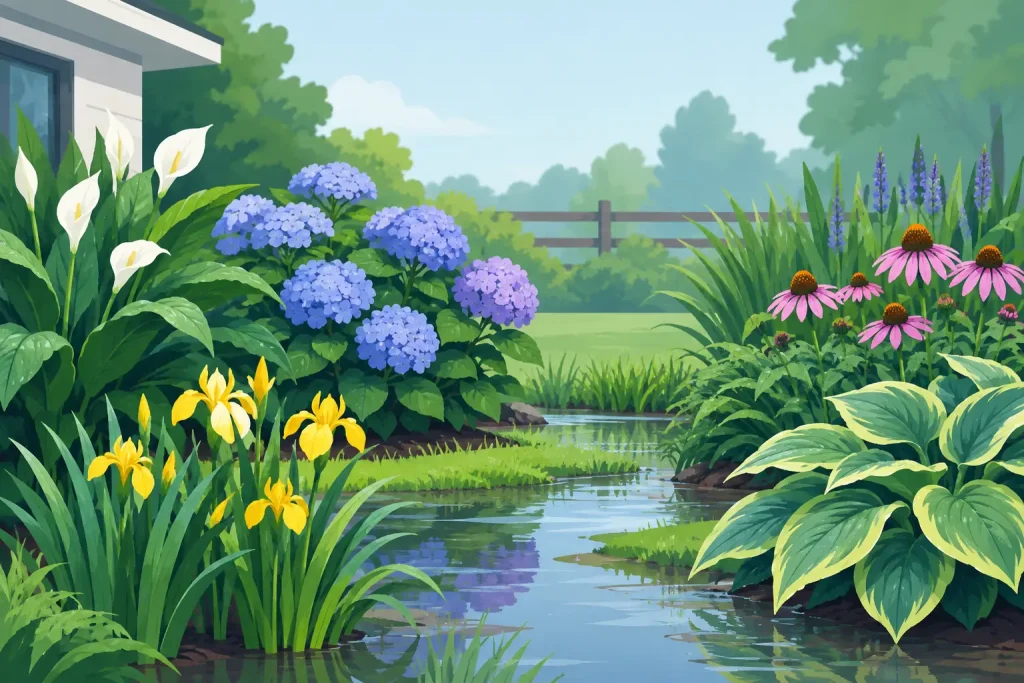
A wet corner of the yard can turn mowing into a mess, leave turf thin, and make every heavy rain feel like a new landscaping problem. The right solution is not always more grass. Choosing the best plants for wet yards can turn a soggy low spot, downspout outlet, or rain garden into a healthy landscape feature that looks intentional throughout the season.
For homeowners in Macomb and nearby communities, plant selection should begin with the cause of the moisture. Some areas stay consistently damp but drain within a day or two. Others hold standing water after storms, remain wet through spring, or have compacted soil that prevents water from moving properly. Those conditions call for different plants – and, in many cases, a broader drainage or grading plan.
Start With the Wetness, Not the Plant
Before planting, observe the area after a normal rainfall. Note how long water remains on the surface, whether the ground stays soft between rains, and how much sun the location receives. A plant that tolerates moist soil may struggle if its roots are submerged for days. Likewise, a plant labeled for wet ground may not thrive in deep shade or blazing afternoon sun.
A wet yard can also signal a site issue that plants alone will not solve. Water flowing toward the foundation, pooling beside a patio, or washing soil from a slope needs professional attention. Proper grading, drainage, downspout management, and, when appropriate, a rain garden can protect the property while creating better growing conditions.
The goal is to match plants to the moisture level rather than forcing the soil to support plants that prefer dry, well-drained ground. That approach reduces replacement costs, limits bare patches, and makes maintenance much easier.
The Best Plants for Wet Yards in Michigan Landscapes
The plants below are practical choices for many southeastern Michigan properties. Most handle consistently moist soil, but their tolerance for standing water, shade, and sun varies. Mixing several plant types creates a fuller look and helps the planting perform across changing weather conditions.
1. Swamp Milkweed
Swamp milkweed is a strong option for sunny locations with wet or average soil. Its pink-to-mauve summer flowers add color without looking overly formal, and it supports pollinators, including monarch butterflies. It grows upright, typically reaching three to five feet, so it works well toward the back of a rain garden or planted in groups along a low area.
Unlike many moisture-loving plants, swamp milkweed can also handle periods when the soil is not saturated. That flexibility makes it useful in yards where water levels change from season to season.
2. Blue Flag Iris
Blue flag iris brings a clean, structured shape to wet areas. Its sword-like foliage stays attractive after its blue-violet spring blooms fade, and it is well suited to sunny or partly sunny ground that remains damp. It is especially effective near the edge of a rain garden, pondless drainage feature, or naturalized low spot.
Give iris enough room for airflow and avoid burying the crown too deeply. Good installation matters here, since crowded or poorly placed plants can lose their shape and flower less reliably over time.
3. Cardinal Flower
For a bold burst of late-summer color, cardinal flower is difficult to beat. Its vivid red blooms stand out in moist soil and attract hummingbirds. It performs best in partial sun or filtered light, making it a good choice where a wet area receives morning sun but is protected later in the day.
Cardinal flower is shorter-lived than some landscape perennials, so it is best used as part of a mixed planting rather than as the only plant in the bed. Allowing a few plants to reseed can help keep the display going.
4. Joe-Pye Weed
Despite the name, Joe-Pye weed is an attractive native perennial, not a nuisance weed. It produces large, dusty-pink flower clusters in late summer and can reach five to seven feet tall. That size makes it ideal for the rear of a wet, sunny border where homeowners want privacy, screening, or a more natural planting style.
It needs space and can look out of scale in a small foundation bed. In the right location, however, it delivers reliable height, texture, and seasonal interest with relatively little fuss.
5. Sweet Flag
Sweet flag is a grass-like perennial with arching foliage that softens the edge of wetter planting areas. Varieties with green-and-gold striped leaves can brighten shaded or partially shaded spots even when flowers are not the main feature. It stays lower than many wet-soil perennials, generally one to three feet tall.
Use sweet flag near paths, bed edges, or transitions between lawn and a rain garden. It offers a tidy appearance while still tolerating the conditions that make traditional edging plants fail.
6. Sedge
Sedges are one of the most useful options for damp yards because they provide the fine texture of ornamental grass without needing dry soil. Many species tolerate shade, moisture, and occasional flooding, although the right species depends on the site. Pennsylvania sedge is often used in shaded settings, while other native sedges are better suited to sunny wet ground.
Sedge can work as a lawn alternative in areas that are too wet or shaded for conventional turf. It is not meant for heavy foot traffic, but it can reduce mowing and create a more dependable green groundcover in difficult locations.
7. Switchgrass
Switchgrass is a native ornamental grass that handles moist soils well once established, though it does not require constantly saturated ground. Its upright form holds up through summer, develops warm fall color, and provides winter structure when many perennials have died back.
Plant it in full sun where a wet yard needs vertical definition. It is a useful counterpoint to broader-leaved plants like iris, hosta, and ligularia. Leave room between plants so mature clumps can develop without crowding nearby perennials.
8. Winterberry Holly
Winterberry holly is a deciduous shrub that earns its place in wet landscapes with bright red berries that persist into winter. It handles moist to wet soil and gives homeowners color after flowering plants have faded. Because it loses its leaves, it does not provide year-round screening like an evergreen, but its branches and berries still add seasonal character.
For berries, plant both male and female winterberry varieties in compatible bloom timing. This is an easy detail to miss when selecting shrubs at random, and it has a major impact on the final result.
9. Red Twig Dogwood
Red twig dogwood is a practical shrub for damp ground, especially where erosion control or winter interest is needed. Its red stems become most noticeable after leaves drop, adding welcome color against snow and gray winter skies. It grows well in sun to partial shade and is often used in mass plantings along drainage areas.
It can spread and become dense over time. Periodic pruning of older stems keeps the shrub looking cleaner and encourages the brightest stem color.
10. Buttonbush
Buttonbush is a native shrub with round, white flower clusters that resemble small pincushions. It thrives in wet ground and can even tolerate shallow standing water, making it one of the better choices for the lowest section of a rain garden. Pollinators are drawn to its summer flowers, while its rounded form gives a planting bed a softer, natural look.
It is best in full sun to partial shade and typically reaches six to12 feet if left unpruned. Choose the planting location with its mature size in mind.
11. River Birch
When a wet area needs a small tree rather than another shrub or perennial, river birch is worth considering. It tolerates moist soil better than many landscape trees and offers peeling bark that remains attractive through winter. Multi-stem forms can make a strong focal point in larger yards.
River birch is not a solution for soil that stays underwater for extended periods, and it needs adequate space away from structures, utilities, and hardscape. A professional site review can help determine whether a tree is appropriate or whether drainage improvements should come first.
12. Hosta
Hostas are a dependable choice for moist, shaded areas where flowers are less important than foliage. Their broad leaves fill in bare ground beneath trees or beside the house, and they pair well with ferns, sedges, and sweet flag. They prefer moisture but do not want prolonged standing water around their crowns.
Deer and slugs can be concerns, depending on the property. If wildlife pressure is high, combine hostas with more resistant plants rather than relying on a large hosta-only bed.
Design a Wet Area to Look Intentional
The most successful wet-yard planting is layered. Taller shrubs, grasses, and flowering perennials belong toward the back or center of the area, while lower plants such as sedges and sweet flag create a finished edge. Repeating a few reliable species looks more polished than installing one of everything.
A rain garden should also be designed by moisture zone. The center receives the most water and needs plants that tolerate occasional pooling, such as buttonbush, blue flag iris, and certain sedges. The upper edges drain faster and can support plants like switchgrass, swamp milkweed, and red twig dogwood. This transition prevents plants from being placed where they are either too wet or too dry.
Mulch helps retain soil moisture and suppress weeds, but avoid piling it against stems or plant crowns. In consistently wet locations, use mulch carefully and keep the layer light enough that it does not hold unnecessary moisture around the base of plants.
When Planting Is Not Enough
Healthy plants can improve a wet area, but they should not be used to hide drainage failures. If water is entering the basement, settling near the foundation, crossing a walkway, or leaving the lawn unusable for long periods, the property may need grading adjustments, drainage installation, or downspout corrections before landscaping begins.
Reeser Outdoor can evaluate the full picture – how water moves across the property, where it collects, and how a planting plan can work alongside practical drainage improvements. That coordinated approach helps homeowners avoid installing a beautiful bed only to redo it after the next major storm.
A wet part of the yard does not have to remain a muddy compromise. With plants chosen for the actual site conditions and a plan for managing water correctly, it can become one of the most distinctive and dependable areas of the landscape.