
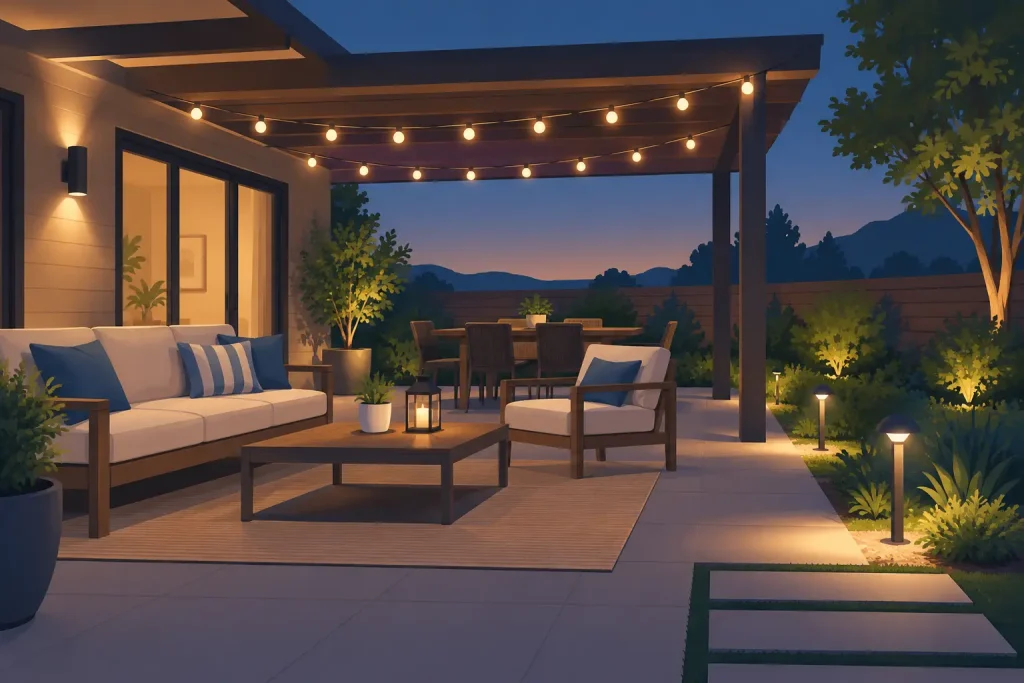
A patio can look finished in daylight and still feel unusable after dark. The best patio lighting options solve that problem without turning the backyard into a floodlit parking lot. The goal is practical: make steps, changes in elevation, dining areas, and routes to the house easy to see, then add enough warmth to make people want to stay outside.
For homeowners in Macomb and nearby communities, the right plan also needs to stand up to changing Michigan weather. Fixtures, wire connections, mounting locations, and placement all affect how well outdoor lighting performs through rain, snow, freezing temperatures, and regular use.
Start With How You Use the Patio
Lighting should follow the patio’s job. A space used for family dinners needs comfortable table lighting and a safe route to the door. A fire feature or lounge area benefits from lower, softer light that supports conversation without competing with the flames. If the patio connects to a pool, outdoor kitchen, detached garage, or garden path, those transitions deserve special attention.
Before choosing fixtures, walk the property at dusk. Notice where the last natural light disappears, where guests may step off the patio, and which areas feel disconnected from the house. This simple exercise often reveals that the brightest fixture is not the answer. Better placement is.
A layered plan usually works best. It combines task lighting for cooking or dining, safety lighting for steps and walkways, and accent lighting for walls, planting beds, pergolas, or architectural features. Each layer can be modest on its own. Together, they make the patio functional and inviting.
Best Patio Lighting Options for Everyday Use
Low-voltage path and area lights
Low-voltage landscape lighting is one of the most dependable choices for paths, patio edges, planting beds, and transitions between outdoor areas. These fixtures run from a transformer rather than standard household voltage, making them a practical option for professionally designed landscape lighting systems.
Path lights should illuminate the walking surface, not shine directly into someone’s eyes. Spacing matters more than fixture quantity. Too few can leave dark gaps, while too many create a runway effect. In most patio designs, a soft, overlapping pool of light is more comfortable than a line of bright dots.
Area lights also help define the edge of a patio near landscaping. They are especially useful where pavers meet a lawn, bed, or change in grade. Choose durable metal fixtures and quality LED lamps rather than lightweight solar stakes that can shift, fade, or stop working after a season or two.
Step and hardscape lights
Built-in step lights are among the most useful upgrades for patios with stairs, seat walls, retaining walls, or raised sections. They cast light downward where feet land, improving visibility without filling the entire patio with glare.
Hardscape lights can be installed beneath wall caps, along the underside of bench seating, or within vertical risers. They create a clean, finished appearance because the fixture itself is often barely visible. For families with children, older guests, or frequent outdoor gatherings, this type of lighting is as much a safety decision as a design choice.
The installation needs careful planning. Wiring should be protected before pavers, caps, or masonry are set in place, and fixtures must be positioned to avoid water collection and damage from snow removal. Retrofitting is possible, but integrating lighting during a patio or retaining wall project is usually more efficient and visually refined.
String lights for casual overhead warmth
String lights are a popular option because they quickly make an outdoor space feel more relaxed. They work well across a pergola, beneath a covered patio roof, or between sturdy mounting points around a seating area. Warm white bulbs generally create the most inviting effect for everyday entertaining.
Their trade-off is that they are decorative more than directional. String lights may brighten a dining table, but they will not reliably light stairs or a dark path to the house. They also need a thoughtful mounting plan. Attaching them to weak fence panels, small tree branches, or gutters can lead to sagging lines, damaged surfaces, and unnecessary maintenance.
For a clean installation, use properly anchored support points and outdoor-rated components. If a pergola is part of the patio design, plan the wiring and attachment locations before construction is complete.
Downlighting from trees, pergolas, and structures
Downlighting creates the natural effect of moonlight from above. Fixtures mounted in mature trees, pergola beams, covered patio ceilings, or roof structures can gently light a seating area, walkway, or dining space. It is often a better choice than placing a bright fixture at eye level.
This approach works best when there is a solid mounting location and a clear purpose for the light below. A carefully aimed downlight can make a patio safer while preserving the evening atmosphere. Poorly aimed fixtures, however, can create harsh shadows, glare through windows, or a spotlight effect that feels uncomfortable.
Tree-mounted lighting requires ongoing care. Trees grow, branches move, and the fixture must be installed without compromising the tree’s health. A professional can select appropriate mounting methods, conceal wiring where possible, and revisit aiming as the landscape matures.
Wall sconces and exterior door lighting
Every patio needs dependable lighting at doors. Wall sconces, porch lights, and properly placed fixtures near an outdoor kitchen entrance provide useful illumination for carrying food, finding keys, and moving between the house and patio.
This is where many homeowners overcorrect by installing a very bright bulb. High-output door lighting can wash out the patio and make accent lighting disappear. A warmer LED bulb with controlled light distribution is often more comfortable. Consider fixtures with dusk-to-dawn sensors or timers for frequently used entrances, while keeping manual control available for entertaining.
Uplighting for landscape and architecture
Uplights add depth after sunset by highlighting specimen trees, textured walls, ornamental grasses, stonework, or the posts of a pergola. They are not meant to light a walking path on their own. Instead, they provide the visual structure that keeps a backyard from becoming a dark void beyond the patio.
Use restraint here. A few well-placed uplights can make a property feel polished; lighting every tree and shrub can look busy. The best results come from selecting features with shape, texture, or seasonal interest and aiming fixtures to avoid shining into windows or neighboring yards.
Solar, Plug-In, or Wired Lighting?
Solar lights can be useful for a temporary accent or a small area that receives consistent sun. They are easy to install and require no trenching. However, their output and runtime depend on sunlight, battery condition, and winter weather. In shaded yards or during shorter days, they are not dependable enough for critical safety areas.
Plug-in lighting offers a middle ground for some pergolas, patios, and small projects. It can work well when an exterior outlet is conveniently located and cords can be safely managed. The limitations are visibility, trip hazards, and fewer options for a finished installation.
A wired low-voltage system costs more upfront, but it gives homeowners the most control over fixture placement, brightness, timing, and long-term expansion. It is often the best investment when lighting is part of a larger patio, landscape renovation, or outdoor living project. The system can be designed around existing irrigation, drainage, hardscape features, and planting plans rather than added as an afterthought.
Color Temperature, Controls, and Maintenance
For most residential patios, warm white light in the 2700K to 3000K range feels comfortable and complements natural stone, brick, wood, and landscaping. Cooler white light can make blue-gray hardscapes appear sharper, but it may also feel more commercial. Matching color temperature across fixtures prevents a patchwork appearance.
Controls should fit your routine. Timers and photocells are reliable choices for landscape lighting. Zoning allows you to keep safety lights on while turning decorative features on only when desired. Smart controls can be helpful, but they should not replace a system with solid wiring, weather-rated connections, and accessible service points.
Even quality lighting needs occasional attention. Fixtures may shift after freeze-thaw cycles, plants can block beams, and lenses collect debris. A seasonal inspection can catch exposed wire, loose mounts, dim lamps, and aiming issues before they become frustrating or unsafe.
Build Lighting Into the Plan, Not Onto the Patio Later
The most successful patio lighting feels intentional because it was considered alongside the patio layout, drainage, seating walls, pergola, kitchen, and landscape beds. At Reeser Outdoor, that coordination helps reduce surprises during installation and gives homeowners one team to manage the work from design through ongoing outdoor care.
If your patio currently goes dark the moment the sun sets, begin with the places people walk and gather most often. Once those areas are safely lit, a few carefully chosen accents can turn an ordinary backyard evening into time you will actually look forward to using.