
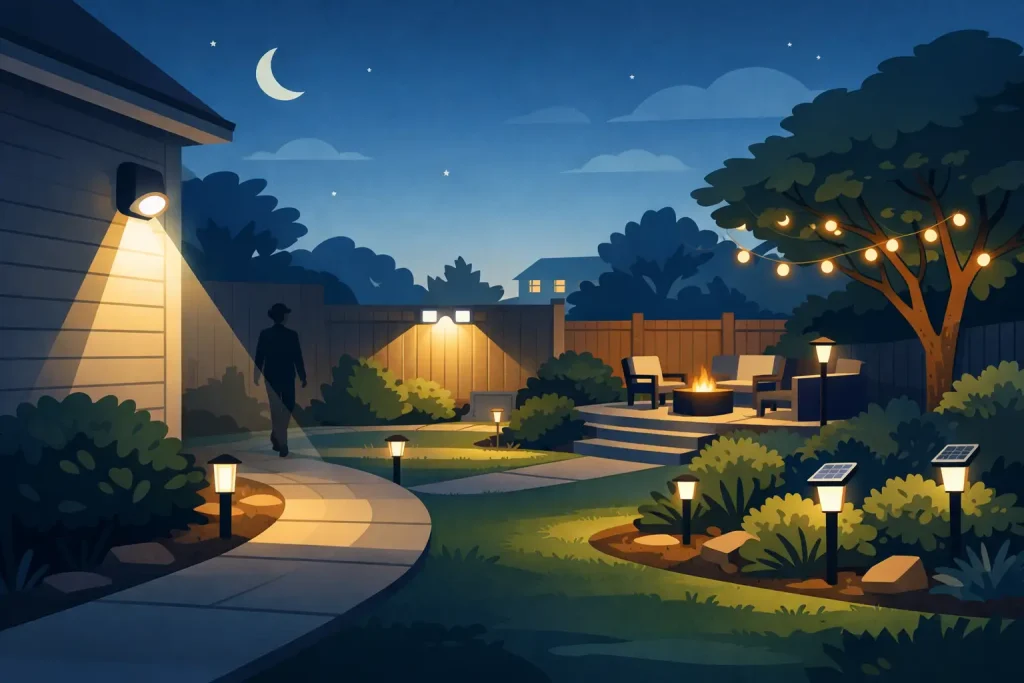
A dark front walk, shadowed steps, or patio with one harsh floodlight can make an otherwise well-kept property feel unfinished. The best outdoor lighting ideas solve practical problems first: helping people move safely, making outdoor living areas usable after sunset, and showing off the landscape features you invested in. The right plan also adds a warm, welcoming look without turning your yard into a bright, glaring display.
Start With a Lighting Plan, Not a Fixture
Outdoor lighting works best when it is planned in layers. A homeowner may be tempted to start by choosing decorative fixtures, but placement, beam direction, wiring routes, and control options have a much greater effect on the final result. Begin by walking the property after dark and noticing where you hesitate, where steps disappear, and which areas deserve attention.
Think about how your family actually uses the space. A front entry needs clear visibility for guests and deliveries. A side gate may need practical security lighting. A patio needs comfortable light that lets people eat, talk, and relax without squinting. Mature trees, stonework, and planting beds often need less light than homeowners expect, but benefit from carefully aimed fixtures.
A professional plan also accounts for underground utilities, drainage patterns, irrigation lines, and future landscape work. Installing a fixture where a trench, planting renovation, or retaining wall will soon be needed creates unnecessary rework. Planning the full property before installation keeps the system organized and easier to expand.
Best Outdoor Lighting Ideas for Paths and Entries
1. Light the walkway edges
Path lights are one of the most useful additions for a front walk, garden path, or route from the driveway to the backyard. Rather than creating a runway of evenly spaced fixtures, place them where the path changes direction, narrows, meets a step, or passes through a darker area. This gives visitors enough guidance while keeping the appearance natural.
Avoid placing fixtures too close together. Overcrowding creates pools of light and dark spots, wastes energy, and can make a small landscape bed look cluttered during the day. Warm white LEDs usually complement brick, natural stone, and most planting designs better than stark blue-white bulbs.
2. Make steps visible from every direction
Steps deserve their own lighting strategy. Low-profile step lights installed in a retaining wall, riser, or adjacent stonework can define each change in elevation without shining directly into a person’s eyes. This is especially valuable around patios, decks, porches, and sloped side yards where rain, leaves, or snow can make surfaces more hazardous.
For homes in Macomb and nearby communities, durable fixtures and proper installation matter. Freeze-thaw cycles can shift loosely installed materials, while winter snow removal can damage poorly placed lights. A contractor should set fixtures where they are protected from shovel edges, traffic, and routine maintenance.
3. Improve the front door without overlighting it
A pair of properly sized wall sconces beside the entry can make a front door easier to use and more inviting from the street. If the architecture does not allow side-mounted fixtures, a quality overhead fixture may be the better choice. The goal is even illumination around the lock, doorbell, and threshold, not a bright spotlight aimed at approaching guests.
Choose fixtures that suit the home’s style, then make sure their scale works with the door and siding. A small fixture beside a broad two-story entry can look lost. Oversized fixtures can overpower a modest porch. This is one of those details where a measured design recommendation can prevent an expensive mismatch.
Create an Outdoor Living Area People Want to Use
4. Use soft perimeter lighting on patios
Patio lighting should make the space feel comfortable, not commercial. Low-voltage fixtures tucked into planting beds, seat walls, or nearby landscape features create a soft perimeter that helps people move around safely. This is often more effective than a single high-output fixture mounted on the house.
If your patio includes a dining table, consider where light will fall when people are seated. Light aimed directly down from above can create sharp facial shadows and glare on glassware. Indirect lighting around the space, paired with a focused fixture where food is prepared or served, usually feels more relaxed.
5. Add lighting to pergolas and covered structures
Pergolas, pavilions, and covered patios give lighting a natural place to live. Recessed fixtures, discreet downlights, or carefully installed string lighting can extend the use of the space well into the evening. The right choice depends on how the structure is used.
For a dining-focused pavilion, dimmable downlights offer useful control. For a casual gathering area, warm string lights may provide more personality. Permanent lighting should be installed with weather-rated components and neat wire management. Hanging cords across beams may work temporarily, but they rarely provide the polished, long-term result homeowners want from a finished outdoor living project.
6. Highlight a fire feature safely
A fire pit or outdoor fireplace already provides visual warmth, but the surrounding area still needs low-level lighting. Seat walls, nearby paths, and steps should remain visible after the fire burns down. Keep fixtures out of direct heat and away from areas where chairs are likely to be moved.
The trade-off is brightness. Too much light competes with the fire and changes the atmosphere. A few well-placed, shielded fixtures make the space safer while allowing the fire feature to remain the focal point.
Use Landscape Lighting to Add Depth and Curb Appeal
7. Uplight mature trees selectively
A mature maple, ornamental tree, or multi-trunk specimen can become a striking nighttime feature with one or two carefully aimed uplights. The fixture should reveal the trunk structure and canopy, not blast light into neighboring windows or the street. Adjustable fixtures give more flexibility as branches grow and planting beds change.
Not every tree needs lighting. Choose the specimens that anchor the view from the home, the street, or the patio. A selective approach feels more refined and keeps the property from looking overly busy after dark.
8. Wash stone walls and textured surfaces
Natural stone retaining walls, brick facades, and architectural columns gain dimension when light grazes across their texture. This technique uses a fixture placed close enough to the surface to emphasize material detail without producing a harsh reflection. It works particularly well around front entries and outdoor kitchens.
Fixture placement needs to account for snow, mulch depth, and plant growth. A light hidden behind a shrub may look good on installation day but disappear after one growing season. Maintenance access is part of good design, not an afterthought.
9. Give water features a subtle glow
Pond edges, fountains, and bubbling features can look exceptional at night, but water and electricity require careful planning. Use fixtures specifically rated for wet locations, protect connections, and avoid aiming bright light directly at the water surface. The reflection can create glare instead of the calm effect you want.
A soft wash on surrounding stone, plants, or a nearby focal point often provides enough visual interest. If a water feature is visible from indoors, this restrained approach can make it feel like part of the landscape even after sunset.
Balance Security, Comfort, and Neighbor Consideration
10. Put motion lighting where it has a purpose
Motion-activated lighting is useful near side doors, garages, rear gates, and areas with limited visibility. It can discourage unwanted activity and make late-night arrivals easier. However, a high-output motion floodlight at the front of every house is rarely the best answer.
Aim security fixtures downward and adjust their sensitivity so passing cars, pets, or a neighbor walking by do not trigger them constantly. Shielded fixtures reduce light spill and keep the property considerate of nearby homes. Better placement is usually more valuable than simply choosing a brighter bulb.
11. Light the driveway and garage approach
Driveways benefit from lighting that helps drivers see edges, turns, and pedestrian routes. Wall-mounted garage lights, low fixtures near a curved drive, or subtle illumination at a transition to a walkway can all work well. The appropriate approach depends on the driveway length, available landscaping, and whether the area is used for parking, play, or winter snow storage.
Do not place ground fixtures where tires, plows, or snowblowers will regularly hit them. A practical installation accounts for the way the property is maintained in every season.
12. Use controls that fit your routine
Timers, photocells, dimmers, and app-based controls can make an outdoor lighting system easier to live with. A photocell can bring lights on at dusk, while a timer can turn decorative lighting off later in the evening. Dimming allows the same patio to feel brighter for a family meal and softer for a quiet night outside.
Smart controls are useful, but they are not required for every property. A dependable low-voltage system with a properly set timer may be the best fit for homeowners who prefer simple operation. What matters is that the system operates consistently without becoming another item on the household to-do list.
Choose Installation Quality Over Short-Term Convenience
Low-voltage landscape lighting is popular because it is energy-efficient, flexible, and well suited to paths, beds, patios, and focal landscaping. Yet the quality of the transformer, wire connections, fixture materials, and installation depth has a direct effect on performance. Cheap fixtures can fade, corrode, crack, or shift out of position after a few seasons.
A well-installed system should use durable, weather-rated components, protected connections, appropriate wire sizing, and fixtures positioned with future trimming and mulch service in mind. It should also be designed so individual fixtures can be adjusted or serviced without disturbing the whole landscape. For line-voltage work or new exterior electrical circuits, use a qualified electrician and follow local code requirements.
Reeser Outdoor can help homeowners coordinate landscape lighting with patios, planting beds, retaining walls, irrigation, and ongoing maintenance, so the finished system looks intentional from the start. The best time to plan lighting is before the final mulch is installed and before hardscape details are locked in, but a thoughtful retrofit can also transform an established yard.
A good outdoor lighting plan should feel almost invisible in the daytime and immediately useful at night. Start with the routes your family uses most, add light where it improves safety or comfort, and let a few well-chosen features carry the visual impact.