
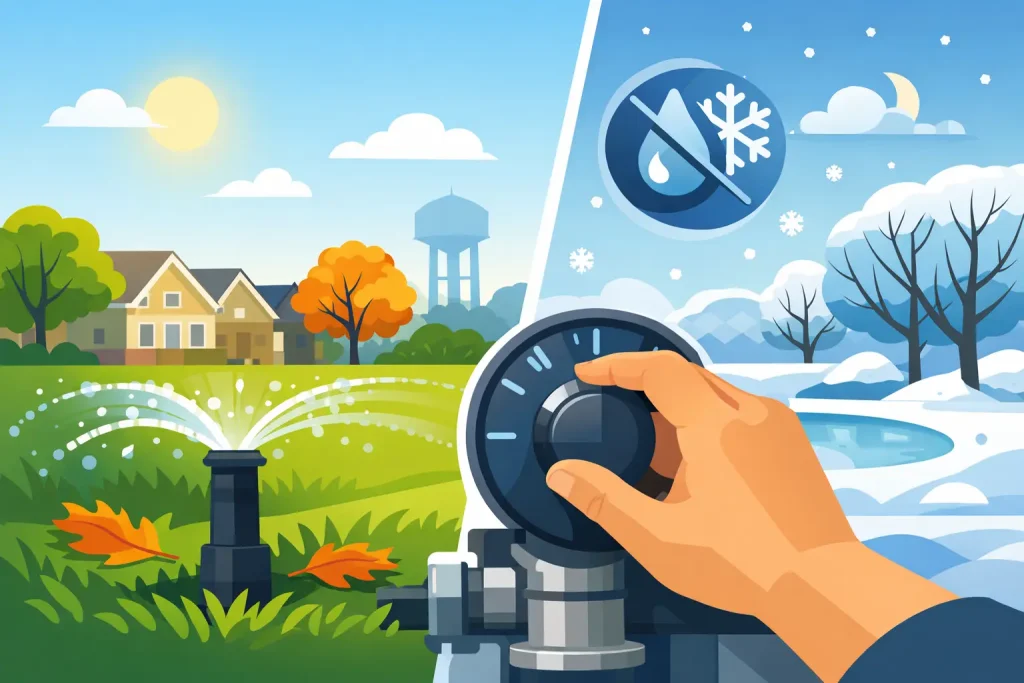
A single hard freeze can turn the water left inside a sprinkler line into an expensive spring repair. In Macomb County, the right answer to when to shut off sprinklers is not a fixed date on the calendar. It is the point in fall when overnight temperatures, forecast patterns, and your irrigation system’s setup tell you winter is close enough to act.
For most local homeowners, that window falls between late September and late October. But waiting until the first serious freeze is a gamble, especially when temperatures can drop quickly after a mild stretch. Proper winterization protects the pipes, valves, backflow preventer, and sprinkler heads that keep your lawn and landscape watered all summer.
When to Shut Off Sprinklers Before Winter
You can usually stop regular sprinkler watering once the weather turns consistently cool and your lawn no longer needs frequent moisture. Cool-season turf common in Southeast Michigan may still grow in fall, but it uses far less water than it does during July heat. Rainfall is often enough to support it.
The more urgent decision is when to winterize the irrigation system. Plan to have it shut down and professionally blown out before sustained overnight temperatures approach freezing. A one-night dip to 32 degrees does not always cause damage, particularly if the ground is still warm. However, repeated freezing nights or temperatures falling into the upper 20s create a real risk for exposed components and shallow lines.
Do not wait for frozen ground. Once the soil hardens, irrigation service is more difficult, and your system has already spent unnecessary time exposed to freezing conditions. Scheduling early also gives you more flexibility than trying to find service after the first widespread cold snap.
A practical Macomb County timeline
A good approach is to begin watching the forecast in late September. If daytime temperatures remain warm and conditions are dry, continue watering only as needed. By early to mid-October, reduce run times and prepare for shutdown. Most systems should be winterized by late October, though an earlier appointment is wise for homes with exposed backflow assemblies, older irrigation components, or a history of early frost on the property.
A protected backyard can stay slightly warmer than an open lawn, while low-lying areas may frost first. Your property’s microclimate matters, but it should not be the only factor. Weather forecasts change quickly, and underground irrigation repairs are far more disruptive than a slightly early shutdown.
Why Turning Off the Controller Is Not Enough
Many homeowners turn the irrigation controller to “off” and assume the system is protected. That stops scheduled watering, but it does not remove water from the pipes. Water can remain in lateral lines, valves, manifolds, sprinkler heads, and the backflow prevention assembly.
When water freezes, it expands. In a closed irrigation line, that expansion can crack PVC fittings, split pipe, damage valves, or break sprinkler heads below the surface where the issue is easy to miss. The backflow preventer is particularly vulnerable because it is often installed above ground or in an exposed location near the home.
A proper winter shutdown has two separate jobs: stop the water supply to the irrigation system and remove as much remaining water as possible. For most residential systems, that second step requires a professional compressed-air blowout.
What a Proper Sprinkler Winterization Includes
Winterization is not simply opening a drain valve and hoping gravity handles the rest. Some systems have manual drains, automatic drains, or components designed to shed a portion of the water. Even so, those methods may leave water in low spots, valve assemblies, or sections of pipe that do not drain completely.
A professional blowout uses carefully regulated compressed air to clear water zone by zone. The goal is to evacuate the lines without applying excessive air pressure that can damage the system. This is why a standard garage compressor and a do-it-yourself approach can create problems. The correct pressure, volume, connection point, and run time depend on the pipe material, number of zones, layout, and equipment installed at your home.
A thorough service generally includes shutting off the irrigation water supply, relieving pressure at the backflow device, blowing out each zone, and placing the controller in its appropriate winter setting. The technician can also identify visible issues such as damaged heads, leaking valves, poor drainage around equipment, or a backflow assembly that needs attention before spring.
Signs You Should Shut Down Earlier
Some properties should not follow the latest possible schedule. Move your appointment earlier if your system has exposed pipes, an above-ground backflow preventer, or a sprinkler connection on the north or shaded side of the home. These areas tend to freeze sooner and thaw later.
You should also act early if you are leaving town for an extended period in October or November. A sudden cold front does not wait for a convenient service date. The same applies if your irrigation system is older, has had leaks in the past, or includes areas where pipes may be shallow because of landscape changes, tree roots, or previous construction.
New landscape installations deserve special attention as well. Fresh sod, seed, shrubs, and perennials may need water later into the season than established plantings. That does not mean the sprinkler system should run on its summer schedule. Instead, water selectively by hand when conditions are dry, then winterize the system before freezing weather arrives. A newly planted landscape benefits from moisture, but it will not benefit from cracked irrigation lines.
How Much Should You Water Before Shutdown?
There is a difference between giving the lawn one final drink and keeping a full irrigation schedule running into cold weather. If fall has been dry, a deep watering before winter can help turf and landscape plants enter dormancy without drought stress. This is especially useful for evergreens, which continue to lose moisture through their needles during winter.
Use the weather and soil conditions as your guide. If rainfall has been steady and the soil is moist several inches down, extra irrigation may not be necessary. If the lawn is dry, crunchy, or showing stress during an extended dry spell, one deliberate watering is more useful than several shallow cycles.
Avoid watering when a freeze is expected that night. Wet pavement and walkways can become slippery, and water left on exposed irrigation components adds risk. Once the system has been blown out, avoid reopening it for one warm weekend. Repressurizing a winterized system can reintroduce water into pipes that may freeze later.
Common Shutdown Mistakes to Avoid
The costliest mistake is waiting until damage is visible. By spring, a cracked fitting may reveal itself as a soggy lawn, weak pressure in one zone, or water pooling near the foundation. At that point, the repair may involve locating buried lines, replacing components, and restoring disturbed turf or mulch beds.
Another common mistake is covering the backflow preventer with insulation while leaving water trapped inside. Insulation can provide limited protection during a brief cold spell, but it is not a substitute for shutting off water and clearing the assembly. Homeowners should also avoid wrapping components so tightly that moisture is trapped or access is difficult for service.
Finally, do not treat every sprinkler system the same. A small lawn with a basic controller has different needs than a property with multiple zones, drip irrigation for planting beds, landscape lighting controls, drainage features, and a larger outdoor living area. A clear record of your irrigation layout makes seasonal service and future repairs much easier.
Preparing for a Smoother Spring Start
A careful fall shutdown makes spring startup more predictable. Before winter, take note of any zones with poor coverage, heads that do not pop up correctly, wet areas that suggest leaks, or plant beds that need a drip irrigation adjustment. Addressing those observations during the off-season can prevent rushed decisions once your lawn starts growing again.
It also helps to keep the controller powered if its manufacturer recommends it, while setting it to rain mode or off mode so it does not run. This preserves programming and avoids the inconvenience of rebuilding every zone schedule in spring. If your controller uses a backup battery, replace it as needed according to the manufacturer’s instructions.
A dependable irrigation plan should protect more than the grass. It should account for your plant material, drainage, water use, and the condition of the system itself. Reeser Outdoor can help Macomb-area homeowners winterize irrigation systems on time, spot concerns before they become repairs, and return in spring with a system ready to water efficiently when the season begins.
The best time to schedule is before freezing temperatures make the decision for you. A proactive fall service protects the work you have invested in outside and lets you head into winter knowing your irrigation system is not carrying a hidden risk underground.