
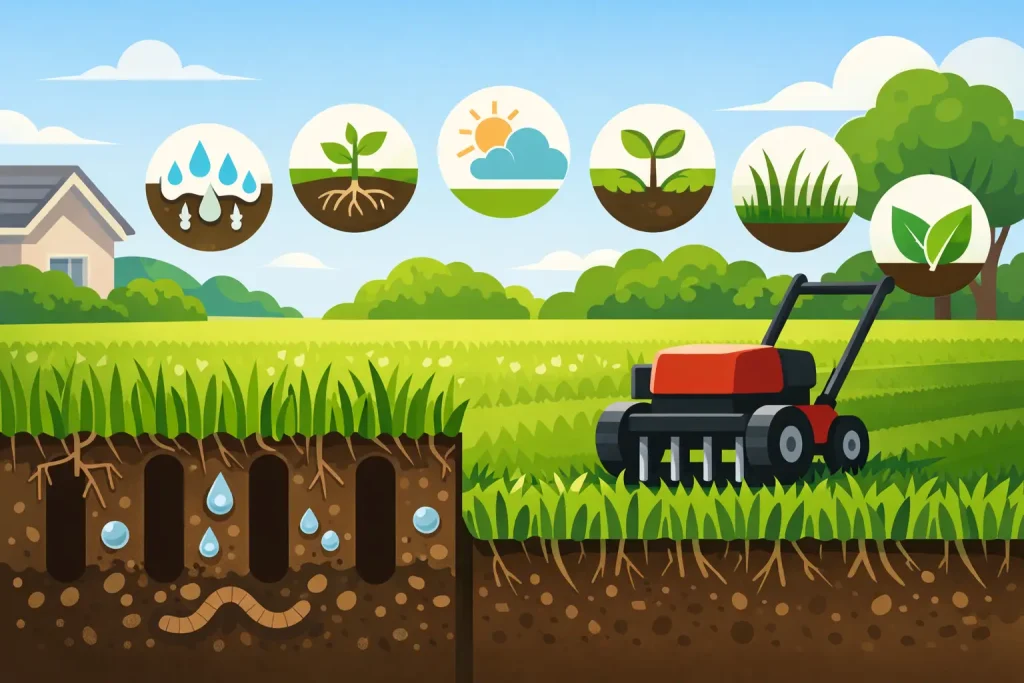
A lawn can look thin, dry, or uneven even when it is being watered and fertilized regularly. Often, the issue is not what is being added at the surface – it is what is happening beneath it. The most meaningful lawn aeration benefits come from relieving compacted soil so water, air, and nutrients can reach the root zone where your grass needs them.
For homeowners in Macomb and nearby communities, aeration is especially useful after a season of foot traffic, mowing, summer heat, and heavy clay soil conditions. It is not a cosmetic shortcut, and it will not fix every lawn problem on its own. When it is timed correctly and paired with proper mowing, watering, and fertilization, though, it gives cool-season turf a better foundation to grow thick and resilient.
Lawn Aeration Benefits Begin Below the Surface
Core aeration uses a machine with hollow tines that remove small plugs of soil and thatch from the lawn. Those openings create temporary channels into the root zone. They allow moisture to soak in rather than run off, improve the movement of oxygen through the soil, and make it easier for roots to expand.
The plugs left on the surface can look messy for a short time, but they break apart naturally with rain, irrigation, and mowing. That material returns beneficial soil and organic matter to the lawn. The goal is not to tear up healthy turf. It is to create room for the soil and grass roots to function as they should.
1. Stronger, deeper roots
Compacted soil acts like a barrier. Grass roots stay shallow because they cannot easily push through dense ground, which leaves the lawn more dependent on frequent watering and more vulnerable during hot, dry stretches. Aeration loosens that barrier in thousands of small locations across the yard.
Over time, a better-developed root system helps turf draw on moisture lower in the soil profile. It will not make a lawn drought-proof, but it can help grass handle normal summer stress with less thinning and browning.
2. Better water absorption and less runoff
When water pools on the lawn after rain or irrigation, compaction may be part of the problem. Aerated soil accepts water more readily, which can reduce surface puddling and help irrigation do its job more efficiently.
Aeration is not a substitute for correcting a serious grading, drainage, or downspout issue. If water consistently collects in one area, the property may need a larger drainage solution. But where the underlying grade is sound and the soil is simply tight, aeration can improve how evenly moisture moves into the turf.
3. More effective fertilizer and overseeding
Fertilizer applied to a compacted lawn can remain closer to the surface than homeowners expect. Aeration creates openings that help nutrients move closer to active roots. That does not mean more fertilizer is always better. A thoughtful fertility plan, based on the season and the condition of the lawn, is still the right approach.
Aeration also creates an excellent opportunity for overseeding. Seeds can settle into the holes and make better contact with soil, which supports germination. This is particularly helpful in lawns with worn areas near patios, play spaces, sidewalks, or the route from the driveway to the front door.
4. A denser lawn with fewer opportunities for weeds
Healthy grass naturally competes with weeds by filling available space. When turf is thin, sunlight reaches bare soil and weed seeds have room to establish. Aeration supports the conditions that help turf thicken, especially when followed by appropriate watering and, when needed, overseeding.
It is worth setting the right expectation here: aeration does not kill weeds. If crabgrass, dandelions, or broadleaf weeds are already established, they may need a separate treatment plan. The long-term value of aeration is that it supports stronger turf that is better able to compete season after season.
5. Reduced thatch pressure
A thin layer of thatch can be normal and even helpful. It can protect the soil surface and hold some moisture. Problems begin when that layer becomes too thick and creates a spongy barrier between the grass blades and the soil below.
Core aeration helps mix some of that organic material into the soil, where it can break down more naturally. If a lawn has a severe thatch layer, it may need additional attention. Aeration is often part of the answer, but the best treatment depends on the thickness of the thatch and the overall health of the grass.
Signs Your Lawn May Need Aeration
Not every lawn needs to be aerated on the same schedule. A newer lawn with loose soil and little traffic may need it less often than an established yard with clay soil, children, pets, and frequent use. The condition of the lawn should guide the decision.
Common signs include water that runs off instead of soaking in, soil that feels hard underfoot, thinning turf despite regular care, and bare spots in high-traffic areas. You may also notice that a screwdriver is difficult to push several inches into moist soil. That is a simple indication that compaction could be limiting root growth.
Lawns built on heavy soil, lawns that have been through construction activity, and areas around gates or outdoor living spaces often benefit most. A professional evaluation can also help separate compaction from other problems, such as insect damage, disease, poor drainage, shade, or irrigation coverage issues.
The Best Time to Aerate in Macomb
For the cool-season grasses common in Southeast Michigan, late summer through early fall is typically the preferred aeration window. The soil is still warm enough to support root activity, while cooler air temperatures reduce stress on the turf. It is also an ideal time to overseed and establish new grass before winter.
Spring aeration can make sense in certain situations, especially for a heavily compacted lawn that needs help before the growing season. Still, spring can bring a trade-off. Opening the soil during the period when annual weeds are germinating may create more favorable spots for weed seeds. If spring is the best practical option, a lawn care plan should account for weed prevention and follow-up maintenance.
Avoid aerating when the soil is excessively dry, saturated, or frozen. Dry ground makes it difficult for the machine to pull proper plugs, while wet soil can smear and compact further under heavy equipment. A lightly moist lawn usually produces the best results.
Core Aeration vs. Spike Aeration
The type of aeration matters. Spike shoes and spike rollers punch holes into the ground, but they can press soil tighter around those holes. They may provide a minor surface effect, but they do not relieve compaction as effectively as removing soil cores.
Core aeration is generally the better choice for established residential lawns because it physically removes plugs of soil. The holes are temporary, but the improvement to air exchange, water movement, and root access is more meaningful. For homeowners who want measurable lawn improvement rather than a quick weekend task, this distinction is worth understanding.
How to Get the Most From Aeration
Aeration works best as part of a coordinated lawn care routine. Mow the lawn at its normal height beforehand, and make sure it has enough moisture for the equipment to remove clean cores. Mark irrigation heads, shallow utility lines, invisible pet fences, and landscape lighting wires before work begins.
After aeration, the lawn needs consistent but sensible care. If you are overseeding, keep the seedbed moist during germination without creating standing water. Continue mowing once the new grass is established enough to need it, and avoid mowing too short. The soil plugs can remain on the surface; they will break down naturally and should not be raked away.
If a lawn has persistent wet areas, patchy growth, or irrigation concerns, aeration is also a good time to look at the full picture. Soil condition, watering coverage, drainage, mowing habits, and fertilizer timing all affect the result. Addressing only one part of the problem can leave homeowners wondering why the lawn has not improved.
A properly aerated lawn will not transform overnight, but it gives every other part of your maintenance plan a better chance to work. Reeser Outdoor can assess whether compaction is holding your lawn back and help schedule the right services for healthier turf through the seasons.