
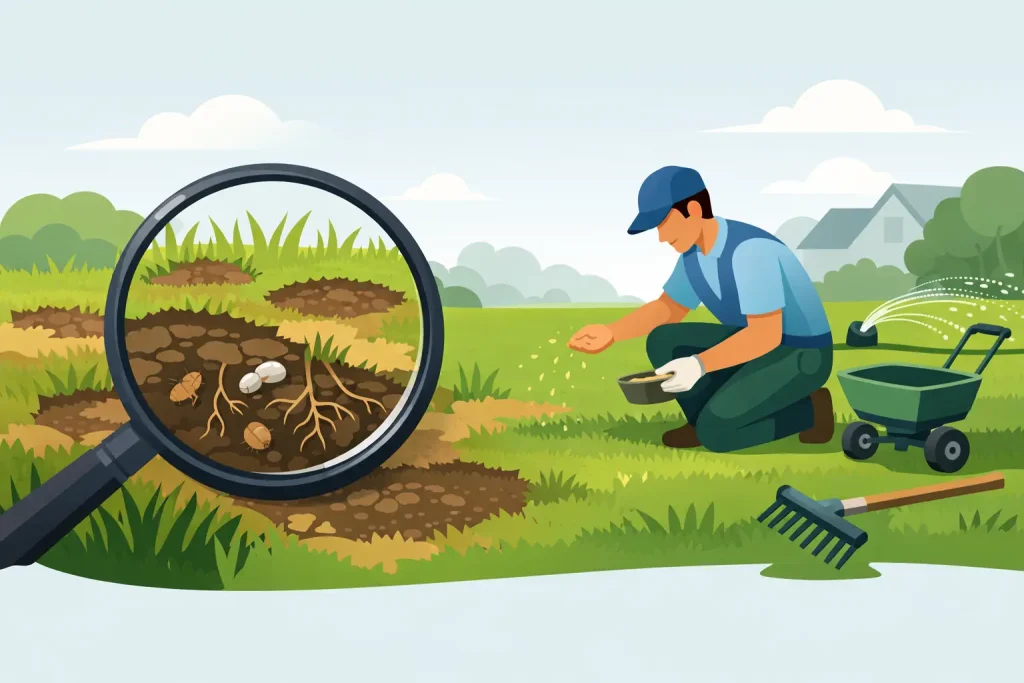
A lawn can look fine from the curb and still have thin spots, bare circles, or uneven color once you walk through it. If you are asking, “why is my lawn patchy,” the answer is rarely just that it needs more grass seed. Patchy turf is usually a signal that something below the surface, or within the lawn-care routine, is working against healthy growth.
For homeowners in Macomb and nearby communities, the right fix depends on the cause. Adding seed to a compacted, poorly drained, drought-stressed, or grub-damaged area may produce a short-lived improvement, but the same patches often return the following season. A dependable repair starts with identifying why the grass struggled in that specific part of the yard.
Why Is My Lawn Patchy? Start With the Pattern
The shape, location, and timing of lawn patches provide useful clues. A broad, thin area in full sun has different likely causes than a small dead spot beneath a tree or a ring of yellow grass near a driveway. Before treating the entire lawn, look closely at where the problem begins and whether it changes after rain, mowing, watering, or seasonal temperature swings.
Grass that pulls up easily with little or no root system can point to insect damage. Turf that feels hard underfoot may be compacted. Areas that stay wet long after the rest of the lawn dries can have a grading, drainage, or irrigation issue. Yellowing that follows a familiar path may be tied to inconsistent fertilizer application or irrigation coverage.
A lawn is a connected system. Soil condition, drainage, sunlight, mowing height, watering, traffic, and pests all affect how well turf can establish roots. Correcting one visible symptom without checking the larger system is a common reason patchy lawns remain frustrating year after year.
Compacted Soil and Thatch Can Limit Root Growth
Macomb-area lawns often deal with compacted soil, especially along sidewalks, near driveways, in active family backyards, and anywhere equipment or foot traffic repeatedly crosses the turf. Compaction squeezes the air pockets out of the soil. Water may run off instead of soaking in, and grass roots cannot move deeply enough to find moisture during hot weather.
Thatch can create a related problem. A thin layer of decomposing plant material is normal, but a heavy, dense layer between the grass blades and soil can prevent water, fertilizer, and seed from reaching the root zone. The lawn may look dry even after watering because the moisture is caught near the surface.
Core aeration is often the appropriate correction for compacted turf. It removes small plugs of soil, giving roots room to expand and improving the movement of water and nutrients. When thatch is excessive, dethatching may also be needed, although aggressive dethatching is not right for every lawn. The best approach depends on the grass type, soil condition, and severity of the buildup.
Watering Problems Are Not Always About Too Little Water
Many patchy lawns are watered often but not effectively. Frequent, shallow watering encourages shallow roots, leaving grass more vulnerable during summer heat. Inconsistent irrigation coverage can also create a patchwork appearance, where grass near one sprinkler head is healthy while the area between heads turns thin or brown.
A healthy lawn generally benefits more from deep, infrequent watering than a light daily spray. The goal is to moisten the root zone, then allow the upper soil surface to dry somewhat before the next watering. Exact schedules depend on rainfall, soil type, sun exposure, and local watering restrictions, so there is no single setting that fits every yard.
Check irrigation zones during daylight at least once each season. Look for clogged heads, heads tilted away from the lawn, overspray onto pavement, weak pressure, and dry areas blocked by shrubs or landscape features. If water pools in a low spot, adding more water will not solve the issue. That may require drainage improvements, grading adjustments, or changes to the irrigation layout.
Too Much Shade Changes What the Lawn Can Support
Grass needs adequate sunlight to produce energy and maintain dense growth. Under mature trees, beside fences, or on the north side of a home, turf may naturally thin out even when it receives good care. Tree roots also compete with grass for water and nutrients, making shaded areas particularly challenging.
Pruning can sometimes improve filtered light, but it should be done responsibly and without damaging the tree. In heavily shaded areas, repeated overseeding may become an expensive annual routine with limited results. A better long-term solution may be selecting a more shade-tolerant grass mix or replacing difficult turf with mulch, groundcover, or a purposeful landscape bed.
This is one of the situations where a lawn does not need to look identical from property line to property line. A well-designed yard can use turf where it performs well and landscape materials where conditions make thick grass unrealistic.
Mowing Too Short Can Create Thin, Stressed Grass
A close-cut lawn may look tidy right after mowing, but repeatedly cutting grass too short can weaken it. Short blades have less leaf surface to support root growth, and the soil dries faster because the turf canopy no longer shades it. Scalping is especially damaging on uneven ground, where mower wheels dip and remove too much of the grass crown.
For most cool-season lawns in southeast Michigan, maintaining a taller mowing height during active growing periods helps grass develop deeper roots and compete more effectively with weeds. A sharp mower blade also matters. Dull blades tear grass instead of making clean cuts, leaving ragged tips that can turn brown and make an otherwise healthy lawn look stressed.
Avoid removing more than one-third of the grass blade in a single mowing. If the lawn gets away from you during a rainy week, raise the mowing height and bring it down gradually over more than one cut.
Insects, Disease, and Pet Damage Can Leave Distinct Patches
Some lawn problems need a closer inspection because the visible damage is only the final result. White grubs feed on grassroots and can cause irregular brown patches that peel back like loose carpet. Chinch bugs and other surface-feeding insects may cause dry-looking areas in sunny locations. Treatment should be based on evidence, not guesswork, because insect products applied at the wrong time or for the wrong pest add cost without solving the problem.
Fungal disease can create spots, rings, or irregular areas of discolored grass, particularly during humid weather or when lawns remain wet overnight. Overwatering, poor airflow, excessive nitrogen, and mowing with dull blades can make disease pressure worse. The right response may include cultural changes rather than immediately applying a treatment.
Pet urine typically creates small, concentrated yellow or brown spots, sometimes with a darker green edge. Promptly watering the affected area can dilute salts before they damage the turf, but repeated use of the same area may require reseeding and a change in where pets relieve themselves.
Nutrient Imbalance and Poor Soil Conditions Matter
Grass needs more than a bag of fertilizer. It needs nutrients in appropriate amounts and a soil pH that allows those nutrients to be used. Applying fertilizer without understanding the soil can lead to uneven growth, unnecessary runoff, or grass that looks green briefly but remains weak underneath.
A soil test takes the guesswork out of fertilizer and lime recommendations. It can reveal low nutrient levels, excessive phosphorus, or pH conditions that limit grass performance. This is especially useful in lawns that have been repeatedly fertilized but still fail to fill in.
Timing matters as much as product choice. Cool-season grass generally responds best to feeding during periods when it is actively growing, not when it is struggling through peak summer heat. A professional lawn-care program can match fertilizer applications, weed control, aeration, and overseeding to the condition of the lawn rather than following a one-size-fits-all schedule.
How to Repair a Patchy Lawn So the Fix Lasts
Once the underlying issue is corrected, damaged areas need a practical recovery plan. Small bare spots can often be loosened with a rake, amended with a light layer of quality topsoil or compost if needed, seeded with a grass variety suited to the site, and kept consistently moist until seedlings establish. Fall is typically the most favorable time for overseeding in this area because cooler temperatures reduce stress and weed competition.
Larger sections may need more preparation. Compacted ground should be aerated, drainage problems should be addressed before seed goes down, and weeds should be controlled using a plan that will not interfere with new grass establishment. If the area receives heavy shade or regular traffic, choosing the right turf mix is as important as the seeding process itself.
Sod can provide faster visual results, but it is not automatically the better answer. It still needs prepared soil, good contact with the ground, proper watering, and a suitable growing environment. Installing sod over a drainage issue or compacted soil simply places healthy turf over the same problem.
When a Patchy Lawn Needs Professional Attention
A few thin spots are often manageable with better mowing and watering habits. However, recurring bare areas, standing water, widespread thinning, suspected grub damage, or irrigation concerns are worth evaluating before spending money on repeated DIY fixes. These problems can overlap, and treating only one may delay a lasting solution.
Reeser Outdoor can assess the condition of the turf along with the drainage, grading, irrigation, and maintenance factors that affect it. A clear plan should explain what is causing the patches, what work is recommended first, and what ongoing care will help protect the repair.
Your lawn does not have to be perfect to be healthy, but patches that return every season deserve more than another bag of seed. Address the condition that created them, then give the grass the soil, moisture, and maintenance it needs to grow back strong.