
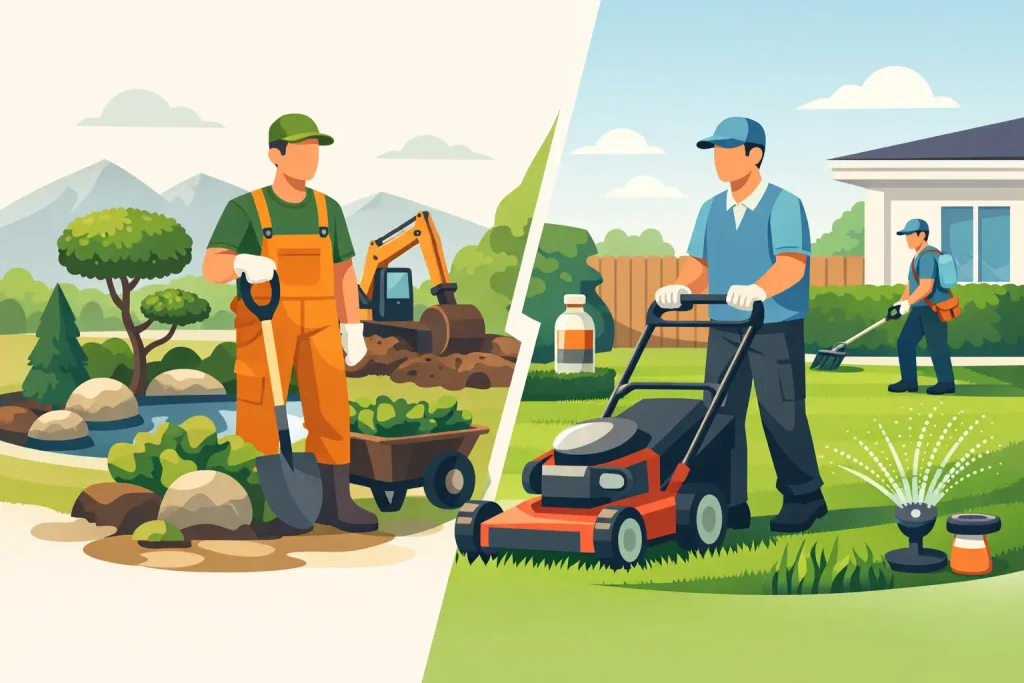
A freshly mowed lawn can make a home look cared for, but it will not fix pooling water near the foundation, an overgrown front bed, or a patio that no longer works for family gatherings. Understanding the difference between a landscaping company vs lawn service helps you hire for the result you want, rather than paying for a service that only handles part of the problem.
For many Macomb-area homeowners, the right answer is not one or the other forever. Lawn service keeps routine care on schedule. A full-service landscaping company can improve how the entire property looks, drains, functions, and holds up over time. The key is knowing where each service begins and ends.
Landscaping Company vs Lawn Service: The Core Difference
A lawn service is generally focused on recurring turf care. Its job is to keep grass looking neat and healthy through regular mowing, trimming, edging, fertilization, weed control, seasonal cleanup, and sometimes aeration or overseeding. This is a practical choice when your yard is fundamentally in good condition and you need dependable help maintaining it.
A landscaping company works at a broader level. In addition to ongoing lawn and landscape maintenance, it may design and install planting beds, shrubs, trees, mulch, edging, irrigation systems, drainage solutions, retaining walls, patios, walkways, fire features, and outdoor living areas. The work often involves planning, materials, construction methods, and an understanding of how water moves across the property.
There is some overlap. Many landscaping companies offer mowing, and some lawn providers install basic mulch or plantings. The difference is usually depth of capability. If your project requires changing the layout, solving a site issue, or building a permanent feature, a landscaping company is typically the better fit.
When a Lawn Service Is the Right Choice
Routine lawn service is valuable when consistency is your main need. Homeowners often choose it because weekends are busy, equipment takes up garage space, and skipped mowing quickly affects curb appeal. A scheduled crew can keep growth under control through the season without asking you to manage every visit.
A lawn-focused provider is often a sensible option if you need regular mowing and trimming, seasonal fertilization, weed management, leaf cleanup, or help bringing thin turf back to a healthier condition. These services are generally recurring, straightforward to price, and centered on a predictable schedule.
The best lawn service relationship is clear about what is included. Ask how often the crew visits, whether edging is part of each visit, how rain delays are handled, and whether clippings are removed or mulched. If fertilization and weed control are included, confirm the treatment schedule and whether the plan is adjusted for your lawn’s actual condition.
It is also worth remembering that even excellent lawn care has limits. Repeated bare spots may point to shade, compacted soil, poor irrigation coverage, pet damage, or drainage issues. If the underlying cause is not addressed, another application or another round of seed may only provide a temporary improvement.
When You Need a Landscaping Company
Choose a landscaping company when the project involves more than maintaining what is already there. Perhaps the front landscape is dated, beds are difficult to maintain, water collects in the backyard, or the family wants a usable patio instead of a patch of uneven lawn. These needs call for a plan, not just a service visit.
A qualified landscape team can look at the property as a connected system. For example, a low spot in the yard may require grading, drainage, and a revised planting plan. A new patio may require base preparation, proper slope, drainage considerations, and coordinated lighting or irrigation adjustments. A retaining wall needs more than attractive block – it needs correct excavation, drainage, compaction, and construction to perform well.
This is where homeowners can avoid the frustration of coordinating multiple contractors. Instead of hiring one company to mow, another to repair sprinklers, and a third to build a patio, a full-service provider can manage the scope from consultation through installation and ongoing care. That single point of accountability is especially useful when several parts of the property affect each other.
Look Beyond the Service Label
The terms “landscaper” and “lawn service” are used loosely, so do not make a decision based on the name alone. Ask direct questions about the work you need. Does the company design outdoor spaces? Can it handle drainage and grading? Does it install irrigation? Is it equipped to build hardscapes and outdoor features? Does it provide maintenance after the installation is complete?
For construction or site-correction work, verify that the contractor is licensed and insured as appropriate for the project. Ask who will perform the work, what materials are included, how long the job is expected to take, and what happens if site conditions change after excavation begins. A professional contractor should be comfortable explaining these details in plain language.
A transparent line-item proposal is another good sign. It helps you see the difference between plant material, hardscape materials, labor, drainage components, irrigation work, and ongoing maintenance. The lowest number is not always the best value if the proposal leaves out proper base preparation, drainage, cleanup, or warranty terms.
How to Match the Provider to Your Goal
Start with the outcome you want by the end of the season or the next few years. If your goal is a tidy lawn without spending Saturday behind a mower, recurring lawn service may be all you need. If you want stronger curb appeal, but the existing bed layout and plants are still in good shape, a seasonal cleanup, mulch refresh, and selective plant replacement may be enough.
If your goal is to change how you use the yard, think more broadly. A family that wants an outdoor dining area needs more than lawn care. A homeowner dealing with erosion near a slope needs more than fresh mulch. Someone tired of hand-watering new plants may need an irrigation assessment rather than another hose timer.
Consider these common situations:
- Your grass grows quickly but the yard otherwise works well. Regular mowing and lawn treatments are likely the best fit.
- Your beds are overgrown, plants are failing, and the front of the house lacks definition. A landscape renovation can improve appearance while reducing future maintenance.
- Water stands after storms or moves toward the home. Look for a company with drainage, grading, and installation experience.
- You want a patio, walkway, retaining wall, pergola, or fire feature. Choose a landscaping company with proven construction capability.
- You want one team to care for the lawn and support larger projects over time. A full-service outdoor company offers the most continuity.
What Ongoing Care Adds to a Landscape Project
A new landscape can look finished on installation day, but it still needs attention to mature well. Trees and shrubs need proper watering, beds need weed management and mulch, and irrigation systems need seasonal checks. Paver patios and retaining walls benefit from periodic inspection so minor settling or drainage concerns can be addressed early.
This is one reason an end-to-end relationship can be practical. The crew maintaining the property understands what was installed, where irrigation lines run, which plants were selected, and what drainage solutions are in place. That familiarity can prevent small issues from becoming expensive repairs.
At Reeser Outdoor, that approach allows homeowners to move from a simple maintenance need to a larger improvement project without starting over with an unfamiliar contractor. The goal is not to sell work a property does not need. It is to give homeowners a dependable team when the scope grows beyond mowing and basic lawn care.
Choose for the Problem You Want Solved
A lawn service keeps your lawn on track. A landscaping company can reshape and support the larger outdoor environment around it. Neither is automatically better – the right choice depends on whether you need routine upkeep, a one-time improvement, a technical repair, or a long-term plan for the property.
Before requesting estimates, walk your yard with a practical eye. Notice where water collects, which areas you avoid using, what requires too much upkeep, and what you want guests to see when they arrive. Those observations give you a clearer starting point and help the right professional build a solution that lasts.