
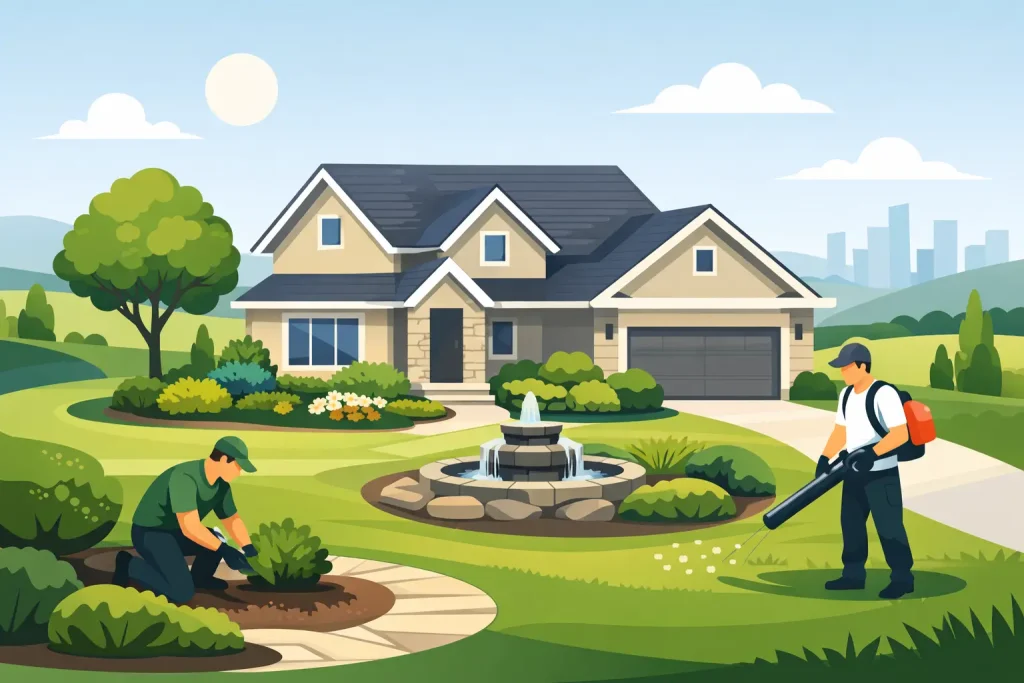
A yard can look fine from the street and still create work every weekend. Thin turf, pooling water near the foundation, overgrown shrubs, and an uneven patio are not just cosmetic frustrations. The real professional landscaping benefits come from addressing the conditions behind those problems, then keeping the property looking and functioning as it should.
For homeowners in Macomb and nearby communities, professional care provides more than a cleaner lawn. It brings a clear plan, the right equipment, accountable installation, and one team that understands how each part of the outdoor space affects the next.
Professional Landscaping Benefits Start With a Better Plan
Many outdoor projects go sideways before installation begins. A homeowner may choose plants that cannot handle the site, add mulch without correcting drainage, or install a patio without considering water flow and grade. The result can be repeated repairs, struggling plants, and money spent twice.
A professional approach begins with the property itself. Sun exposure, soil conditions, existing grades, drainage paths, irrigation coverage, traffic patterns, and the way your family uses the yard all shape the right recommendation. A front landscape designed for curb appeal has different needs than a backyard built for entertaining, play, pets, or quiet evenings.
That planning also helps set a realistic scope. Some properties need a straightforward cleanup and planting refresh. Others need drainage correction, new edging, irrigation adjustments, or hardscape work before landscape beds make sense. Clear, line-item proposals help homeowners understand what is included, why it is needed, and where their investment is going.
A Healthier Lawn and Stronger Plantings
A green lawn is not simply the result of mowing often. Grass needs the correct mowing height, seasonal fertilization, weed control, adequate water, and attention to compacted or thin areas. Cutting too short, applying the wrong products, or watering at the wrong time can weaken turf and encourage weeds.
Professional lawn care creates consistency across the growing season. Regular mowing keeps the property neat without stressing the grass. Fertilization and weed-control programs can be timed around local conditions rather than applied at random. When a lawn is not performing well, a trained crew can look beyond the surface for issues such as poor drainage, shade, irrigation gaps, or soil compaction.
The same is true for trees, shrubs, and perennials. Proper plant selection matters because a beautiful plant at the garden center may not be the right choice for your soil, sun, or maintenance preferences. Professional installation considers mature size, spacing, root health, and access for future pruning. This gives plantings room to grow instead of creating an overcrowded bed that needs constant correction.
Better Drainage Protects the Rest of the Property
Standing water is easy to ignore until it damages turf, washes out mulch, creates icy areas, or collects near the house. In Southeast Michigan, repeated freeze-thaw cycles and heavy rain can turn small grading problems into larger property concerns.
Professional landscaping can address drainage as part of a complete outdoor plan. Depending on the site, the right solution may involve regrading, extending downspouts, adding drainage systems, adjusting bed elevations, or changing how water moves around a patio or walkway. There is no one-size-fits-all fix. The goal is to move water away from structures and high-use areas without sending it toward a neighbor or creating a new low spot elsewhere.
This is where a company with both landscape and construction capability is especially useful. Drainage, irrigation, planting, and hardscapes should work together. Handling them separately through multiple contractors can lead to missed details and finger-pointing when something does not perform as expected.
Functional Outdoor Spaces Add Everyday Value
A well-built patio, retaining wall, fire feature, or pergola can change how often a family uses its backyard. Instead of looking at unused grass or a worn-out concrete pad, homeowners gain a defined place to eat outside, host friends, gather around a fire, or enjoy a quieter evening at home.
The value is in the construction details as much as the finished appearance. A patio needs proper excavation, base preparation, compaction, edge restraint, and grading. Retaining walls need sound engineering, drainage behind the wall, and materials suited to the height and load they will carry. Skipping those steps may save money upfront, but shifting pavers, settling areas, and water damage are expensive ways to learn why installation standards matter.
Professional crews also help homeowners make practical design decisions. A larger patio is not always better if it overwhelms the yard or pushes the budget away from needed drainage work. A fire feature may be a great fit for a family that spends evenings outdoors, while a covered structure may provide more value for a sunny yard with limited shade. The best plan balances appearance, use, maintenance, and cost.
More Time Back in Your Week
Homeowners often begin with DIY lawn and landscape care because it seems manageable. Then spring cleanup, weekly mowing, edging, fertilization, pruning, mulch, irrigation checks, and fall leaf removal start competing with work and family time. Missing a few weeks can make the property feel like it is always behind.
Recurring maintenance removes that pressure. A dependable schedule means the lawn is mowed before it gets overgrown, beds are maintained before weeds take over, and seasonal needs are handled at the appropriate time. It also gives homeowners one reliable point of contact when a concern comes up instead of searching for a different contractor for every task.
Convenience should not mean uncertainty. Ask how often crews visit, what each service includes, how weather delays are handled, and who to contact with questions. Reliable service is built on clear expectations, responsive communication, and a team that follows through.
Professional Landscaping Benefits Include Safer, More Polished Grounds
Outdoor improvements can make a property safer as well as more attractive. Uneven walkways, poorly lit steps, overgrown shrubs near paths, and slick areas caused by runoff all create avoidable hazards. Defined walkways, properly graded surfaces, maintained plantings, and thoughtfully placed lighting help make the property easier to use after dark and through changing weather.
Curb appeal matters, too, especially when a home may eventually go on the market. A maintained lawn, clean bed edges, healthy shrubs, and a welcoming front entry create a strong first impression. While no landscape project guarantees a particular resale return, neglected outdoor areas can make buyers wonder what other maintenance has been postponed. Professional care helps protect the pride and investment homeowners already have in their property.
Why One Accountable Team Makes a Difference
A landscape project often includes several connected parts: design, removal, grading, irrigation, hardscape installation, planting, and ongoing maintenance. When those services are coordinated by one local, licensed, and insured team, there is less chance that one phase interferes with another.
That continuity is valuable after the installation is complete. The team maintaining the property knows where irrigation lines run, which plants were installed, how drainage was designed, and what materials were used in the hardscape. If a concern appears, there is a clearer path to diagnosing it and making it right.
Reeser Outdoor approaches outdoor work as an ongoing property relationship, not a one-day transaction. That means homeowners can start with the project that matters most, whether it is weekly lawn care, a landscape renovation, drainage correction, or a new patio, and build from there as needs and budgets allow.
Before choosing a landscaper, walk the property with them and discuss how you actually live outside. Point out the wet spot, the area where grass will not grow, the patio that feels too small, or the bed you no longer have time to maintain. A useful recommendation should make the next step clearer, not make the project feel more complicated.