
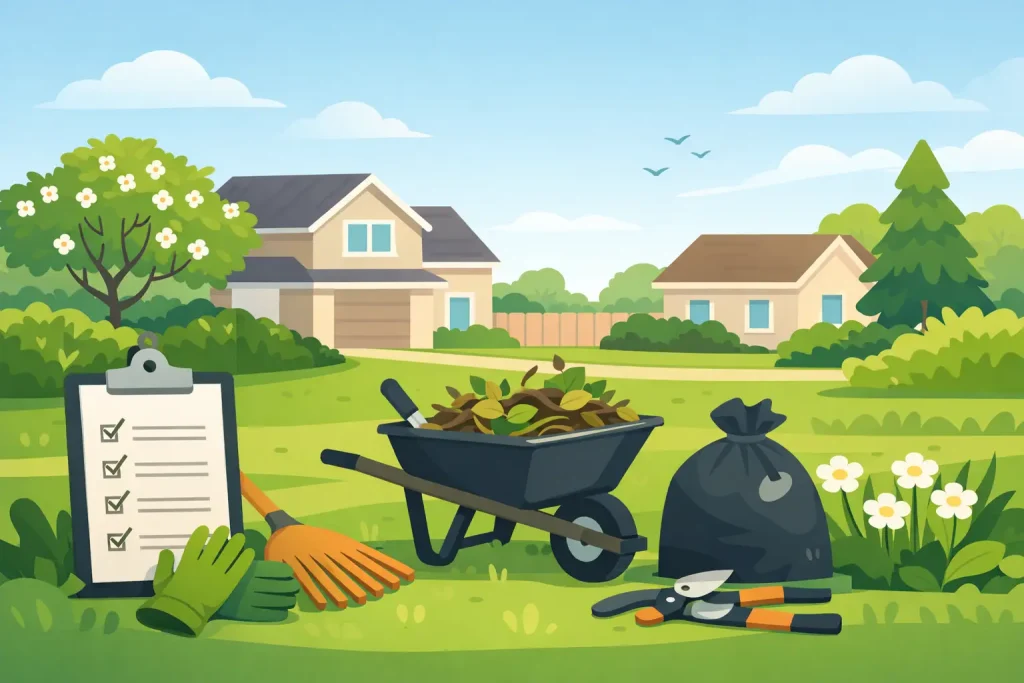
The first warm weekend in Macomb can make a winter-worn yard look like a project that needs to happen all at once. It does not. A thoughtful spring yard cleanup checklist helps you handle the work in the right order, protect emerging plants, and spot problems before they become expensive repairs. The goal is not simply to make the property look tidy. It is to set up your lawn, landscape beds, drainage, and irrigation for a healthy growing season.
Start when the ground has begun to firm up and the lawn is no longer saturated. Working too early can compact wet soil, damage turf roots, and leave ruts that linger well into summer.
Start With a Full Property Walk-Through
Before raking, pruning, or spreading mulch, walk the property with a notepad or phone. Look at the lawn, planting beds, trees, hardscape, downspouts, and areas where water tends to collect. Winter freeze-and-thaw cycles can shift pavers, loosen edging, crack small sections of concrete, and expose drainage issues that were not obvious last fall.
Pay close attention to low spots near the foundation, patio, driveway, or walkways. Standing water is more than an inconvenience. It can weaken turf, wash out mulch, create slippery surfaces, and put unnecessary moisture near the home. If you see recurring puddles, erosion, or water flowing toward the house, cleanup alone may not solve the issue. Grading adjustments, downspout extensions, catch basins, or drainage installation may be the better long-term answer.
Also inspect trees and larger shrubs for broken, hanging, or split branches. These can become a safety hazard during spring storms. Branches near roofs, service lines, or outdoor living spaces deserve professional attention rather than a ladder-and-pruner approach.
Spring Yard Cleanup Checklist: Clear Winter Debris First
Debris removal is the foundation of spring cleanup. Leaves, sticks, road salt residue, windblown trash, and matted plant material hold moisture against grass and soil. That can encourage fungal problems, block sunlight, and slow green-up.
Rake lawn areas gently, especially where snow mold, flattened grass, or heavy leaf cover is visible. The purpose is to lift debris and improve air circulation, not to aggressively tear at dormant turf. A lawn that is still soft from melting snow is easily damaged by heavy raking or repeated equipment traffic.
In landscape beds, remove fallen branches, old annuals, and loose leaves that have collected around perennials and shrubs. Leave any healthy emerging perennial growth intact. It is easy to mistake early shoots for weeds in April, particularly around hostas, daylilies, ornamental grasses, and flowering shrubs.
For a clean, organized start, focus on these distinct tasks:
- Pick up branches, litter, and pet waste from lawn and bed areas.
- Rake away matted leaves from turf without scalping the grass.
- Clear debris from window wells, basement drains, and drainage grates.
- Remove old annual plants and winter-damaged containers.
- Sweep patios, walkways, driveways, and outdoor living areas.
If debris is heavy or the property has several mature trees, professional cleanup can save a substantial amount of weekend time. It also helps ensure material is removed properly instead of being piled where it can block drainage or smother grass.
Prune With a Purpose, Not Just for a Neater Look
Spring pruning improves appearance, but timing matters. Remove dead, damaged, rubbing, or diseased branches from shrubs and small trees as soon as conditions allow. This improves air movement and directs the plant’s energy toward healthy growth.
Do not give every shrub the same haircut. Spring-flowering plants such as lilac, forsythia, and some hydrangeas may already carry buds on old wood. Pruning them too early can remove this season’s flowers. In most cases, wait until after they bloom before doing major shaping. Summer-flowering shrubs often tolerate early spring pruning better, but the right approach depends on the specific plant.
Ornamental grasses are usually cut back in early spring before new blades grow through the old foliage. Perennials with dead top growth can also be trimmed back carefully. Keep cuts clean, and avoid cutting into visible new shoots.
This is also a good time to identify shrubs that repeatedly struggle with winter burn, crowding, or poor placement. Replacing a declining plant may be more cost-effective than repeatedly pruning and treating it. A landscape plan that accounts for mature plant size, sun exposure, and drainage will require less correction over time.
Give the Lawn a Careful Spring Reset
A green lawn begins below the surface. After debris is cleared, check for thin areas, bare patches, compacted soil, and signs of snow mold or animal damage. Do not rush to seed every brown spot. Some turf will recover naturally as temperatures stabilize, particularly after a harsh Michigan winter.
If you have areas that remain thin, loosen the soil lightly, add quality topsoil where needed, and overseed with a grass blend suited to the site. Keep newly seeded areas consistently moist until established. Spring seeding can work well for small repairs, although fall is often the stronger window for larger lawn renovations because weed pressure and summer heat are lower.
Fertilizer should be based on the condition of the lawn and, ideally, a soil test. Applying too much fertilizer too early can produce quick top growth without addressing root health. A measured lawn care program can provide the nutrients and weed control your turf needs at the appropriate time rather than relying on a one-size-fits-all application.
Avoid mowing until the lawn is dry enough to support the mower without leaving tracks. For the first cuts of the season, keep the mower blade sharp and avoid removing more than one-third of the grass blade at once. Cutting too short stresses turf and gives weeds more opportunity to establish.
Refresh Landscape Beds and Check Edging
Once beds are cleaned and pruned, redefine their edges. Crisp bed lines make a property look maintained even before every plant has leafed out. They also help keep mulch in place and prevent turf from creeping into planting areas.
Inspect existing edging for heaving, gaps, or sections that have shifted over winter. Plastic edging may lift, metal edging can loosen, and paver borders can settle. Small corrections now can prevent a larger repair later, especially along walkways and patios where movement may create a trip hazard.
Mulch should come after cleanup, pruning, and bed preparation. A fresh layer helps hold moisture, moderate soil temperature, and improve the finished appearance of the landscape. Keep mulch about 2 to 3 inches deep in most beds, and pull it back from the base of trees, shrubs, and the home’s siding. Mulch piled against trunks or stems can trap moisture and contribute to decay, pests, and disease.
If your beds have become crowded, uneven, or difficult to maintain, spring is an ideal time to reassess them. A simpler planting plan with properly spaced shrubs and perennials can reduce weeding, improve curb appeal, and make future maintenance more predictable.
Test Irrigation, Drainage, and Outdoor Features
Irrigation systems need a full inspection before regular watering begins. Check sprinkler heads for cracks, clogs, poor alignment, and coverage gaps. Heads that spray sidewalks, siding, or patios waste water and can leave parts of the lawn dry. Look for unusually wet areas as well, since they may indicate a leak or damaged line.
A professional irrigation start-up should include checking zones, valves, controller settings, rain sensors, and sprinkler coverage. The system should match the needs of the landscape, not run on a fixed schedule regardless of rainfall or temperature.
Test outdoor lighting, inspect retaining walls for movement, and look over patios, steps, and fire features for winter damage. Small paver shifts or loose wall caps are easier to correct before outdoor entertaining season begins. If you are considering a patio expansion, pergola, drainage improvement, or landscape renovation, early planning gives you more flexibility than waiting until the busiest part of summer.
Know When Cleanup Needs a Professional Eye
Homeowners can handle many seasonal tasks, but some conditions call for more than a rake and a few bags of mulch. Repeated standing water, damaged irrigation components, major lawn thinning, unstable retaining walls, and widespread plant decline should be assessed before money is spent on temporary fixes.
A full-service team can connect the visible problem to the underlying cause. For example, a thin lawn may be related to poor drainage, compacted soil, shade, or irrigation coverage. A washed-out bed may point to grading or downspout runoff rather than a lack of mulch. Addressing those details correctly protects the work you invest in later.
Reeser Outdoor helps Macomb-area homeowners move from seasonal cleanup to dependable ongoing lawn, landscape, irrigation, and outdoor property care. Whether the yard needs a straightforward spring refresh or a plan for larger improvements, clear scope, proper timing, and professional execution make the season easier to enjoy.
A well-prepared yard does not need to be perfect by the first warm day. It needs to be clean, safe, draining properly, and ready for steady care as spring unfolds.