
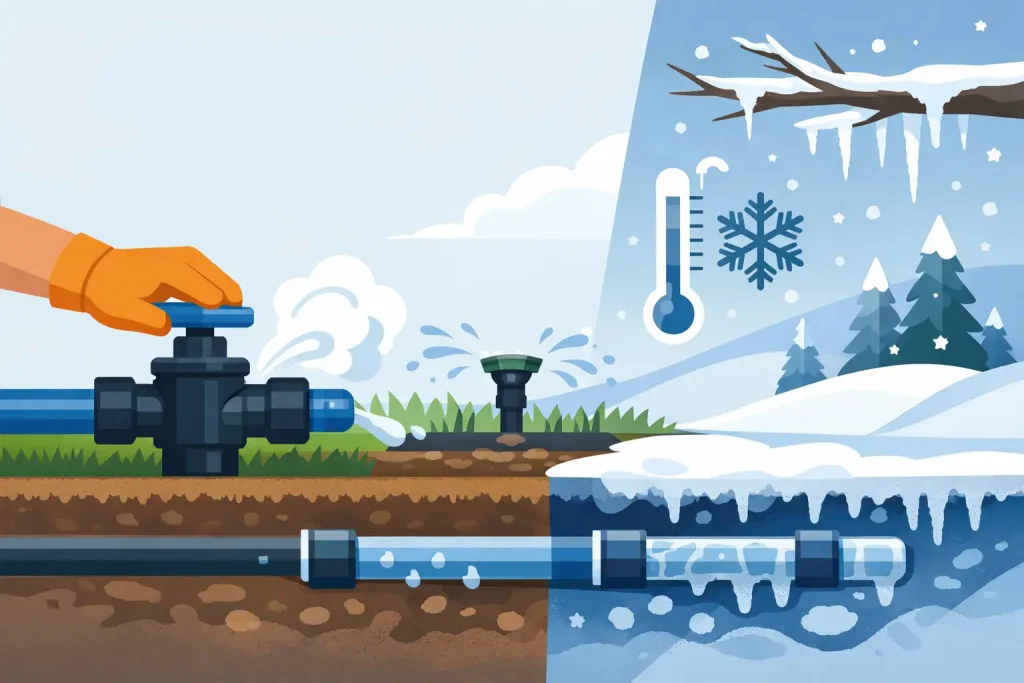
The first hard freeze can turn a healthy sprinkler system into an expensive spring repair. For homeowners in Macomb and nearby communities, knowing how to winterize an irrigation system means protecting underground lines, sprinkler heads, valves, and backflow equipment before trapped water expands into ice.
A proper winterization is more than turning off the controller. Water can remain in low spots, valve manifolds, and supply lines even after the system is shut down. The right process depends on how your irrigation system was installed, but the goal is always the same: remove water from components that could freeze and prevent the system from accidentally running during winter.
How to Winterize an Irrigation System Before a Freeze
Plan to winterize your system before overnight temperatures begin reaching 32 degrees Fahrenheit consistently. In Southeast Michigan, that usually means scheduling service in early to mid-fall instead of waiting for the first snowfall. A sudden cold snap can arrive before the season feels finished, and a single freeze can damage exposed components.
Start by locating the irrigation shutoff valve. This is usually a separate valve from your home’s main water shutoff and may be found in a basement, crawl space, utility room, or mechanical area. Turn off the water supply dedicated to the irrigation system. If you are unsure which valve serves the sprinklers, do not guess. Shutting off the wrong line can affect household water or other exterior fixtures.
Next, turn off the irrigation controller or set it to rain mode. This preserves programming while keeping scheduled watering cycles from opening valves after the system has been drained. If your controller does not have a rain mode, use its off setting and make a note to restore the schedule in spring.
Drain the Supply Line and Backflow Assembly
Most systems have a drain point near the indoor irrigation shutoff. Opening this drain releases water caught between the shutoff valve and the backflow preventer. Keep a small bucket and towel nearby because this line can release more water than expected.
The backflow preventer deserves special attention. It is designed to keep irrigation water from flowing back into the home’s drinking water supply, and it contains internal parts that are vulnerable to freeze damage. Depending on the type of device and its installation, winterization may involve opening test cocks, draining the assembly, or using a designated blowout connection downstream from the device.
Backflow devices must be handled according to their manufacturer instructions and local plumbing requirements. For that reason, this is one area where professional service is often the safer choice. Forcing valves, using the wrong adapter, or sending compressed air through the wrong connection can damage the device and create a preventable repair.
Why Compressed-Air Blowouts Matter in Michigan
Some irrigation systems use manual or automatic drain valves. These can release a portion of the water when the supply is shut off, but they do not always clear every lateral line. A system with uneven grading, multiple zones, long pipe runs, or limited drain points can retain water in places you cannot see.
A compressed-air blowout pushes remaining water from each irrigation zone. This is the most dependable method for residential systems in climates with extended freezing temperatures. It is also the step that requires the most care.
The air connection should be made at the proper point in the system, typically after the backflow assembly. Each zone is then opened one at a time so air can move water through the pipes and out of sprinkler heads. The heads will rise and mist, spray, or sputter as water exits. Once mostly air is coming through, the zone should be closed and the next zone started.
Pressure alone is not the measure of a safe blowout. Air volume matters just as much. A small portable compressor may produce enough pressure on its gauge but not enough cubic feet per minute to clear a zone effectively. Raising the pressure to compensate is risky and can crack fittings, damage valves, or stress older pipe.
For many residential systems, regulated pressure in the 40 to 50 PSI range is common, but the correct setting depends on the pipe material, irrigation components, and manufacturer specifications. Never exceed the rated pressure of your system. PVC, polyethylene pipe, drip irrigation, and older components can have different limits, so a one-size-fits-all setting is not appropriate.
Do not run a zone on air for long after the water has cleared. The purpose is to remove water, not to keep blasting dry components. Two or three short cycles may be useful for a long or complex zone, but repeated extended blowouts can create unnecessary wear.
Protect Above-Ground Parts After the Blowout
After the lines are cleared, check every exposed component around the foundation. Close or cap the blowout connection as appropriate, leave drain ports in the correct winter position, and make sure the irrigation shutoff remains closed. If your system has a hose connection or exterior control wiring, inspect it for loose fittings and signs of wear.
Insulated backflow covers can help shield an above-ground assembly from wind and cold, but insulation is not a substitute for draining it. A cover placed over a water-filled device may hide the problem rather than prevent it. Avoid wrapping components so tightly that moisture is trapped against fittings or that access is difficult when service is needed.
It is also a good time to walk the property and look for damaged sprinkler heads, sunken valve boxes, exposed wiring, or wet spots that stayed green longer than the surrounding lawn. These can point to leaks or drainage concerns worth addressing before spring startup.
Common Winterization Mistakes to Avoid
The most costly mistakes tend to be simple ones. Homeowners may shut off the controller but leave the water supply on, drain the main line but skip the zones, or try to blow out the system with an undersized compressor. Each approach can leave water where it should not be.
Other common issues include leaving a backflow preventer full of water, using excessive air pressure, and forgetting drip irrigation. Drip lines are easy to overlook because they do not have sprinkler heads that visibly spray during a blowout. Yet emitters, filters, pressure regulators, and supply tubing can all be affected by freezing conditions.
If you have recently added a patio, retaining wall, landscape bed, or drainage improvement, consider how the project may have changed access to valve boxes and sprinkler zones. Grade changes can affect drainage, and new plantings may alter where irrigation lines need attention. Winterization is a useful opportunity to identify these issues while the system is still familiar and accessible.
When Professional Winterization Is Worth It
A homeowner who understands their system, has the correct equipment, and can safely access the shutoff and blowout connection may be able to complete basic winterization. That said, professional service is a practical investment when the system has multiple zones, an exposed backflow device, drip irrigation, unfamiliar valve locations, or a history of leaks and freeze damage.
A trained technician can regulate air volume and pressure, clear each zone methodically, inspect visible equipment, and identify issues that could complicate spring startup. This is especially helpful for homeowners who would rather not manage compressors, fittings, valve settings, and the risk of a damaged backflow assembly on a cold fall weekend.
Reeser Outdoor provides irrigation winterization with the same hands-on attention used across its landscape and property maintenance services. A properly shut-down system helps protect the investment already beneath your lawn and gives you a cleaner starting point when watering season returns.
Before winter settles in, take a few minutes to confirm your irrigation shutdown is scheduled and your system is protected. That small bit of preparation can prevent cracked pipes, flooded valve boxes, and an unwelcome repair list when spring arrives.