
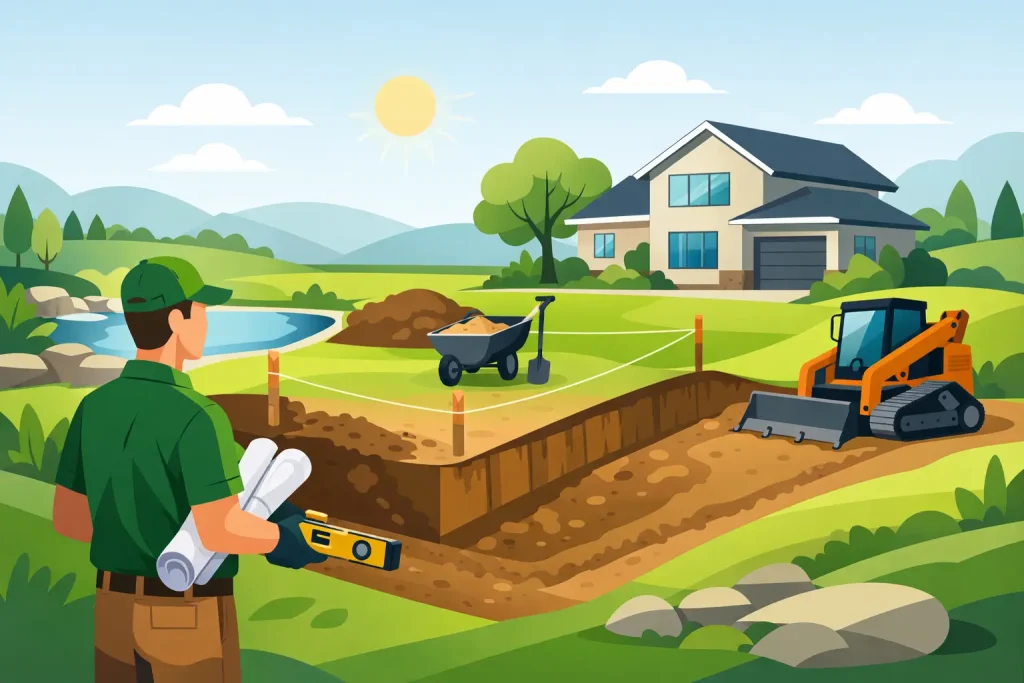
A yard can look freshly landscaped and still be working against your home. Water that settles beside a foundation, runs across a walkway, or drains into a neighbor’s yard can lead to muddy turf, stressed plants, icy pavement, and expensive structural concerns. This residential landscape grading handbook explains how a properly shaped yard manages water before new sod, beds, patios, or irrigation go in.
What landscape grading actually does
Landscape grading is the process of shaping the soil surface so rainwater and snowmelt move safely through the property. It is not simply making a yard look level. In fact, a perfectly level yard is often a drainage problem waiting to happen.
The goal is controlled movement: water should leave the foundation area, avoid low spots and hardscape surfaces, and reach a suitable drainage area without creating problems elsewhere. On a typical residential property, this may involve adjusting the slope around the house, raising or lowering sections of lawn, building shallow swales, installing catch basins, or directing downspout water farther from the home.
Grading also creates the base for nearly every outdoor improvement. A patio needs a planned pitch so water does not sit on the surface. A retaining wall needs proper drainage behind it. Planting beds need soil elevations that keep mulch away from siding. Even a reliable irrigation system performs better when water is not constantly pooling in the same areas.
Start with the water, not the wish list
Before choosing pavers, shrubs, or a new lawn layout, watch how water behaves on the property. The most useful inspection happens during a steady rain or shortly afterward. Look for puddles that remain more than a day, soil erosion, mulch washing out of beds, water marks on foundation walls, and downspouts discharging directly at the house.
Pay attention to transitions between your yard and neighboring lots. Water naturally moves downhill, but a grading plan should not concentrate runoff toward a neighbor’s driveway, basement window, or low lawn area. Local drainage rules, lot lines, easements, and existing storm systems can affect what is appropriate.
It also helps to identify what changed before a drainage issue appeared. A new fence can redirect runoff. Settling soil around a newer home can flatten the original slope. Added mulch and edging can raise a planting bed above the siding line. A patio or pool installation may interrupt a natural drainage route. The visible puddle is often the result of several small changes rather than one obvious failure.
The slope around your foundation
The soil directly next to the home deserves the most attention. As a general residential guideline, finished grade should fall about 6 inches over the first 10 feet away from the foundation where site conditions allow. This creates a positive slope that encourages water to move outward rather than collect near the basement or crawl space.
That guideline is not a substitute for evaluating your individual property. A narrow side yard, a walkout basement, an adjacent driveway, or a nearby property line may limit how much room is available. In those cases, surface grading may need to work with buried drainage, a swale, or a properly designed downspout extension.
Keep soil and mulch below siding, weep screeds, and other required clearance areas. Raising the grade too high to solve a low spot can expose the home to moisture and pest issues. The right fix moves water away without burying important building details.
Know the difference between a swale and a ditch
A swale is a broad, shallow channel shaped into the landscape to guide surface water. When installed correctly, it can blend into a lawn and be barely noticeable after the grass fills in. It is commonly used to carry water from a high area toward an approved outlet or lower drainage area.
A ditch is typically deeper, more defined, and may be needed where larger volumes of water move through a site. It can be effective, but it is not automatically the best fit for a finished suburban yard. Deep channels can be difficult to mow, unattractive, and unsafe for children or guests if they are poorly planned.
The trade-off is capacity versus appearance. A subtle swale may be right for mild surface runoff, while a recurring flood zone may call for a more substantial drainage solution. The grade must also be set carefully. Too little fall allows water to sit; too much fall can wash soil and seed away.
Grading before patios, walls, and new landscaping
Hardscape projects are where grading errors become especially costly. A patio should pitch away from the house, typically at a modest but consistent slope that allows water to drain without making the surface feel uneven. Water that drains off a patio needs somewhere safe to go. Sending it directly into a planting bed that already holds water only shifts the problem.
Retaining walls need even more planning. A wall holds back soil, but it also interrupts water movement. Without the correct base, drainage stone, collection pipe, and outlet, water pressure can build behind the wall. That pressure can cause staining, shifting, cracking, or eventual failure.
New landscape beds should be shaped with plant health in mind. Most shrubs and perennials dislike constantly saturated root zones, while some areas may need additional organic material or a different plant selection because the soil dries quickly. Good grading does not force every part of the property to behave the same way. It creates usable zones and matches materials and plants to each one.
When downspouts are the real problem
Many homeowners assume standing water means the entire yard needs to be regraded. Sometimes the issue is much simpler: roof runoff is being discharged too close to the foundation. A single downspout can release a significant amount of water during a heavy storm, especially on a large roof section.
Extensions, buried drain lines, and catch basins can help, but they must be installed with a workable outlet and enough slope to function. A buried pipe that ends in a low, saturated corner will not solve the problem. It may simply move water out of sight until it backs up.
Downspout drainage should be planned as part of the overall grading system. The roof, lawn, planting beds, paved surfaces, and drainage features all affect one another. Treating them as separate projects is one reason water problems return after a quick fix.
Why DIY grading often falls short
Small touch-ups can be reasonable for a homeowner. Filling a minor lawn depression with screened topsoil, resetting a short downspout extension, or repairing washed-out mulch after a storm can all be manageable tasks. The risk rises when soil is added near the foundation, elevations are changed around a patio, or drainage is redirected across the property.
A yard can appear to slope away from the house but still contain subtle low areas that trap water. Equipment matters too. Professional grading often requires removing and replacing material, establishing elevations with laser levels, compacting soil in the right areas, and protecting finished surfaces from damage.
The wrong fill material creates another common issue. Heavy clay may hold water where it is placed, while loose soil can settle dramatically after a season. Topsoil is valuable for growing turf and planting beds, but it is not always the correct structural material for rebuilding a grade.
A practical plan for correcting drainage
A dependable grading project starts with a site review, not a guess. The work should identify existing elevations, roof drainage points, soil conditions, property constraints, and the final destination for runoff. From there, the scope can be built around the actual cause of the issue.
For a simple problem, the solution may be regrading a foundation bed and extending downspouts. For a larger project, it may include lawn reconstruction, a swale, drainage pipe, catch basins, new bed contours, and restoration of sod or seed. If a patio, wall, or outdoor living area is part of the plan, the drainage layout should be completed before those finished elements are installed.
Ask for a clear, line-item proposal that explains what material will be removed or added, how water will be routed, whether drainage components are included, and how the disturbed lawn and beds will be restored. A licensed and insured contractor should also explain what site conditions could affect the schedule, such as weather, utility marking, or unexpected buried obstacles.
Maintenance protects the grade you paid for
Grading is not a one-time concern. Soil settles, mulch shifts, roots grow, and lawn edging can slowly change water flow. Check drainage areas each spring and after major storms. Keep catch basin grates clear, repair eroded areas promptly, and avoid piling mulch against the foundation.
If water begins behaving differently, address it before it damages lawn areas or reaches the home. A local team such as Reeser Outdoor can evaluate grading alongside irrigation, planting, hardscape, and routine property care, which helps prevent one project from creating a problem for another.
A well-graded yard rarely calls attention to itself. Rain arrives, water moves where it should, and your lawn, landscape, and outdoor spaces stay ready to enjoy.