
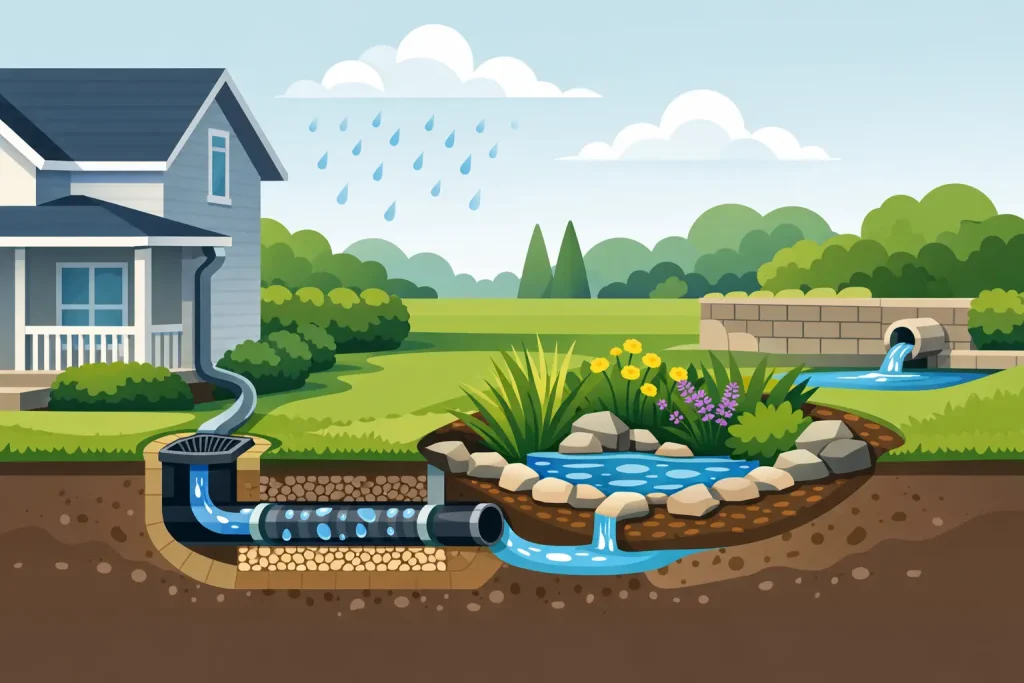
A soggy stretch of lawn after a hard Macomb rain is more than an inconvenience. When water repeatedly collects near a foundation, runs across a patio, or turns planting beds into mud, it can damage the landscape and create expensive problems below the surface. The right drainage solutions move water away from the areas that need to stay dry while preserving the look and usability of your property.
For homeowners, the challenge is rarely just getting rid of one puddle. Water follows grade, soil conditions, hardscape edges, downspouts, and underground utility paths. A lasting fix starts with understanding why water is collecting, where it is coming from, and where it can safely go.
What Poor Drainage Can Do to a Property
Standing water places stress on much more than turf. Saturated soil can weaken grass roots, invite disease, and make it difficult for plants to establish. In planted beds, repeated runoff can wash away mulch and topsoil, expose roots, and carry sediment onto walks or driveways.
The bigger concern is often near the home. Water that lingers against the foundation may seep into basements or crawl spaces, contribute to damp conditions, and create freeze-thaw pressure during Michigan winters. Water flowing across a driveway, sidewalk, or patio can also create slippery surfaces and accelerate cracking or settling.
Drainage problems tend to become more visible after landscape improvements. A new patio, retaining wall, pool area, or expanded driveway changes how water moves through the yard. That does not mean the project was a mistake. It means drainage should be part of the design and construction plan, rather than an afterthought once water begins pooling.
Signs You Need Professional Drainage Solutions
Some warning signs are obvious, such as water standing for more than a day after normal rainfall. Others build gradually. You may notice thin or yellowing grass in one low area, mulch that repeatedly washes out, soil erosion along a slope, or a damp line on a basement wall.
Pay attention to where downspouts discharge. If they release water directly beside the house, onto a walkway, or into a low spot, they can overwhelm the yard during heavy rain. Likewise, a neighbor’s runoff, a failing swale, or a compacted clay soil area can send water toward your property even when your gutters are working properly.
A professional evaluation should also consider the season. Snowmelt can reveal grading issues that are less noticeable in summer, while a brief but intense storm may expose capacity problems in an existing drain system. The goal is not to design for a perfectly dry yard in every weather event. It is to give normal rainfall and seasonal runoff a controlled path away from structures, hardscapes, and sensitive landscape areas.
Choosing the Right Drainage Approach
There is no single drain system that fits every yard. Effective drainage solutions are usually a combination of grading, collection, conveyance, and discharge. The best choice depends on the source of the water, the available elevation, soil type, lot layout, and local drainage rules.
Regrading and Swales
When water is collecting because the ground slopes toward the house or into a low area, regrading may be the first and most important correction. Soil is reshaped to direct water away from the foundation and toward an appropriate drainage route. A shallow, landscaped channel called a swale can guide surface water across the property without looking like a ditch.
Regrading is often a practical answer for broad, shallow drainage issues. It may not be enough, however, when a yard has very little fall, water enters from a neighboring property, or hardscapes prevent surface water from moving naturally.
Downspout Extensions and Buried Lines
Roof runoff can deliver a surprising volume of water in a short time. Extending downspouts away from the foundation is a simple starting point, but visible extensions are not always attractive or practical around walkways and beds. Buried solid pipe can carry roof water to a suitable outlet, helping keep the area near the home dry and clean.
The outlet matters as much as the pipe. Water cannot simply be sent to the nearest corner of the yard if that area is lower, poorly drained, or likely to affect a neighbor. Proper planning accounts for the final discharge point and makes the system serviceable if maintenance is needed later.
French Drains for Saturated Soil
A French drain is designed to collect subsurface water. It typically uses a perforated pipe surrounded by clean drainage stone and protected with filter fabric. Water enters through the stone, reaches the pipe, and travels to an approved discharge location.
French drains can be effective along foundations, beside patios, near retaining walls, and in consistently wet lawn areas. They are not a cure-all for every puddle. If the pipe has no usable outlet or the surface grade is still sending water toward the problem area, the drain will have limited results. Correct depth, slope, stone, fabric, and outlet are essential to performance.
Catch Basins and Area Drains
Where water flows quickly across a driveway, patio, or low point, a catch basin or area drain can collect surface runoff before it spreads. These systems are often connected to solid pipe that carries water away. They are useful near downspout collection points, low spots in hardscape areas, and transitions where grading alone cannot control runoff.
Because catch basins collect leaves, mulch, and sediment along with water, they need occasional cleaning. This is a reasonable trade-off for protecting a patio or keeping runoff from crossing a heavily used walkway.
Retaining Wall and Hardscape Drainage
Any retaining wall that holds back soil also needs a plan for water behind it. Without drainage stone, collection pipe, and a designed outlet, pressure can build behind the wall. That pressure may contribute to movement, staining, or premature failure.
Patios require the same level of attention. The finished surface should slope away from the home, and edges should be detailed so runoff does not settle against the house or undermine the base. Installing a beautiful outdoor space without addressing water management can lead to avoidable repairs later.
Why Installation Details Matter
Drainage work is largely underground, which makes shortcuts difficult for a homeowner to spot after the lawn is restored. Pipe slope, connection methods, fabric placement, stone depth, and outlet protection all affect whether the system continues working over time.
For example, perforated pipe belongs where the goal is to collect groundwater, while solid pipe is generally used to transport collected water. Using the wrong pipe in the wrong location can release water where it should be contained or fail to gather it where it is needed. A drain line also needs enough consistent fall to move water, but overly steep routes can carry sediment and create erosion at the discharge point.
Before installation, a dependable contractor should identify obvious utility conflicts, evaluate existing grades, and explain what work will be visible after completion. A clear, line-item proposal helps homeowners understand whether the scope includes excavation, drainage materials, grading, restoration, downspout connections, and any needed hardscape repairs.
Pair Drainage With a Landscape Plan
The strongest drainage systems work with the landscape instead of fighting it. Grading can be blended into lawn areas. Swales can be softened with appropriate plantings. Downspout lines can be routed beneath beds, and drain outlets can be placed where they are functional without becoming an eyesore.
This coordinated approach is especially valuable when you are planning a new landscape renovation, patio, retaining wall, or irrigation update. Handling drainage before or during construction protects the investment and avoids tearing up finished work later. Reeser Outdoor approaches drainage as part of the property’s overall performance, combining landscape knowledge with the construction details needed to manage water correctly.
Keep Your Drainage System Working
Even a well-installed system benefits from basic seasonal attention. Keep gutters and downspouts clear so roof water reaches the intended line. Remove leaves, mulch, and sediment from catch basins. Watch drain outlets after heavy rain, and avoid piling soil, mulch, or landscape debris over them.
If a previously dry area begins holding water again, do not assume the entire system has failed. The issue may be a blocked outlet, a crushed section of pipe, a settled grade, or a new source of runoff from a nearby improvement. Early inspection is usually simpler and less disruptive than waiting for foundation moisture, erosion, or hardscape damage to appear.
Water will always move through a property. With a thoughtful plan and professional installation, it can move where it belongs – away from your home and toward a yard you can enjoy after the rain stops.