
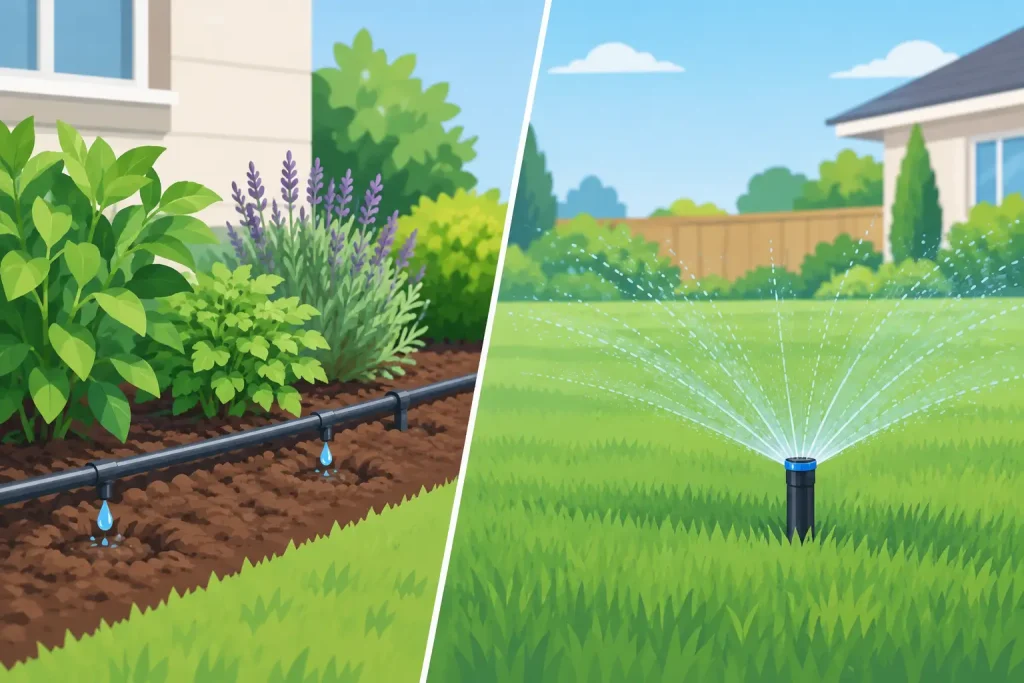
A healthy lawn and landscape should not depend on dragging hoses across the yard or guessing whether the back planting bed received enough water. When homeowners compare drip irrigation versus sprinklers, the right answer usually comes down to what is being watered, how the property is laid out, and how much control is needed from one zone to the next.
For many Macomb-area properties, the strongest solution is not choosing one system for the entire yard. It is using sprinklers where broad lawn coverage makes sense and drip irrigation where flowers, shrubs, trees, and garden beds need water delivered closer to the roots. A properly designed system protects curb appeal while reducing wasted water, runoff, and plant stress.
Drip Irrigation Versus Sprinklers: The Core Difference
Sprinkler systems apply water through the air, covering a wide area with spray heads or rotors. They are designed primarily for turfgrass, though certain heads can also water large groundcover areas. A sprinkler zone can cover a front lawn, backyard, side yard, or other open area efficiently when it is designed with proper spacing and pressure.
Drip irrigation delivers water slowly at or below the soil surface through tubing, emitters, or dripline. Rather than soaking leaves and surrounding pavement, it directs moisture into the root zone. This makes drip particularly effective for landscape beds, foundation plantings, vegetable gardens, young trees, and narrow areas that are difficult to reach with conventional sprinkler heads.
The difference matters because lawns and ornamental plants do not use water in the same way. Turf needs even coverage over a large surface. Shrubs, perennials, and trees benefit from slower, deeper watering that encourages healthy roots without constantly wetting foliage.
When Sprinklers Are the Better Choice
A professionally installed sprinkler system is generally the best tool for established lawn areas. Spray heads are well suited to smaller spaces, while rotor heads are often used for larger lawn sections. When heads are laid out correctly, they provide the consistent overlap needed to prevent dry strips and weak patches of grass.
Sprinklers are also easier to manage when a property has broad, uninterrupted turf. A controller can run each lawn zone based on its sun exposure, soil conditions, and slope. The sunny front lawn may need a different schedule than a shaded backyard, and separate zones make that adjustment possible.
There are trade-offs. Wind can blow spray off target, especially around open corners of the yard. Overspray onto sidewalks, driveways, fences, and siding wastes water and can create slippery surfaces. Poorly matched sprinkler heads can leave one section flooded while another stays dry. These are design and maintenance issues, not reasons to avoid sprinklers altogether, but they need to be addressed correctly.
Sprinklers also require seasonal attention in Michigan. A system should be winterized before freezing weather arrives, then inspected and adjusted in spring. Broken heads, clogged nozzles, leaks, and settling soil around heads can all affect coverage over time.
Where Drip Irrigation Performs Best
Drip irrigation shines in planting beds where a sprinkler would water more mulch, stone, or pavement than plants. It is especially useful around shrubs and perennials, where water can be placed along the root zone instead of sprayed across leaves and blooms.
For homeowners who have invested in a landscape renovation, drip helps protect that investment. New plant material often needs dependable moisture during its first growing seasons, but frequent overhead watering can encourage fungal issues on susceptible plants and may not penetrate mulch evenly. Dripline applies water gradually, giving soil time to absorb it rather than letting it run off.
It is also a practical choice for narrow side-yard beds, foundation plantings, raised gardens, and areas along retaining walls or patios. These spaces may be too irregular for efficient spray coverage. Drip tubing can be routed around plants and hardscape features with far less overspray.
Drip is not maintenance-free. Filters, pressure regulators, and emitters need to be installed properly. Tubing can be damaged by edging, digging, animals, or landscape work. In heavily planted beds, the system should be checked periodically to confirm water is reaching every plant as the landscape matures. A good design allows access for future service instead of burying every component where it cannot be inspected.
Water Efficiency Depends on Design, Not Just Equipment
Drip irrigation is often considered the more water-efficient option, and in landscape beds that is usually true. Because it delivers water directly to the soil, less is lost to wind and evaporation. It can also reduce weed growth in areas that would otherwise be watered broadly.
Still, a drip system can waste water if it runs too long, has damaged tubing, or is installed without the correct pressure regulation. Likewise, a sprinkler system can operate efficiently if each zone is designed for the right nozzle type, adjusted for the property, and programmed to avoid watering during heat, wind, or rainfall.
Smart controllers and rain sensors can improve either system. A controller that adjusts run times for seasonal weather can prevent the common problem of a system running on a summer schedule after temperatures cool down. Rain sensors stop unnecessary cycles after rainfall. For properties with slopes, shorter cycle-and-soak watering periods can help sprinkler zones absorb water without sending it down the driveway or into the street.
Installation Cost and Long-Term Maintenance
The cost of irrigation depends less on whether a system uses drip or sprinklers and more on the overall scope. Property size, number of zones, water pressure, soil conditions, planting-bed layout, hardscape obstacles, and controller options all affect the installation plan.
Sprinkler systems typically require more trenching and a larger number of heads to cover turf evenly. Drip systems may use less visible hardware, but they still need dedicated valves, proper filtration, backflow protection where required, and careful routing through planting beds. A mixed system combines both approaches, often providing the best long-term performance for a landscaped residential property.
Homeowners should be cautious about installing a single zone to water everything. Lawn sprinklers and drip irrigation operate at different pressures and need different run times. Putting them on the same zone often leads to under-watered plants, over-watered lawn areas, or both. Separating zones gives each part of the yard the watering schedule it actually needs.
Maintenance should be part of the decision from the beginning. Irrigation systems benefit from spring start-up, midseason inspections, adjustments as plants grow, and proper fall winterization. During a service visit, a technician can look for leaking valves, tilted heads, blocked nozzles, exposed dripline, and programming that no longer matches the season.
Choosing the Right System for Your Property
Start by looking at the areas that need water rather than treating the yard as one large zone. Open lawn, dense foundation beds, new trees, vegetable gardens, slopes, shaded areas, and sunny exposures all have different requirements.
A property with mostly turf and a few simple planting beds may need a conventional sprinkler system with limited drip zones. A heavily landscaped yard with patios, retaining walls, ornamental beds, and mature trees may benefit from a more detailed mixed design. If drainage or grading issues are already present, those should be evaluated before irrigation is installed. Adding water to a low spot will not solve a drainage problem.
It also helps to think about how you use the property. Families with children and pets may want irrigation schedules that run early in the morning, before the yard is active. Homeowners who travel often may prioritize a smart controller and remote monitoring. Those adding a new patio, pergola, or landscape bed should plan irrigation at the same time, before finished surfaces make future changes more disruptive.
Reeser Outdoor can assess lawn coverage, planting-bed needs, drainage conditions, and future landscape plans as part of a clear, property-specific irrigation recommendation. The goal is not to sell more zones than a yard needs. It is to build a system that supports healthy grass and plant material while remaining straightforward to maintain.
The best irrigation system is the one that puts the right amount of water in the right place without becoming another homeowner task to manage. Whether that means sprinklers, drip irrigation, or a combination of both, thoughtful design now helps the yard look better through every growing season.