
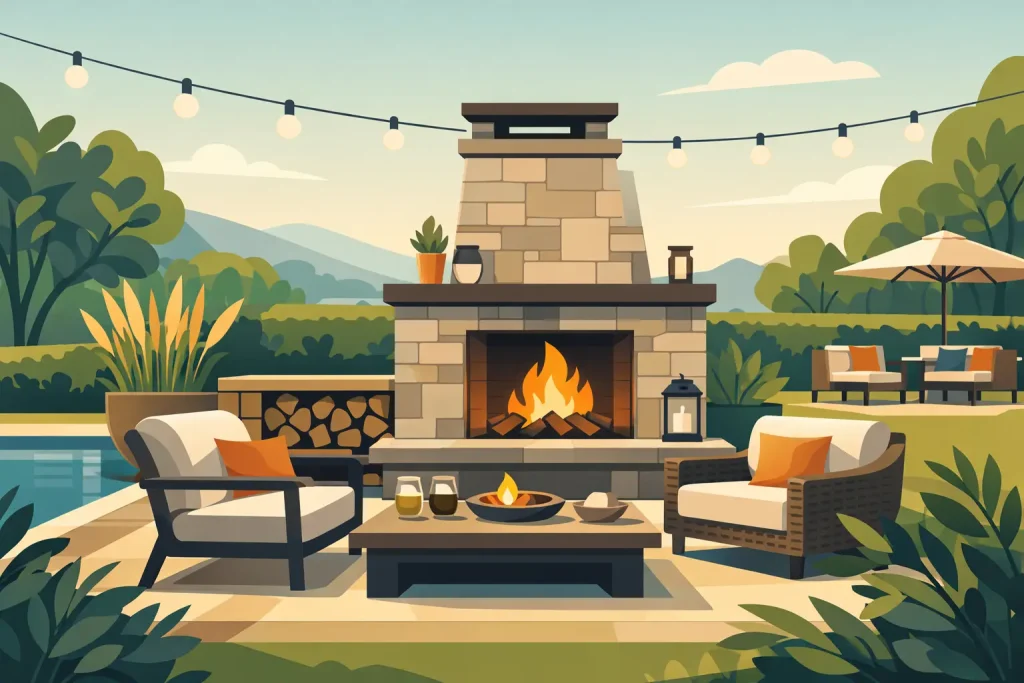
A patio can look complete on paper and still sit empty after sunset. For many Macomb homeowners, outdoor fireplaces are the feature that changes that. They add a dependable gathering point, extend the usable season, and give a backyard a sense of purpose that patio furniture alone cannot create.
The best fireplace is not simply the largest one or the one with the most dramatic stone. It is the one that fits how your family uses the yard, works safely with the property, and is built on a foundation that will hold up through Michigan winters. That takes thoughtful planning well before the first block or stone is installed.
Start With How You Want to Use the Space
An outdoor fireplace is a permanent architectural feature, not a moveable accessory. Before choosing materials or fuel, think about the role it needs to play in your outdoor living area.
A family that wants quiet weeknight fires may prefer a fireplace located just off the back patio, where it is easy to reach from the house. Homeowners who entertain often may want it positioned as the anchor of a larger seating area, with room for guests to circulate without crowding the fire. If the goal is to create a private destination away from the house, a fireplace can become the focal point of a garden patio or poolside lounge.
This decision affects more than the view. It determines the size of the hardscape, the path of utilities, the need for lighting, and whether nearby planting beds need protection from heat and foot traffic. A good design considers the whole yard rather than treating the fireplace as a standalone addition.
Fireplace or Fire Pit?
Both create warmth and atmosphere, but they serve different spaces. A fire pit is generally more open and social, allowing people to sit around all sides. It can be a practical choice for a broad patio, a casual family yard, or a space where the fire feature should remain visually low.
A fireplace has a stronger sense of enclosure. Its vertical structure can define an outdoor room, create privacy, and establish a clear focal point from inside the home. It also directs heat forward, which can make seating more comfortable in a planned lounge area. The trade-off is that it needs more room, more substantial construction, and more careful siting.
For homeowners considering a pergola, kitchen, retaining wall, or patio expansion, the fireplace should be planned alongside those features. Building it first and trying to fit everything else around it often leads to awkward proportions or unnecessary reconstruction later.
Choosing the Right Fuel for Outdoor Fireplaces
Fuel choice shapes the daily experience of owning an outdoor fireplace. There is no single best option. The right answer depends on convenience, atmosphere, available utilities, and how much maintenance you are comfortable handling.
Natural Gas
Natural gas is a strong fit for homeowners who want a fire at the push of a button. It provides consistent flames, eliminates the need to store fuel, and requires very little cleanup. For frequent use, that convenience is hard to beat.
The limitation is installation. A licensed professional must determine whether the existing gas line has adequate capacity and how it can be safely routed to the fireplace. Gas work, local permits, and inspections should be included in the project plan rather than treated as an afterthought.
Propane
Propane offers many of the same convenience benefits as natural gas when a natural gas connection is not practical. Depending on the design, the tank may be concealed within the structure or located remotely. It gives homeowners flexibility, but someone still needs to monitor fuel levels and arrange refills.
For occasional fires or properties without easy utility access, propane can be an excellent solution. For heavy use, homeowners should weigh the ongoing fuel cost and logistics against the upfront investment of extending a natural gas line.
Wood-Burning
A wood-burning fireplace provides the crackle, aroma, and traditional fire experience many families enjoy. It can feel especially fitting in a rustic landscape design or a backyard built around fall gatherings.
It also requires the most involvement. Wood must be stored dry and away from the house, ash needs to be removed, and smoke can affect neighbors or nearby seating areas if the fireplace is poorly located. Some communities have rules that affect wood-burning features, so it is wise to confirm local requirements before settling on this option.
Location Is a Safety Decision, Not Just a Design Choice
A fireplace should feel connected to the home without being too close to structures, rooflines, windows, trees, or combustible materials. The exact placement must account for manufacturer specifications, local codes, lot conditions, and the type of fuel being used.
Wind deserves particular attention in open suburban yards. A fireplace facing the wrong direction can send smoke across the patio or toward a neighbor’s property. Existing drainage patterns matter, too. A beautiful fire feature installed where water collects may experience settling, freeze-thaw damage, or staining around the base.
An experienced outdoor contractor evaluates grade, drainage, utility locations, access for construction equipment, and the relationship between the feature and existing landscape beds. This is where an end-to-end approach can save frustration. The fireplace, patio base, drainage corrections, irrigation adjustments, and surrounding plantings can be coordinated as one project instead of handed off to separate crews.
Build for Michigan Weather From the Ground Up
The visible stonework gets the attention, but the base is what protects the investment. Outdoor fireplaces are heavy structures, and Macomb-area freeze-thaw cycles can expose shortcuts quickly. If the foundation shifts, cracks in veneer, joints, caps, or the chimney may follow.
Proper excavation, a compacted aggregate base, drainage planning, and a suitable foundation system help the feature remain stable through seasonal changes. The right approach depends on the fireplace design, soil conditions, and site grade. A masonry fireplace and a prefabricated gas unit with a veneer surround may require different structural solutions.
Material selection matters as well. Natural stone, manufactured stone, brick, and concrete products can all look excellent when chosen for exterior use and installed correctly. Homeowners should consider how the material relates to the home, patio, retaining walls, and landscaping. A fireplace that matches every surface exactly can look flat, while one that ignores the property’s existing colors can feel disconnected.
A line-item proposal should clearly identify the scope of work: excavation, base preparation, firebox or insert, fuel connection where applicable, veneer, caps, hearth, seating wall integration, cleanup, and any restoration of disturbed lawn or beds. Clear scope protects homeowners from surprises and makes it easier to compare options fairly.
Design the Seating Area With Real Life in Mind
A fireplace without enough usable seating becomes more of a backyard sculpture than a gathering place. Plan space for chairs, side tables, and a comfortable walking path around the seating zone. Avoid placing furniture so close that people feel overheated, but do not push it so far away that the feature loses its warmth.
Built-in seat walls can make a patio feel organized and provide extra seating without filling the area with furniture. They work especially well around a fireplace patio, though cushions or movable chairs may still be needed for long evenings. If dining is part of the plan, keep the dining area separate from the primary fire seating area whenever possible. That gives guests room to eat, talk, and move comfortably.
Lighting should support the fireplace, not compete with it. Low path lighting, step lights, and subtle landscape lighting improve safety after dark while allowing the fire to remain the visual center. Irrigation heads may also need to be relocated so they do not spray the stonework or interfere with utility lines.
Plan for Maintenance Before the First Fire
Even low-maintenance gas fireplaces need periodic care. Burners, ignition components, vents, and gas connections should be inspected according to the manufacturer’s guidance. Keep the firebox clear of leaves, nesting material, and debris, especially after winter.
Wood-burning fireplaces need more regular cleaning, including ash removal and occasional inspection of the chimney and firebox. Avoid using harsh cleaners or pressure washing stone and mortar indiscriminately. The wrong method can damage joints or drive water into areas that should stay protected.
Seasonal landscape care also helps preserve the setting. Pruning nearby shrubs, managing leaf buildup, checking drainage, and repairing paver or mortar issues early can keep a small concern from becoming a larger repair. Reeser Outdoor can help homeowners coordinate those ongoing details with the rest of their landscape maintenance rather than leaving a finished project to fend for itself.
A well-planned fireplace gives a backyard a reason to be used on cool spring evenings, crisp fall weekends, and the in-between moments when family and friends simply want to stay outside a little longer. Choose the feature that fits your property and routines, then build it with the same care you expect from the rest of your home.