
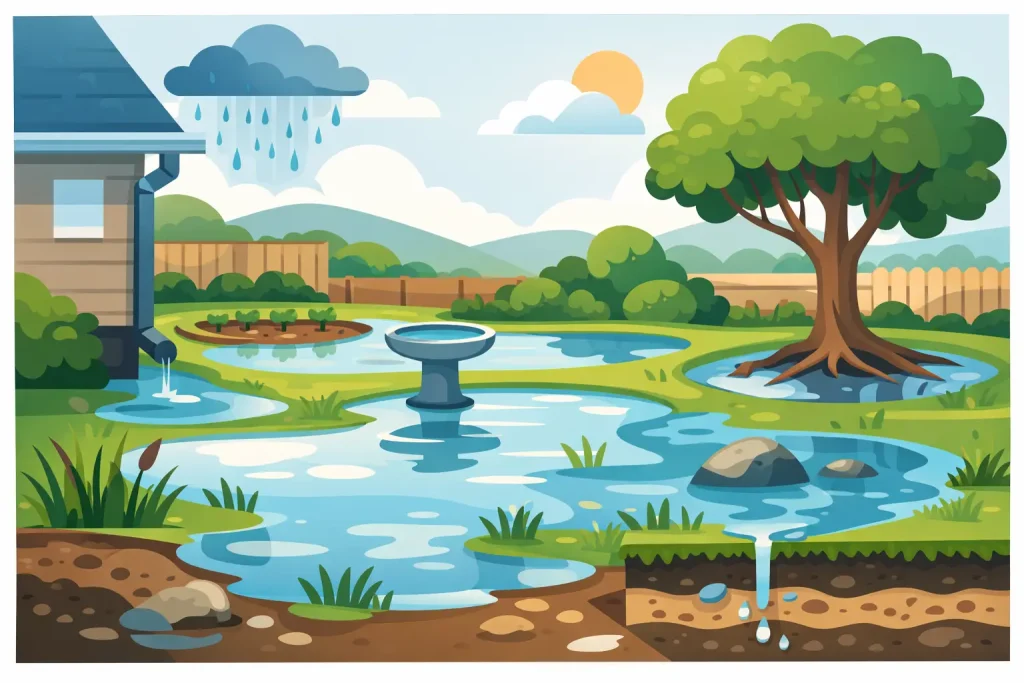
A puddle near the downspout after a hard rain may be normal. Water that remains in the same part of your lawn for days is not. Understanding what causes standing water helps you protect your grass, landscape beds, foundation, and the usable space you expect from your yard.
For homeowners in Macomb and nearby communities, persistent wet areas often come down to a combination of soil, slope, runoff, and drainage design. The visible water is the symptom. Finding the reason it collects there is what determines whether the right fix is a simple adjustment or a more involved drainage and grading project.
What Causes Standing Water in a Yard?
Standing water forms when more water reaches an area than the ground can absorb or move away. Rainfall is usually the trigger, but it is rarely the complete explanation. A healthy yard needs a route for water to soak in, flow across the surface, or drain through a properly designed system.
When one of those routes is blocked, too slow, or aimed in the wrong direction, water settles in the lowest available spot. That could be the middle of a lawn, along a foundation, beside a patio, at the bottom of a driveway, or in a landscape bed.
Poor Yard Grading
Improper grading is one of the most common reasons for standing water. Grading refers to the shape and slope of your property. Ideally, the ground around the home slopes away from the foundation, while the rest of the yard guides water toward an appropriate outlet, such as a swale, drain, or designated drainage area.
A shallow low spot can collect surprising amounts of water, especially after repeated rain. In some cases, the yard was never graded correctly. In others, the grade changed over time after soil settled, a patio or retaining wall was installed, landscaping was added, or construction equipment compacted the lawn.
The right repair depends on the site. Adding soil can help a small depression, but it is not a cure if the new soil simply redirects water toward the house or a neighbor’s property. Professional grading considers the entire flow of water across the property, not just the puddle itself.
Compacted or Clay-Heavy Soil
Many Michigan lawns have dense, clay-heavy soil. Clay can support a beautiful lawn, but it absorbs water slowly compared with loose, sandy soil. After heavy rain, water may sit on the surface because it cannot move down through the soil fast enough.
Compaction makes that issue worse. Foot traffic, lawn equipment, construction activity, and repeated mowing on soft ground can press soil particles tightly together. The result is less pore space for air and water, which affects both drainage and root health.
If water disappears within a day after a major storm, slow infiltration may be the main concern. Core aeration, soil improvement, and lawn care adjustments can make a meaningful difference. If water remains for several days or repeatedly floods the same area, compaction may be only part of a larger drainage problem.
Downspouts and Roof Runoff
Your roof sheds a large volume of water in a short period. If downspouts empty next to the foundation or terminate in a low area, that concentrated runoff can create erosion, soggy mulch beds, and standing water.
This is especially common where downspout extensions are too short, disconnected, crushed, or pointed toward a patio or side yard with no natural outlet. Buried downspout lines can also clog or collapse, causing water to back up and surface near the house.
Extending a downspout may solve a simple problem, but the water still needs somewhere safe to go. A longer extension that sends runoff into a neighboring lot, toward the driveway, or into another low spot only moves the issue. Drainage planning should account for local site conditions and the route water follows after it leaves the roof.
Clogged or Undersized Drainage Systems
Catch basins, channel drains, French drains, and buried drain lines are designed to move water away from problem areas. Like any outdoor system, they need proper installation and occasional maintenance. Leaves, mulch, sediment, roots, and debris can block an inlet or pipe and keep the system from doing its job.
An undersized system can also fail during a heavy storm. A drain that handles light rain may not keep up with water flowing off a large roof, sloped lawn, or paved surface. The problem may look random until a major rainfall reveals that the drainage capacity is not sufficient.
A drainage assessment should examine the visible basin or grate, but also the pipe route, outlet, slope, and condition of the surrounding soil. Replacing a grate without addressing a broken line or poor outlet will not provide a lasting repair.
Hardscapes That Redirect Water
Patios, walkways, driveways, retaining walls, and pool decks all change how water moves through a property. When these features are built with the correct pitch and drainage details, they make an outdoor space more functional. When water is allowed to run toward the house or become trapped against a wall, they can contribute to standing water.
A patio should slope gently away from the home, but not so aggressively that it feels uneven or directs runoff into the lawn below. Retaining walls may require drainage stone, filter fabric, and drainage pipe behind them to relieve water pressure. Without those details, water can saturate the soil, stain surfaces, and create wet areas at the base of the wall.
This is why drainage should be part of the design conversation before a hardscape project starts. Correcting water flow after installation is possible, but it is usually more disruptive and costly than building it correctly the first time.
Irrigation Leaks or Poor Scheduling
Standing water is not always caused by rain. An irrigation zone that runs too long, a broken sprinkler head, a leaking valve, or a damaged underground line can create a wet patch even during dry weather.
If a problem area stays wet when it has not rained, pay attention to when the irrigation system runs. Water pooling near one head may signal a damaged nozzle or poor coverage pattern. A consistently soggy strip may indicate a line leak below the surface.
Overwatering can be just as harmful as poor drainage. Grass roots need oxygen, and saturated soil encourages shallow rooting, fungal issues, and thinning turf. An efficient irrigation schedule should respond to weather, soil conditions, sun exposure, and plant needs rather than following the same routine all season.
Why Standing Water Should Not Be Ignored
A wet yard is more than an inconvenience when you are trying to mow, use the patio, or let children play outside. Persistent moisture can weaken turf, drown plant roots, wash away mulch, and create muddy traffic paths. It can also attract mosquitoes during warm weather.
The greater concern is water near the home. Repeated pooling beside the foundation can increase hydrostatic pressure against basement walls and raise the risk of seepage. Water that freezes near walkways or driveways creates another safety concern during Michigan winters.
Not every puddle calls for excavation. A small amount of temporary pooling after an exceptional storm may be unavoidable, particularly in a flat yard with heavy clay soil. The warning signs are water that repeatedly returns, lasts longer than 24 to 48 hours, damages grass or plants, or sits close to structures.
How to Identify the Source Before Choosing a Fix
Start by observing the area during and after rain. Note where water first appears, which direction it travels, and how long it takes to drain. Look for downspouts nearby, settled soil, blocked drain inlets, overflowing gutters, and hardscape surfaces that slope toward the wet area.
It also helps to distinguish surface water from a high water table. Surface drainage problems are usually tied to rainfall, roof runoff, or irrigation. A high water table may keep soil damp for extended periods, particularly in lower-lying areas, and can require a different approach than reshaping one section of lawn.
Avoid relying on a quick DIY fix before understanding the cause. Filling a low spot with topsoil, for example, can bury grass, disrupt existing drainage, and create a new pooling area nearby. The best repair is often a combination of grading, drainage collection, downspout management, and soil or lawn improvements.
When Professional Drainage Work Makes Sense
Professional help is worthwhile when standing water affects your foundation, repeatedly kills grass, collects around a patio or retaining wall, or returns after basic maintenance. A qualified outdoor contractor can evaluate elevations, runoff sources, existing drains, irrigation performance, and the practical limits of the property.
At Reeser Outdoor, that process can bring landscaping, drainage, grading, irrigation, and hardscape experience into one plan instead of asking a homeowner to coordinate several separate contractors. The goal is not to sell the largest possible project. It is to create a clear scope that addresses where the water starts, where it needs to go, and how the finished yard will continue to perform.
A dry, usable yard begins with paying attention to the patterns water leaves behind. If the same spot stays soft, muddy, or flooded after every storm, treating it early can prevent a manageable drainage correction from becoming a larger landscape or foundation issue later.